
Introduction
Warehouse jobs in Canada are one of the steadiest entry points into the Canadian job market. Warehouses support retail, food, e-commerce, and manufacturing, and they hire in almost every large city. The work is physical, the shifts are clear, and many roles do not ask for a university degree.
That demand also attracts confusing posts. Some promise a warehouse job with sponsorship in days, some promise a job with no checks at all, and some ask for money before you have spoken to an employer. This guide explains what the work really looks like, where to find real listings, and how to apply safely.
What warehouse work in Canada looks like
A warehouse worker in Canada might work in receiving, picking, packing, shipping, or inventory. Common settings include distribution centres for retail chains, food and grocery warehouses, e-commerce fulfilment centres, and factory warehouses. Titles change. You might see warehouse associate, order picker, packer, forklift operator, or shipping and receiving clerk, but the core work is similar: move goods accurately, keep records straight, and work safely.
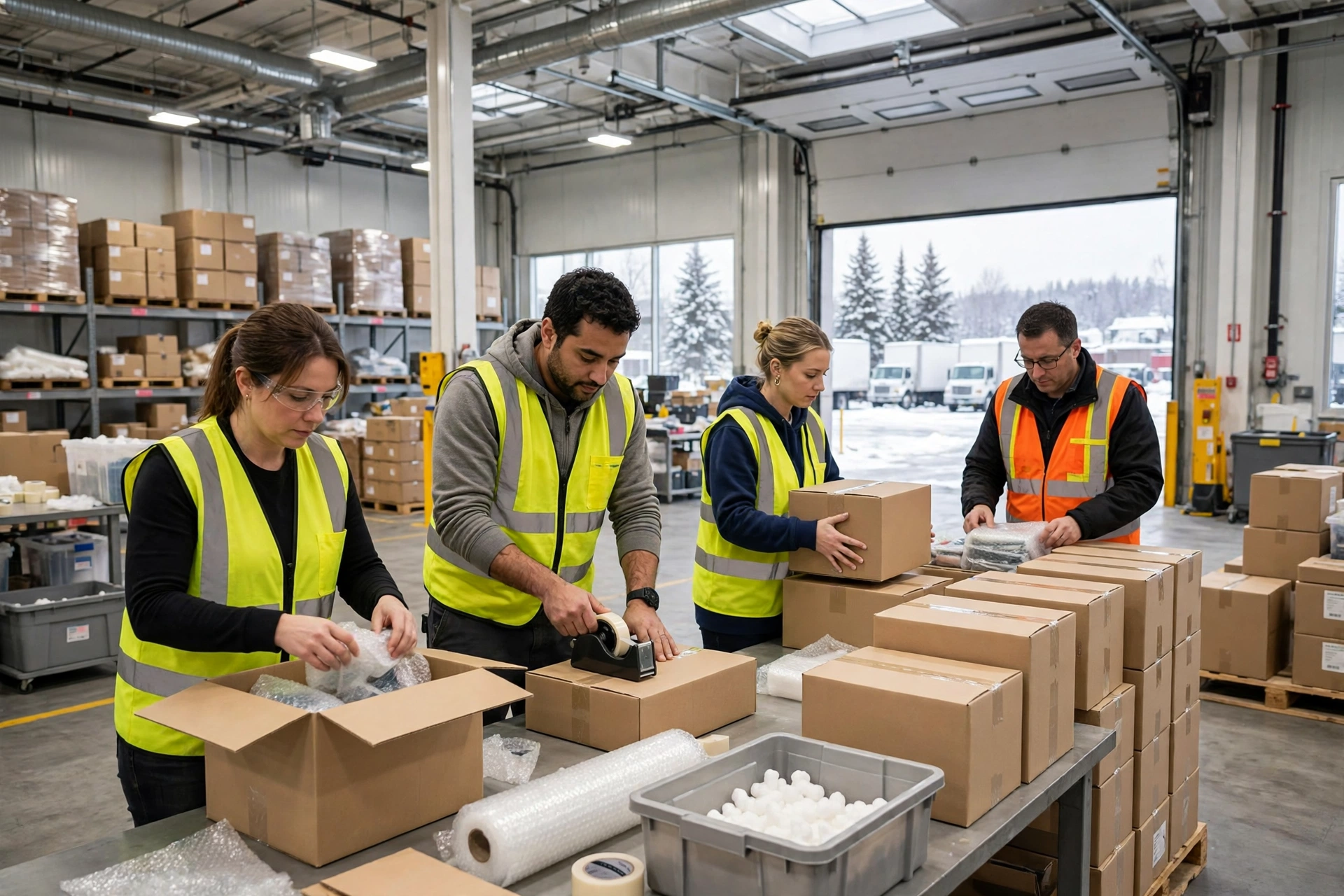
A normal shift can include unloading trucks, checking deliveries against paperwork, picking items from shelves, packing orders, labelling boxes, and loading trucks for delivery. Shifts are often 8 to 12 hours, and many warehouses run day, evening, and night shifts, including weekends. You will usually work in a team with a shift supervisor. You need to be on your feet most of the shift, follow safety rules for lifting and equipment, and wear the safety gear the warehouse provides. Employers notice reliability most. Turning up on time and making few picking errors matter more than years of experience, and many entry level roles train you on the job.
Warehouses are in large cities like Toronto, Vancouver, Montreal, Calgary, and Edmonton, and in industrial areas outside them, so check how you will travel there before you apply.
Where to find real warehouse jobs in Canada
Start with the places employers actually use: Indeed Canada and Job Bank, the Government of Canada job board, first, then the careers pages of large employers like retail chains, grocery distributors, and logistics companies.
On Indeed Canada, search for “warehouse associate”, “order picker”, or “forklift operator”, and set the location to the city you can work in, like Toronto, Vancouver, Montreal, Calgary, or Edmonton. Do the same on Job Bank, which lists roles from employers across Canada and lets you filter by province, full time or part time, and date posted. A listing from this week is far more useful than one from three months ago.
A real listing has an employer name, a clear location, a description of the duties, and a way to apply through the portal or the employer website. If a post has no employer name, no location, and only a phone number or messaging contact, treat it with caution. Save it, note the employer, and check the same role on Indeed or Job Bank before you reply.
What employers usually ask for
Requirements change from listing to listing, so always read the listing itself. In general, most warehouse listings ask for:
Basic English. Enough to understand instructions, read labels and pick lists, and talk to your supervisor. You do not need perfect English, but you do need enough to work safely. In Quebec, some roles may ask for French, so check the listing.
Work rights in Canada. You must have a visa or status that allows you to work before you can start. A job offer does not give you work rights on its own. Check your visa conditions first, on the official Government of Canada immigration website.
Physical fitness and reliability. Warehouse work is physical. You will stand for long hours, lift boxes, and walk long distances across the warehouse floor. If the listing says night shifts and weekends, it means that.
Experience, if any. Some listings say experience is preferred, especially for forklift operators, who usually need a valid forklift licence. Some say no experience is needed and training is provided. If you have no warehouse experience, say what you have done, like packing or retail stock work, and give one person who can confirm you are reliable.
Employers expect you to follow lifting rules, report hazards, and use equipment properly. Some roles ask for safety shoes and a hi-vis vest on your first day, while others provide them.
Pay varies by employer, city, and shift. This guide gives no pay figure, because any figure here would be wrong for your city or out of date. Check how pay is described in the listing, and ask at interview if it is not clear.
The visa question, honestly
Warehouse work in Canada is generally not a role that comes with easy employer sponsorship. Most warehouse jobs are filled by people who already have the right to work in Canada, such as citizens, permanent residents, and people on open work permits. An employer cannot usually sponsor a warehouse worker in the way they might sponsor a skilled tradesperson or a health worker.
Some other routes can allow warehouse work, depending on who you are and what visa you hold. For example, an open work permit, a Working Holiday visa for people from eligible countries, or a student visa with work conditions. Those routes have their own age, country, and condition rules, and they change.
Do not trust any post that promises visa sponsorship for a warehouse job without naming the visa, the employer, and the official source. Do not pay anyone who says they can arrange sponsorship for a fee before you have a written offer from a real employer. If you are already in Canada on a visa that allows work, check your work conditions and apply through Indeed or Job Bank.
How to apply, step by step
Step 1: Get your documents ready
Have these ready in a folder: a short CV of one to two pages, proof of your right to work, a forklift licence if you have one, and one or two references, after asking them first.
Step 2: Search properly on Indeed and Job Bank
Pick one city and one type of warehouse work, for example order picking in Toronto. Search that phrase, filter by the last 7 days, and read 10 listings carefully. Apply to 3 to 5 that really fit, not 30 that do not.
Step 3: Write a short, specific application
In three or four lines, say what role you are applying for, where you live, what experience you have, and what hours you can work. Attach your CV as a PDF named “Your-Name-Warehouse-CV.pdf” and check your phone and email are correct.
Step 4: Prepare for a short interview
Many roles have a short interview by phone or in person, and sometimes a short practical check. Be ready to answer: Have you done warehouse work before? What hours can you work? Can you get to this location on time? Can you lift boxes safely? Ask your own questions too: What are the exact hours? Who is my supervisor? What training will I get? How is pay set out? Is safety gear provided?
Step 5: Check the offer before you accept
Get the offer in writing. It should name the employer, the job title, the location, the hours, and how pay is arranged. Do not pay for the job. A real employer does not ask you to pay a fee to apply, to get a job, or to get a visa before a written offer. If someone asks for money to “reserve” a job, stop and walk away.
What to avoid
Do not pay to apply. Stay away from a job with no employer name you can find online. Do not trust “no experience, no visa check, start tomorrow, sponsorship guaranteed”. Do not share your passport copy or bank details in a first chat message. And do not apply to jobs in a city you cannot reach. Focus on where you can actually work.
Frequently asked questions
Do I need experience to get a warehouse job in Canada? Not always. Many entry level roles say training is provided. Experience helps, especially for forklift and shipping roles, but reliability and availability often matter more for a first warehouse job.
Do warehouse jobs in Canada offer visa sponsorship? Generally, warehouse roles have limited employer sponsorship. Most are filled by people who already have work rights in Canada. Always check the official immigration source and the actual listing.
Do I need a forklift licence to work in a warehouse? Not for every role. Picking and packing roles usually do not need one. Forklift operator roles do, and the listing will say so. If you want to move into forklift work, ask the employer whether they provide the training and licence.
Final thoughts before you apply
Warehouse jobs in Canada can be a solid start for people who want steady, physical work with clear shifts. Search on Indeed and Job Bank, read the listing properly, ask questions, and check the offer before you accept. That is how you find a real warehouse job in Canada and avoid the fake ones.
Related guides
- Cleaner Jobs in Australia 2026: https://job804.com/cleaner-jobs-in-australia-2026-complete-guide-how-to-find-check-and-apply-safely/
- Factory Jobs in Poland 2026: https://job804.com/factory-jobs-in-poland-2026/
Last checked: 7 November 2026
Disclaimer
Job804 shares job information and practical guides to help you search and apply. Job804 is not an employer, not a recruitment agent, and does not guarantee a job, an interview, or a visa. Job details, hours, and requirements are set by the employer in the listing. Always check the live listing on Indeed, Job Bank, or the employer official website, and check visa conditions on the official immigration website before you apply or pay for anything. Never pay for a job offer.
