
Last checked: 7 November 2026. This is general guidance only about dairy farm jobs in New Zealand. Listings change daily, so always check the live listing on Seek or Farm Source Jobs and the official immigration website before you act.
Introduction
Dairy farm jobs in New Zealand are some of the most respected farm roles in the country. Dairy is a major part of the New Zealand economy, and farms across the country need workers through the year. The work is hands on and the days are long, from milking and feeding to pasture care and animal health.
That demand also attracts confusing posts. Some promise a dairy farm job with sponsorship in days, some promise a job with no experience and no checks, and some ask for money before you have spoken to a farmer. This guide explains what the work really looks like, where to find real listings, and how to apply safely.
What dairy farm jobs in New Zealand involve
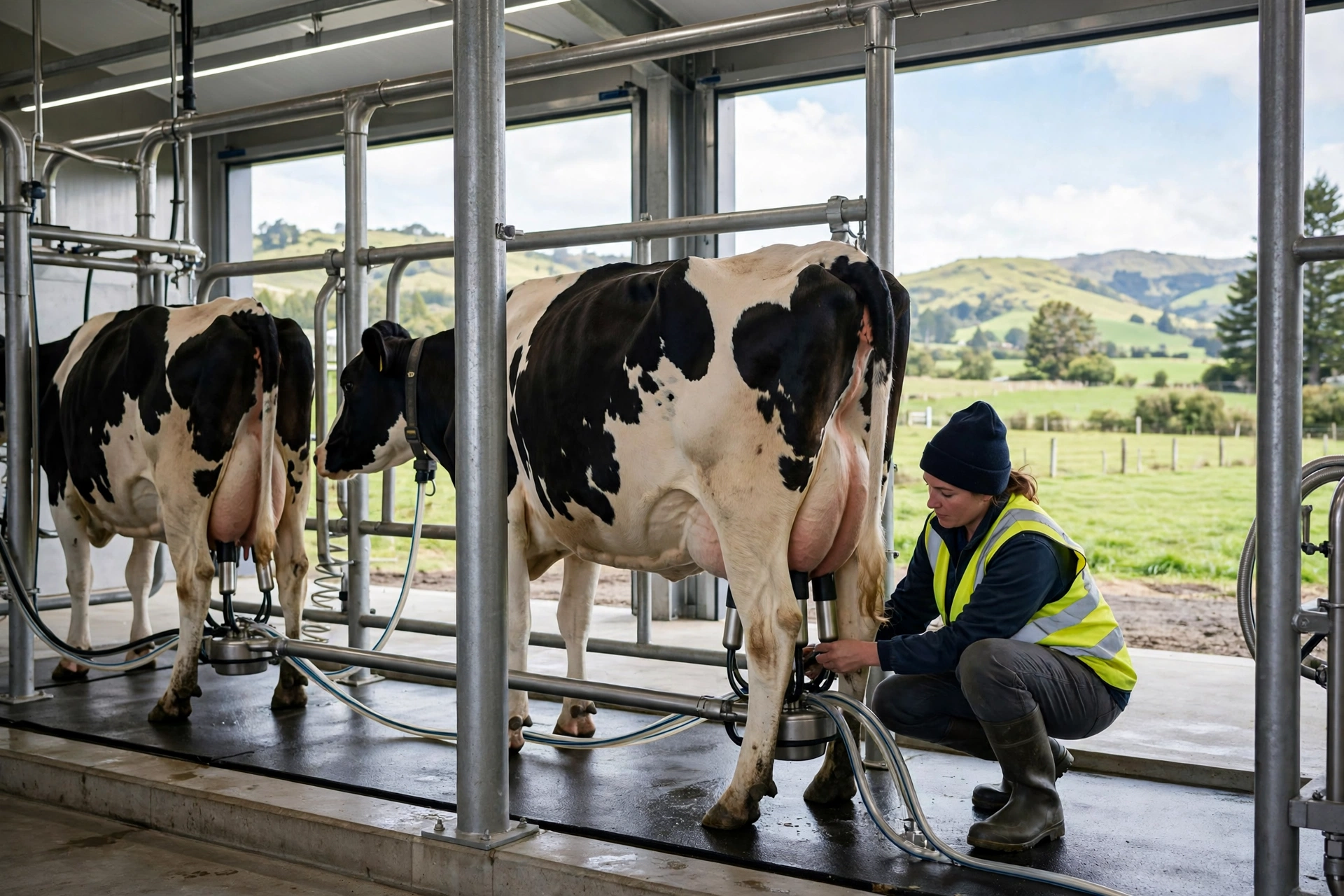
A dairy farm worker in New Zealand might work as a farm assistant, a herd manager, or a dairy farm manager, depending on experience. Titles change, but the core work is similar: care for the cows, keep the milking shed running, and manage pasture.
A normal day can include milking twice a day, feeding stock, moving cows between paddocks, checking animal health, cleaning the milking shed, and recording milk production. Calving season is the busiest time, with long days and night checks.
You will usually work in a small team with a farm manager or farm owner. You need to be on your feet most of the day, work outdoors in all weather, and follow safety rules around animals, machinery, and chemicals. Employers notice reliability most, and many entry level roles train you on the farm.
Many dairy farms are in rural areas and the job often comes with a farm house, so ask what the housing is, what it costs, and whether it is included before you accept.
Where to find real dairy farm jobs in New Zealand
Start with the places farmers actually use: Seek New Zealand and Farm Source Jobs first, then Trade Me Jobs and the careers pages of large dairy companies.
On Seek New Zealand, search for “dairy farm assistant”, “herd manager”, or “dairy farm worker”, and set the location to the region you can work in. Do the same on Farm Source Jobs, which lists dairy roles from farms across New Zealand. A listing from this week is far more useful than one from three months ago.
A real listing has an employer or farm name, a clear location, a description of the duties, and a way to apply through the portal or the employer website. If a post has no employer name, no location, and only a phone number or messaging contact, treat it with caution. Save it, note the employer, and check the same role on Seek or Farm Source Jobs before you reply.
What employers usually ask for
Requirements change from listing to listing, so always read the listing itself. In general, most dairy farm listings ask for:
Entry level farm assistant roles may say no experience is needed and training is provided. Herd manager and farm manager roles ask for real dairy experience, often two or more seasons. If you have no dairy experience, say what you have done, like farm work or animal care, and give one person who can confirm you are reliable.
Work rights in New Zealand. You must have a visa that allows you to work before you can start. A job offer does not give you work rights on its own. Check your visa conditions first, on the official Immigration New Zealand website.
Dairy work is physical and the hours are long, especially at calving. You will work early mornings, weekends, and in rain and cold. If the listing says a roster with early starts, it means that.
Farm work often needs a full driver licence, and some roles ask for experience with tractors, farm bikes, or quad bikes. Check the listing, do not assume.
Employers expect you to notice when a cow is sick or lame, follow milking hygiene, and work safely around large animals and machinery. Some roles ask for a first aid certificate, while others provide training.
Pay varies by employer, region, and role, and by whether accommodation is included. This guide gives no pay figure, because any figure here would be wrong for your region or out of date. Check how pay is described in the listing, and ask at interview if it is not clear.
The visa question, honestly
Dairy farm work is one of the few farm roles where employer support for a visa is genuinely possible in New Zealand, but it is not guaranteed. Some accredited dairy employers can support a work visa for an experienced worker, usually for herd manager and farm manager roles. Entry level farm assistant roles are much less likely to come with visa support.
The honest position is this. If you already have dairy experience and a farmer wants to hire you, ask whether the employer is accredited and which visa they would support, and check the details on the Immigration New Zealand website. If a post promises a dairy visa for anyone, with no experience needed and no employer named, do not trust it. Do not pay anyone who says they can arrange a New Zealand dairy work visa for a fee before you have a written offer from a real employer.
If you are already in New Zealand on a visa that allows work, check your work conditions and apply through Seek or Farm Source Jobs.
How to apply for dairy farm jobs in New Zealand, step by step
Step 1: Get your documents ready
Have these ready in a folder: a short CV of one to two pages, proof of your right to work, your driver licence details, and one or two references, after asking them first. If you have dairy experience, list the farms, the herd size, and the seasons you worked, since farmers read that first.
Step 2: Search properly on Seek and Farm Source Jobs
Pick one region and one level of role, for example farm assistant in Waikato or herd manager in Canterbury. Search that phrase, filter by the last 14 days, and read 10 listings carefully. Note which ones ask for experience and whether accommodation is included. Apply to 3 to 5 that really fit, not 30 that do not.
Step 3: Write a short, specific application
In three or four lines, say what role you are applying for, where you can live and work, what experience you have, and when you can start. Attach your CV as a PDF and check your phone and email are correct.
Step 4: Prepare for a short interview
Many roles have a short interview by phone or video call, and sometimes a farm visit or a working interview. Be ready to answer: Have you done dairy work before? What size herd have you worked with? Can you milk, feed, and move stock? What hours can you work? Ask your own questions too: What is the herd size? What is the roster? What is the accommodation? Who is my manager? What training will I get? How is pay set out?
Step 5: Check the offer before you accept
Get the offer in writing. It should name the employer, the job title, the location, the hours, the roster, and how pay and accommodation are arranged. Do not pay for the job. A real employer does not ask you to pay a fee before a written offer. If someone asks for money to “reserve” a job, stop and walk away.
What to avoid when looking for dairy farm jobs in New Zealand
Never pay to apply. Skip any job with no employer name you can find online. Treat promises such as “no experience, no visa check, start tomorrow, sponsorship guaranteed” with suspicion. Keep your passport copy and bank details out of a first chat message. Before you accept a farm job, make sure you know the roster, the accommodation, and the pay.
Frequently asked questions about dairy farm jobs in New Zealand
Do I need experience to get a dairy farm job in New Zealand? It depends on the role. Farm assistant roles may say training is provided. Herd manager and farm manager roles ask for real dairy experience, often two or more seasons. Farmers read your farm history first.
Do dairy farm jobs in New Zealand offer visa sponsorship? Some accredited dairy employers can support a work visa for an experienced worker, usually for herd manager and farm manager roles. Entry level roles are much less likely to come with visa support. Sponsorship is never guaranteed.
What are the hours on a dairy farm? Long, especially at calving. Milking is usually twice a day, starting early, and the roster often includes weekends. The listing should describe the roster. If it does not, ask before you accept.
Final thoughts before you apply
Dairy farm jobs in New Zealand can be a solid career for people who like outdoor work, animals, and early mornings. Search on Seek and Farm Source Jobs, read the listing, ask about the roster and the housing, and check the offer before you accept. That is how you find a real dairy farm job in New Zealand and avoid the fake ones.
Related guides
- Farm Manager Jobs in Southland, New Zealand: https://job804.com/farm-manager-jobs-in-southland-new-zealand-what-employers-look-for-and-how-to-apply/
- Cleaner Jobs in New Zealand 2026: https://job804.com/cleaner-jobs-in-new-zealand-2026/
- Fruit Picking Jobs in Australia 2026: https://job804.com/fruit-picking-jobs-in-australia-2026/
Disclaimer
Job804 shares job information and practical guides to help you search and apply. Job804 is not an employer, not a recruitment agent, and does not guarantee a job, an interview, or a visa. Job details, hours, and requirements are set by the employer in the listing. Always check the live listing on Seek, Farm Source Jobs, or the employer official website, and check visa conditions on the official immigration website before you apply or pay for anything. Never pay for a job offer.
