
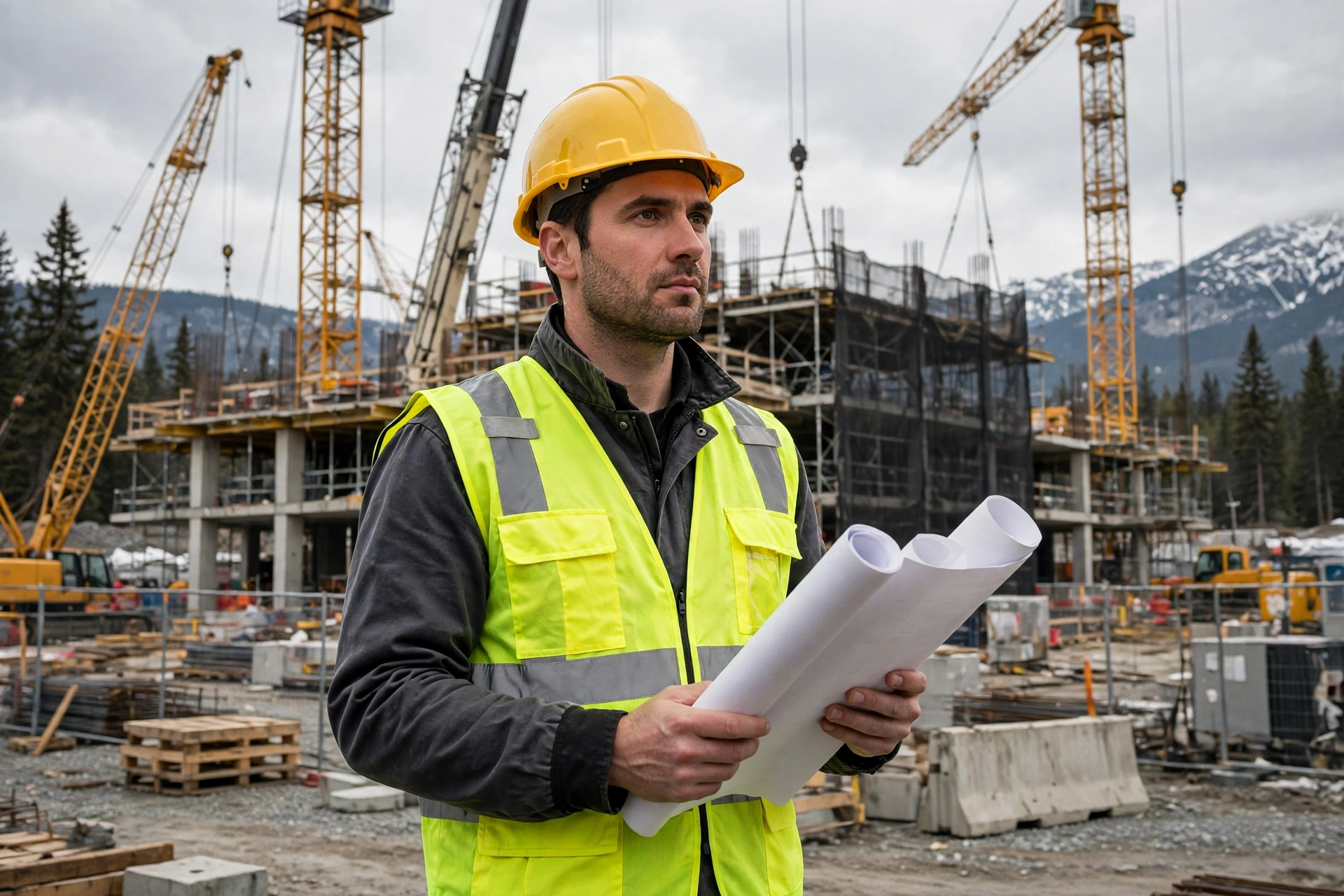
Introduction to construction worker jobs in Canada
Construction worker jobs in Canada cover general labourers, carpenters, concrete workers, and skilled trades on building sites. The work is physical, outdoor, and team based. Some roles need no experience, and some need a trade ticket. In this guide, we explain what the work looks like, where to find real listings, what employers usually ask for, and how the visa question works.
What construction worker jobs in Canada look like
A general labourer on a construction site does the work that keeps the site moving. The day can include carrying materials, cleaning up, digging, helping tradespeople, and setting up safety barriers. You follow instructions from the site supervisor, and you work in all weather. The work is physical. You are on your feet for most of the shift, lifting, bending, and repeating tasks with care.
A carpenter builds and repairs wooden structures, frames walls, and fits doors and windows. A concrete worker pours, levels, and finishes concrete. An ironworker fits steel. Each trade has its own skills, and each one needs training. Many tradespeople in Canada hold a Red Seal endorsement, which is a national standard for skilled trades.
Construction work in Canada is seasonal in many places. In winter, outdoor work slows down in the cold provinces. In summer, sites run long hours. Some workers move between provinces for big projects. The hours can be long, and weekend work is common when a project is behind schedule.
Safety is not optional on a construction site. You will be shown how to use tools, how to lift safely, what protective gear to wear, and what to do in an emergency. That gear includes a hard hat, steel cap boots, gloves, and a high visibility vest. Some of it is provided by the employer. If a site asks you to work without an induction or safety gear, that is a warning sign.
Where to find real construction worker jobs in Canada
Start with the job portals employers actually use: Job Bank, the official Government of Canada job site, and Indeed Canada. On Job Bank, search for “construction worker” or “general labourer” and set the province you can work in. On Indeed Canada, do the same. Filter by the last 7 days, because a listing from this week is far more useful than one from three months ago.
In addition, large construction companies list directly on their own careers pages. If you see a company name on a job portal, look for its own website too. Trade unions in Canada also list work for members, and some unions run apprenticeship programs for people starting in a trade.
A real listing has an employer name, a clear location, a description of the duties, the hours, and a way to apply. If a post has no employer name, no location, and only a phone number or messaging contact, treat it with caution.
What employers usually ask for in construction worker jobs in Canada
Requirements change from listing to listing, so always read the listing itself:
Physical fitness. Construction work means standing, walking, bending, and lifting for most of the shift. Be honest with yourself about whether you can do the work safely.
Safety tickets. Many sites ask for safety training before you start. In Ontario, working at heights training is common. WHMIS training, which covers hazardous materials, is asked for on many sites. Some employers provide this training after you start.
A trade ticket, for skilled roles. Carpenters, electricians, and plumbers usually need a trade qualification. In Canada, the Red Seal endorsement shows a tradesperson meets the national standard. General labourer roles usually do not need a ticket.
A driving licence. Some sites are outside the city, and you need a car to get there. The listing will say so if it is needed.
Reliability and availability. Sites run on schedules. If the listing says early starts and weekends, it means that. Apply only if you can work those hours.
Basic English or French. Enough to understand instructions, read safety signs, and talk to your supervisor.
However, pay varies by province, by trade, and by whether the role is full time or part time. This guide gives no pay figure, because any figure here would be wrong for your province or out of date. Check the listing, and ask at interview if it is not clear.
The visa question for construction worker jobs in Canada, honestly
Construction worker jobs in Canada are often talked about as a way to move to Canada. Here is the honest picture. Some construction trades are in demand, and some employers can support a work permit, but that depends on the exact trade and the immigration rules at the time. General labourer roles are harder to sponsor than skilled trades with a Red Seal.
In fact, most construction roles are for people who already have the right to work in Canada. Some people work in construction on a Working Holiday visa. Others are already in Canada on a visa that allows work. Do not trust any post that promises visa sponsorship for a construction job without naming the visa, the employer, and the official source. Do not pay anyone who says they can arrange sponsorship for a fee before you have a written offer. Visa applications go through the official immigration channel, and the fees and conditions are set by Immigration, Refugees and Citizenship Canada, not by a person in a chat message.
How to apply for construction worker jobs in Canada, step by step
Step 1: Get your documents ready
First, have these ready in a folder: a short CV of one to two pages with your name, contact details, city, and a short line about the construction work you can do; proof of your right to work; your safety tickets if you have any; and one or two references, like a previous employer or supervisor.
Step 2: Search properly on Job Bank and Indeed Canada
Next, pick one province and one type of construction work, for example general labourer in Alberta. Search that phrase, filter by the last 7 days, and read several listings carefully. Apply to 3 to 5 that really fit, not 30 that do not. Save the search and set an alert so new listings come to you.
Step 3: Write a short, specific application
In three or four lines, say what role you are applying for, where you live, and what experience or tickets you have. For example: “I am applying for the general labourer role in Toronto. I have one year of site experience and I hold a Working at Heights certificate.” Attach your CV as a PDF named “Your-Name-Construction-Worker-CV.pdf”.
Step 4: Prepare for a short interview
Also, many construction roles have a short interview by phone or in person. Be ready to answer: Have you worked on a site before? What tickets do you hold? Can you work early starts and weekends? Ask your own questions too: What are the exact hours? Is safety gear provided? How is pay set out?
Step 5: Check the offer before you accept
Finally, get the offer in writing. It should name the employer, the job title, the location, the hours, and how pay is arranged. If you only have a chat message with no employer name, ask for the offer by official email or through the job portal. Do not pay for the job.
What to avoid with construction worker jobs in Canada
Never pay to apply. Do not apply to a job with no employer name you can find online. Be wary of posts that say “no experience, no visa check, start tomorrow, sponsorship guaranteed”. Also, do not share your passport copy or bank details in a first chat message. And do not apply for a construction role in a province you cannot reach.
Final thoughts on construction worker jobs in Canada
Construction worker jobs in Canada suit people who like steady, physical work with a clear routine and a team around them. Overall, the best way in is through a real listing on Job Bank or Indeed Canada, with a named employer and an offer in writing. In addition, check the listing, ask about tickets and safety gear, and check your visa conditions on the official immigration website.
Construction worker jobs in Canada: frequently asked questions
Do I need experience to get a construction job in Canada? Not always. Many general labourer roles say training is provided. Experience helps, especially for skilled trades, but reliability and availability often matter more for a first site role.
What is a Red Seal endorsement? It is a national standard for skilled trades in Canada. It shows a tradesperson meets the standard across provinces. General labourer roles do not need it.
Do construction jobs offer visa sponsorship? Some skilled trades can be sponsored, but it depends on the exact trade and the rules at the time. General labourer roles are harder to sponsor. Always check the official immigration source and the actual listing.
Is construction work seasonal in Canada? In many provinces, outdoor work slows down in winter and picks up in summer. The listing should say whether the role is year round or seasonal.
Related guides
- Farm Jobs in Canada 2026
- Caregiver Jobs in Canada 2026
- How to Find Real Jobs on Seek and Indeed and Avoid Fake Job Offers
Disclaimer
Job804 shares job information and practical guides to help you search and apply. Job804 is not an employer, not a recruitment agent, and does not guarantee a job, an interview, or a visa. Job details, hours, and requirements are set by the employer in the listing. Always check the live listing on Job Bank, Indeed, or the employer official website, and check visa conditions on the official immigration website before you apply or pay for anything. Never pay for a job offer.
Last checked: 9 November 2026.
