
Introduction
Housekeeping jobs in Germany are steady, hands on roles that suit people who like tidy, organised work and take pride in a room that looks right. Housekeepers work in hotels, guesthouses, hospitals, offices, and private homes across the country, from busy city hotels in Berlin and Munich to small family run guesthouses in the countryside.
This guide explains what housekeeping work in Germany actually involves, what employers look for, where to find real listings, and how to apply safely. It is written for job seekers, and it does not promise a job, a visa, or sponsorship.
What housekeeping work in Germany actually looks like
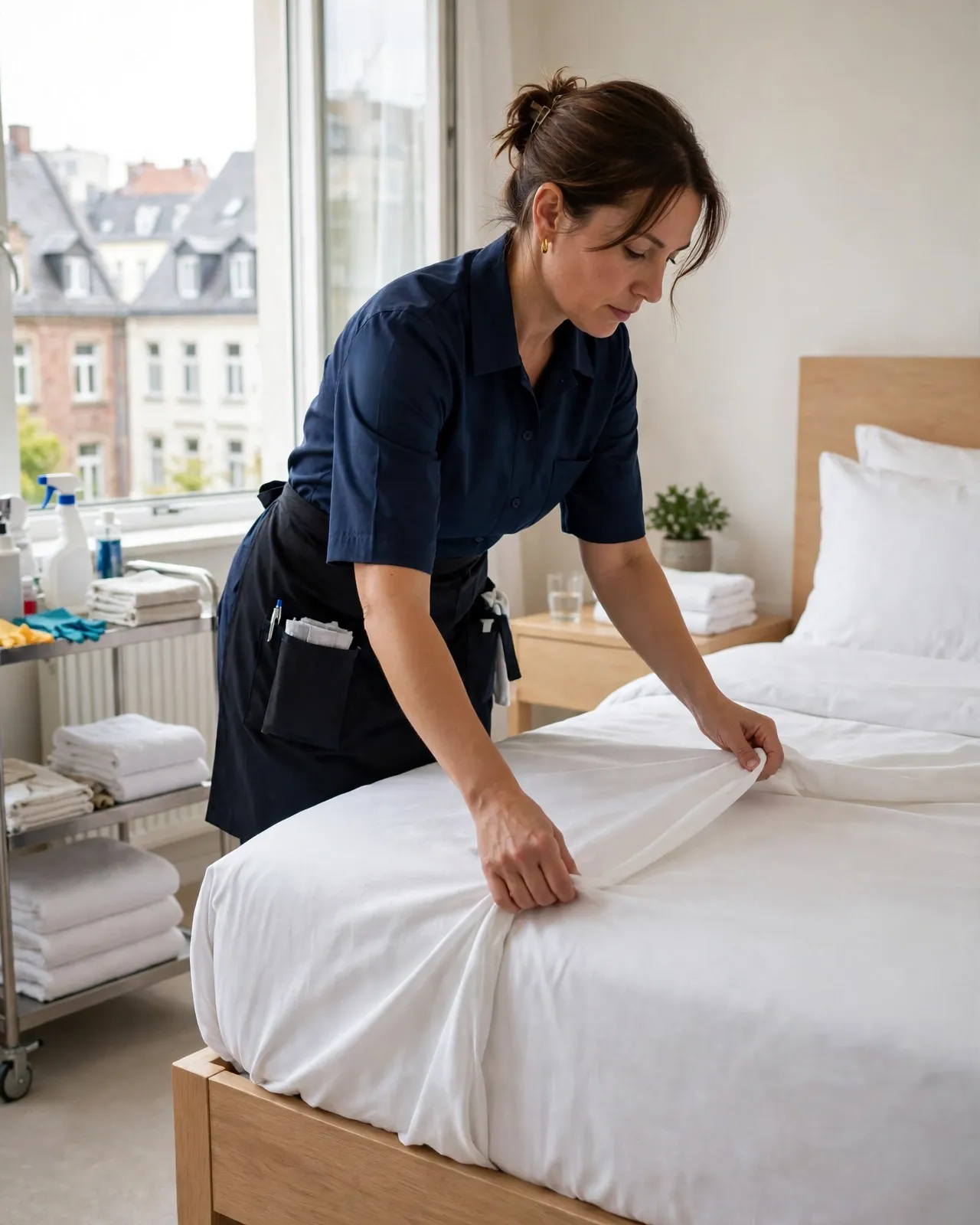
A housekeeper’s day starts early, usually before the first guests check out. Hotel work can mean cleaning and remaking rooms, changing linen, vacuuming floors, cleaning bathrooms, and restocking towels and toiletries. Guesthouse work is similar but smaller, and you may also help with breakfast service or laundry. Hospital and office work focuses on cleaning common areas, wards, and washrooms to a high standard.
The work is physical and it is fast. You are on your feet for the whole shift, lifting mattresses, pushing trolleys, and moving between rooms on a tight schedule. A good housekeeper works in a set order, room by room, so nothing is missed and the next guest can check in on time. The hardest part is keeping up the standard when the hotel is full and the list of rooms is long.
Most housekeeping roles are shift work. Morning shifts are common, and so are weekend shifts, because hotels are busiest when guests are travelling. Some hotels offer part time work, which suits people who want hours that fit around study or family. Ask the employer how the roster is set before you accept a role.
Where to find real housekeeping jobs in Germany
The best place to start is Indeed Germany, which carries the most housekeeping listings across the country. Search for housekeeping or housekeeper and the city you want to work in, and read the listing in full before you apply. StepStone is the second place to check, and it often lists hotel and facility roles from larger employers.
Large hotel chains hire housekeepers directly through their own careers pages. Hotels in Berlin, Munich, Hamburg, and Frankfurt list housekeeping roles by property, and their websites show whether the role is in rooms, laundry, or public areas. Smaller guesthouses often advertise on local job boards, and some still hire through a sign in the window or a recommendation from current staff.
When you search, use the city as well as the role. Housekeeping jobs in Berlin are different from housekeeping jobs in a small town in Bavaria. City hotels offer more roles and more competition. Smaller towns may offer fewer roles, but they may also lead to steadier work with one hotel over a long time.
What employers usually ask for
The first thing an employer asks for is reliability and attention to detail. Previous housekeeping or cleaning experience helps, but many hotels hire juniors and train them on the job. If you have worked in cleaning, hospitality, or any role where tidiness mattered, mention it, because those skills transfer directly.
Employers also look for good German or English communication skills, depending on the hotel and the guests. In larger city hotels, English is often enough to start, but German helps a lot with colleagues and with guests. Some hotels ask for a basic German level in the listing, so check it before you apply and be honest about your level.
Some roles ask for experience with cleaning chemicals and equipment, and some provide training after you start. A driving licence is rarely needed for hotel housekeeping, but it can help for private home roles that involve travel between houses. Previous experience helps, but a willing and tidy worker who turns up on time is what most hotels want most.
How pay is described in a listing
Pay for housekeeping jobs in Germany is usually listed per hour. The rate changes by city, by the type of hotel, and by your experience. A housekeeper in a large Munich hotel is usually paid more than a housekeeper in a small guesthouse in a regional town. Weekend and public holiday work usually pays more than a standard weekday.
Read the listing for how pay is described. A real listing states the hourly rate, or it says the rate is discussed at interview. A listing that promises very high pay for very little work, with no employer name and no location, is a warning sign. Never pay for a job, a certificate from an unknown provider, or a uniform before you have a written offer.
The visa question, honestly
Housekeeping work is not usually a sponsored role in Germany. Most hotels hire people who already have the right to work in Germany, such as EU citizens, residents, and people on work visas that allow full time work. A housekeeping role on its own rarely leads to sponsorship, and a hotel or agency that promises it easily should be checked carefully.
If you are outside Germany and the EU and want to work in housekeeping, be careful with anyone who promises you a housekeeping job and a visa for a fee. A real employer never asks you to pay for a job or a visa. Check the official immigration website for the visa you would need, and check that the employer is real before you send documents or pay anything. Germany has specific rules for work visas, so read them on the official website.
How to apply, step by step
Step 1: Get your documents ready
Gather a short resume that lists your cleaning or hospitality experience, the places you have worked, and any languages you speak. Have references from a previous hotel manager or supervisor ready. Keep your resume to one page if you are new to the industry.
Step 2: Search properly on Indeed and StepStone
Search Indeed Germany and StepStone for housekeeping and the city you want to work in. Read each listing in full. Check the employer name, the location, the type of hotel, and the shift pattern. Apply only to listings that name the employer and the hotel.
Step 3: Write a short, specific application
Keep your application short and personal. Say who you are, what cleaning or hotel experience you have, and when you are available. Do not copy the job ad word for word. Mention something specific from their listing, such as the type of hotel or the shifts, so the hotel can see you read it properly.
Step 4: Prepare for a short interview
Housekeeping interviews are usually short and practical. Expect questions about how you would clean a room in order, what you would do if a guest left something behind, and how you would handle a busy day with many check outs. Some hotels ask for a trial shift. Treat it as a real shift, turn up on time, and work tidy.
Step 5: Check the offer before you accept
Read the offer letter before you sign. Check the pay, the hours, the shift pattern, and whether a uniform is provided. Check whether the role is full time or part time, and what that means for your hours. If anything in the offer is different from what the listing promised, ask about it before you sign.
A tidy room is the job
In housekeeping, a tidy room is the job. Guests judge a hotel by the room they walk into, and a clean, fresh, well made room is what brings them back. A housekeeper who checks the bathroom, the bed, the floor, and the small details before leaving a room earns good reviews. A housekeeper who rushes and misses the details costs the hotel its reputation.
Build good habits. Work in the same order in every room. Check every surface. Report anything broken instead of hiding it. Those small habits are what turn a new housekeeper into a housekeeper a hotel manager trusts with the busy days.
What to avoid
Do not apply to a listing that has no employer name, no location, and only a phone number or messaging app. Never pay for a job, a certificate, a uniform, or a visa before you have a written offer. Avoid sending your passport number or bank details to an employer you have not verified. Turn down a role that asks you to work without a written agreement on pay and hours. If a listing promises very high pay for very little work, walk away.
Frequently asked questions about housekeeping jobs in Germany
Do I need experience to work in housekeeping in Germany?
Not always. Many hotels hire juniors and train them on the job. Experience in cleaning or hospitality helps, but reliability and attention to detail matter more.
Do I need to speak German?
It helps a lot, especially with colleagues and guests, but larger city hotels often accept English to start. Check the listing for the language level asked for, and be honest about your level.
How much do housekeepers earn in Germany?
Pay is usually listed per hour, and it changes by city, by the type of hotel, and by your experience. Check the live listing for the rate, because it changes from employer to employer.
Can I work in housekeeping in Germany without a work permit?
No. You need the right to work in Germany. Housekeeping on its own rarely leads to sponsorship, so check the official immigration website for the visa you would need.
What is the difference between housekeeping and cleaning?
Housekeeping usually means cleaning hotel rooms and guest areas to a set standard, including making beds and restocking supplies. Cleaning can cover offices, hospitals, and other buildings, and the tasks are often different.
Related guides
Job804 shares job information and practical guides. Job804 is not an employer, not a recruitment agent, and does not guarantee a job, an interview, or a visa. Always check the live listing on Indeed Germany or StepStone, and check visa conditions on the official immigration website before you apply or pay for anything. Never pay for a job offer.
Last checked: 18 November 2026. Check the live listing before you apply.
