
Introduction
Teaching jobs in Pakistan suit people who like working with children and young people and want steady, respected work. Teachers work in government schools, private schools, colleges, and academies in Lahore, Karachi, Islamabad, Rawalpindi, Faisalabad, Multan, and smaller towns, teaching subjects from primary classes up to college level.
This guide explains what teaching work in Pakistan actually involves, where teaching jobs are advertised, what schools and departments look for, and how to apply safely. It is written for job seekers in Pakistan, and it does not promise a job or a posting.
What teaching work in Pakistan actually looks like
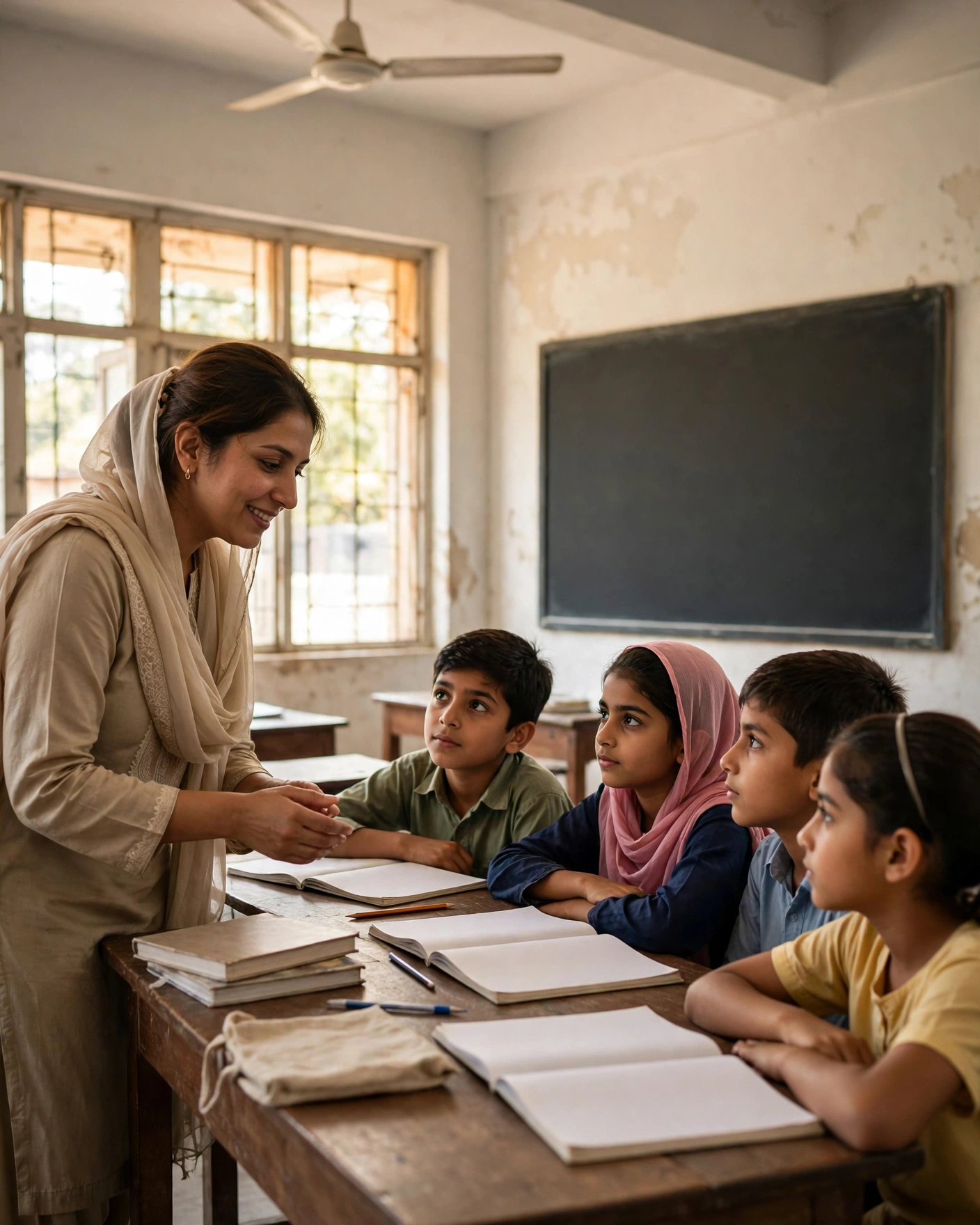
A teacher day starts early, with preparing the lesson and reaching the school before the first bell. Government schools usually run five or six periods of teaching, with marking and register work in between. Private schools are similar, with more focus on lesson plans, parent meetings, and school events. Colleges run a lighter timetable, with more time for preparation and checking papers.
The work changes with the level you teach. Primary teachers teach one class through most subjects, and spend the day with the same children. Middle school teachers teach one or two subjects across several classes. High school teachers teach a single subject, such as English, mathematics, science, or Islamiat, to several classes a day. College lecturers teach a subject to older students, and may also set and mark exams.
Most teaching work is done in a classroom, on your feet for much of the day, talking, writing on the board, and keeping students focused. You need to be patient with slow learners, firm with a noisy class, and clear when you explain a topic. The work follows the school calendar, with summer and winter breaks, and exam seasons that are busy with papers to set and mark.
Where to find real teaching jobs in Pakistan
The best place to start is the official website of the department that is hiring. The School Education Department usually advertises government school teaching jobs in Punjab, and the Punjab Public Service Commission, known as PPSC, often does the hiring. FPSC, known as the Federal Public Service Commission, advertises jobs in federal government schools and colleges. Provincial commissions and education departments advertise jobs in other provinces.
Newspapers still carry most government teaching ads. The Express, Jang, Dawn, and Nawa-i-Waqt publish the official advertisements, and the same ads appear on the department website and on the commission website. Read the ad in full before you apply, and check the post name, the number of posts, the district, the qualification needed, and the last date. The official website is the only place to trust for the last date and the fee.
Private school teaching jobs are advertised differently. Large private school chains list vacancies on their own websites and on job portals such as Rozee.pk and Indeed Pakistan. Smaller schools put a notice on the school gate or in a local newspaper. When you apply to a private school, check that the school is registered and that the job is real before you send your documents.
When you search, use the district as well as the subject. Teaching jobs in Lahore have more competition and more private schools, while smaller districts may have fewer applicants for the same post. Check whether the ad mentions a written test, because most government teaching posts need one.
What employers usually ask for
The first thing a school or department asks for is the right qualification for the subject. A primary teacher usually needs a bachelor degree, and a B.Ed or M.Ed is asked for in many government posts. A high school teacher needs a master degree in the subject, and a college lecturer needs a master degree with good marks, and sometimes an MPhil. The ad always states the exact qualification, so read it carefully and match it to your own degree.
The second thing is a teaching certificate or training where the post needs it. A B.Ed is the standard teaching qualification in Pakistan, and many government ads ask for it. Some posts accept a degree in the subject with teaching experience instead. A short teaching course helps too, and private schools often value a teacher who has done a course in classroom management or child psychology.
Employers look for a domicile of the district or province where the post is based, and they will ask to see it before the interview. They look for a valid CNIC, and for government posts they check your age against the limit in the ad, with relaxation for government servants and for some categories as the rules allow. Previous teaching experience helps a lot, and a reference from a past school head is worth more than a long resume.
How pay is described in a listing
Pay for teaching jobs in Pakistan is usually described by the pay scale for government posts, or as a monthly salary for private schools. A government teaching post states the basic pay scale, such as BPS-14, BPS-16, or BPS-17, and the ad says which scale the post carries. The exact salary depends on the scale and the allowances, and the official pay scale is published by the government. Check the ad for the scale, and check the official pay rules for what it means in practice.
Private school pay is different, and it changes by the school, the city, and your experience. A real private school ad states the salary range or says it is discussed at interview. A large private school chain usually pays more than a small school in a town, and a teacher with experience in a known school can ask for more. Read the ad for how pay is described, and ask about it at interview before you accept.
A listing that promises very high pay for very little work, with no school name and no address, is a warning sign. Never pay for a job, a test, a certificate from an unknown provider, or a posting before you have a written offer. A real school or department pays you for your work, and it never asks you to pay to start teaching.
Eligibility and the official process, honestly
Teaching jobs in Pakistan are for people who live in Pakistan and hold Pakistani citizenship or a valid domicile, so there is no visa question for a local applicant. The department and the commission run the process, and it follows the rules in the ad. You start with an online application, pay a fee through the bank or mobile banking as the ad says, take a written test, and attend an interview if you pass the test. Test and interview marks decide the merit list, and the department gives the posting on merit.
The rules depend on the province, the department, and the post, and they change from time to time. The ad is the only reliable source for the age limit, the qualification, the domicile, and the last date. If a person or an academy promises you a teaching post for a fee, that is a scam. A real department never asks for money to give a posting, and no one can speed up a merit list for a fee. Check the official commission website for the result, and check that the ad you are applying to is on the official site before you send documents or pay anything.
How to apply, step by step
Step 1: Get your documents ready
Gather your degrees, your B.Ed or M.Ed if you have one, your domicile, your CNIC, and your experience certificates from any school where you have taught. Keep attested copies ready, and keep the originals safe. Have passport size photographs ready, and a short resume that lists your subjects, your classes, and your experience.
Step 2: Find the real ad on the official website
Search the official website of the department or the commission for the post you want. Read the ad in full. Check the post name, the district, the qualification, the age limit, the fee, and the last date. Apply only to ads that appear on the official website or in a known newspaper with the department name on it.
Step 3: Apply online and pay the fee the right way
Fill the online form on the official website, and check every entry before you submit it. Pay the fee only through the bank or mobile banking method the ad states, and keep the receipt. Note the tracking number or roll number slip the website gives you, and keep it safe for the test day.
Step 4: Prepare for the test and the interview
Study the subject you will teach and the general knowledge the test usually covers. Practice past papers from the same commission if you can find them on the official site. Prepare a short lesson you can teach in the interview, and be ready to answer questions about your subject and about classroom discipline. Answer with examples from your own teaching, and be honest about what you know.
Step 5: Check the result and the offer before you accept
Check the result on the official commission website, and wait for the official letter or call. Read the appointment letter before you accept. Check the post, the school, the district, the pay scale, and the joining date. If anything is different from what the ad promised, ask the department before you join.
The test and interview, what to prepare
The written test is the part most applicants worry about, and it is the part that decides who gets to the interview. It usually covers the subject you will teach, general knowledge, and basic English and mathematics. Your subject is the biggest share, so revise it from the books you studied at university. Past papers help you see the pattern, and the commission website sometimes publishes the syllabus for the post.
The interview is shorter, and it checks how you speak, how you explain, and how you handle a classroom. The panel may ask you to teach a short topic, so prepare one topic you know well and can explain in ten minutes. Answer with examples from what you would actually do, not with a memorised line.
Time matters. Start preparing when the ad appears, not after the test date is announced. A few weeks of steady study is better than a few days of cramming, and teachers who prepare early and apply on time are the ones who reach the merit list.
What to avoid
Skip an ad that has no department name, no official website, and only a phone number or messaging app. Never pay for a job, a test, a posting, or a merit list place before you have a written offer. Keep your CNIC number, bank details, and original documents to yourself until you have verified the person. Ignore a person who says they can get you a government teaching post for a fee, because that is not how the system works. Send your application before the last date, because late applications are not accepted. If an ad promises a posting without a test, walk away.
Frequently asked questions about teaching jobs in Pakistan
Do I need a B.Ed to teach in a government school in Pakistan?
Many government teaching posts ask for a B.Ed, and some ask for it with a bachelor or master degree in the subject. The ad states the exact requirement, so read it and match it to your own qualification.
Where are government teaching jobs advertised in Pakistan?
They are advertised in newspapers such as Express, Jang, and Dawn, and on the official websites of the School Education Department, PPSC, FPSC, and the provincial commissions. The official website is the only place to trust for the last date.
How much do teachers earn in Pakistan?
Government pay is set by the pay scale in the ad, such as BPS-14, BPS-16, or BPS-17, and the exact amount depends on the scale and allowances. Private school pay changes by the school, the city, and your experience, so check the ad and ask at interview.
Can I teach in Pakistan without teaching experience?
You can apply for many posts without experience if you have the qualification the ad asks for. Private schools often take new teachers, and government posts are filled on test and interview merit, so experience helps but is not always needed.
What is the age limit for teaching jobs in Pakistan?
The age limit is stated in each ad, and it changes by the post and the department. Government rules allow age relaxation for government servants and for some categories, so check the ad for the exact limit.
Related guides
- Jobs in Pakistan 2026
- How to Write a CV for Cleaning, Housekeeping and Farm Jobs
- How to Find Real Seek Jobs and Avoid Fake Job Offers
Job804 shares job information and practical guides. Job804 is not an employer, not a recruitment agent, and does not guarantee a job, an interview, or a posting. Always check the live ad on the official department or commission website before you apply or pay for anything. Never pay for a job offer.
Last checked: 20 November 2026. Check the live listing before you apply.
