
Introduction
Electrician jobs in New Zealand are skilled trade roles that suit people who like hands on work, solving problems, and working in homes, businesses, and building sites. Electricians install wiring, fit lights and power points, fix faults, and keep buildings safe and working, from a house in Auckland to a farm shed in Southland.
This guide explains what electrician work in New Zealand actually involves, what licence and experience employers look for, where to find real listings, and how to apply safely. It is written for job seekers, and it does not promise a job, a visa, or sponsorship.
What electrician work in New Zealand actually looks like
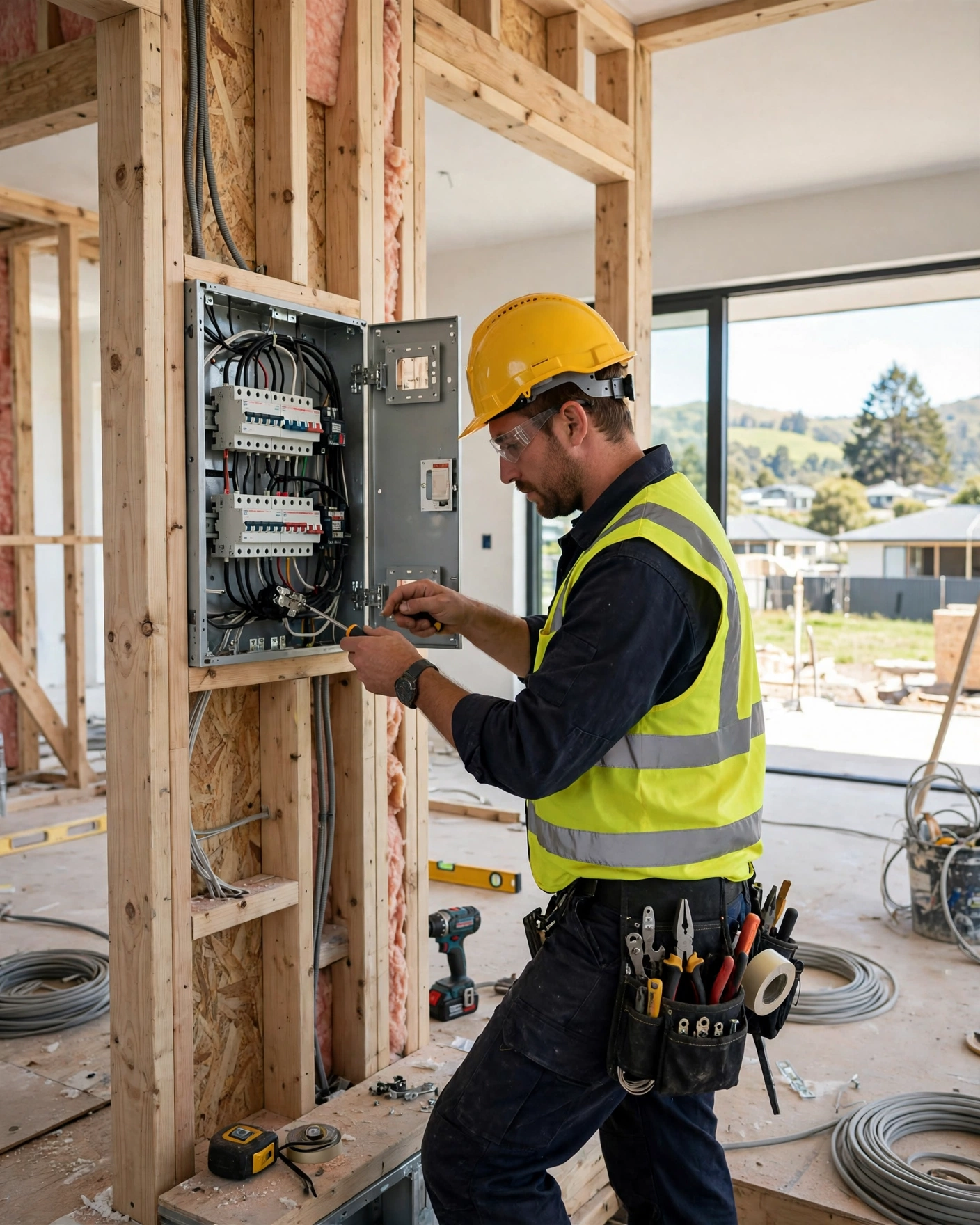
An electrician day changes with the job. Residential electricians might wire a new house, fit a switchboard, install lights, and test everything before the family moves in. Commercial electricians might work on an office, a shop, or a school, running cables, fitting fittings, and working with the builder and the other trades on site. Maintenance electricians might visit homes and businesses to fix faults, replace a switchboard, or sort out a power problem.
The work is physical and detailed. Electricians read plans, measure and cut cable, drill and fix fittings, and test circuits with meters. They work in roof spaces, under floors, and on ladders, and they need to be comfortable in tight spaces and at heights. Safety is the heart of the job, because electricity is dangerous when it is not handled properly, and a good electrician never cuts corners on testing and isolation.
New Zealand building work follows local standards, and electricians need to know them. A house built in New Zealand is wired differently from a house in many other countries, so a new electrician in the country needs to learn the local rules, the local fittings, and the local way of working. The hours are often a normal working day, with some weekend and on call work for maintenance roles.
Where to find real electrician jobs in New Zealand
The best place to start is Seek New Zealand, which carries the most trade and construction listings in the country. Search for electrician, registered electrician, or electrical apprentice, and the city or region you want to work in, and read the listing in full before you apply. Trade Me Jobs is the second place to check, and it often lists the same roles from electrical companies and builders.
Electrical companies hire electricians directly through their own websites and careers pages, and they often list several roles at once, for residential, commercial, and maintenance work. Trade recruitment agencies place electricians on short and long term roles, which can be a good way to start if you are new to a city and want to try different companies. Large building projects hire electricians through contractors, and those roles often say how long the project runs.
When you search, check what licence the listing asks for, and what kind of work it is. A registered electrician has completed the training and the exams, and can sign off work. An apprentice is still learning. Check whether the role is residential, commercial, or industrial, and whether a work vehicle is part of it.
What employers usually ask for
The first thing an employer asks for is a New Zealand electrical registration or the path to it, with a licence that matches the work. Electricians who trained overseas need to have their qualification assessed, and they may need to pass exams and complete a period of supervised work before they can register. Employers check the licence and the registration before they offer a job, and a reference from a past employer helps a lot.
The second thing is experience with the type of work in the listing. Residential electricians need to know house wiring, switchboards, and testing. Commercial electricians need to know larger jobs, cable trays, and working with builders. Maintenance electricians need to be good at finding faults fast. Employers look for people who are careful, tidy, and safe, because a messy board or a missed test is a problem.
Employers also look for a valid work visa or the right to work in New Zealand, and they will ask to see it before you start. They want electricians who are reliable, honest about their hours, and willing to work as part of a team. An electrician who turns up on time, keeps the site tidy, and tests everything before leaving gets asked back, because a building company runs on tradespeople it can trust.
How pay is described in a listing
Pay for electrician jobs in New Zealand is usually listed per hour, or as a yearly salary for a full time role. The rate changes by city, by the type of work, and by your experience and registration. A registered electrician earns differently from an apprentice, and commercial work often pays differently from residential work. A real listing states the rate clearly, or it says the rate is discussed at interview.
Read the listing for how pay is described. A listing that promises very high pay for very little work, with no company name and no city, is a warning sign. Never pay for a job, a licence, a certificate from an unknown provider, or a visa before you have a written offer. A real electrical company pays you for your work, and it never asks you to pay to start work.
The visa question, honestly
Electrician work in New Zealand is usually done by people who already have the right to work in New Zealand, such as citizens, residents, and people on work visas that allow trade work. The rules depend on your visa type, your age, and your experience, and they change from time to time. Registration is a separate question from a visa, and an overseas electrician needs to sort out both.
If you are outside New Zealand and want to work as an electrician, be careful with anyone who promises you an electrician job and a visa for a fee. A real employer never asks you to pay for a job or a visa. Check the official immigration website for the visa you would need, and check the electrical registration body for what your overseas qualification needs, and check that the employer and the company are real before you send documents or pay anything. Do not pay anyone who says they can speed up a visa for a fee.
How to apply, step by step
Step 1: Get your documents ready
Gather a short resume that lists your electrical experience, the types of work you have done, and the companies you have worked for, and add references from a past employer if you have them. Have your registration and licence ready if you hold one, along with any qualification papers. Have your work visa or proof of the right to work in New Zealand ready.
Step 2: Search properly on Seek and Trade Me Jobs
Search Seek New Zealand and Trade Me Jobs for electrician and the city or region you want to work in. Read each listing in full. Check the company name, the licence needed, the type of work, and whether a work vehicle is part of it. Apply only to listings that name the employer.
Step 3: Write a short, specific application
Keep your resume to one or two pages. Put your registration and your electrical experience at the top, and say clearly which city you can work in and when you can start. Mention the types of jobs you have done, residential, commercial, or maintenance, and the size of the projects. Do not copy the job ad word for word. Write in your own words, and be honest about your experience.
Step 4: Prepare for a practical interview
Electrician interviews are often short and practical. Expect questions about your registration, how you test a circuit, how you handle a fault, and how you keep a site safe. Some companies ask for a practical test or a trial day on site. Answer with examples from your own experience, and be honest about what you can do.
Step 5: Check the offer before you accept
Read the offer before you sign. Check the pay, the hours, the roster, the type of work, and whether a work vehicle or tools are part of it. Check whether the role is full time or part time, and what that means for your hours. If anything in the offer is different from what the listing promised, ask about it before you sign.
What to avoid
Skip any listing that has no company name, no city, and only a phone number or messaging app. Never pay for a job, a licence, a certificate, or a visa before you have a written offer. Keep your passport number and bank details private until you have verified the employer. Turn down any role that asks you to work without the visa your situation needs, or without the registration the work needs, because that is not allowed in New Zealand. If a listing promises very high pay for very little work, walk away.
Frequently asked questions about electrician jobs in New Zealand
Do I need a New Zealand licence to work as an electrician?
Yes, electricians in New Zealand need to be registered and hold a practising licence for the work they do. Overseas electricians need to have their qualification assessed and may need to pass exams and complete supervised work first.
Do I need experience to work as an electrician in New Zealand?
Most employers want previous electrical experience, and they check your registration and your references. Some companies take on apprentices, but a registered electrician role needs real experience in the trade.
How much do electricians earn in New Zealand?
Pay is usually listed per hour or as a yearly salary, and it changes by city, by the type of work, and by your registration and experience. Check the live listing for the rate, because it changes from employer to employer.
Is electrician work in New Zealand residential or commercial?
Both exist. Residential electricians work in houses, commercial electricians work in offices, shops, and schools, and maintenance electricians fix faults in both. The listing should say which one the role is.
Can I work as an electrician on a working holiday visa?
Working holiday visa holders often take trade and construction work, but electrical work needs registration, so check the conditions of your visa and the registration rules first.
Related guides
Job804 shares job information and practical guides. Job804 is not an employer, not a recruitment agent, and does not guarantee a job, an interview, or a visa. Always check the live listing on Seek New Zealand or Trade Me Jobs, and check visa conditions on the official immigration website before you apply or pay for anything. Never pay for a job offer.
Last checked: 21 November 2026. Check the live listing before you apply.
