
Introduction
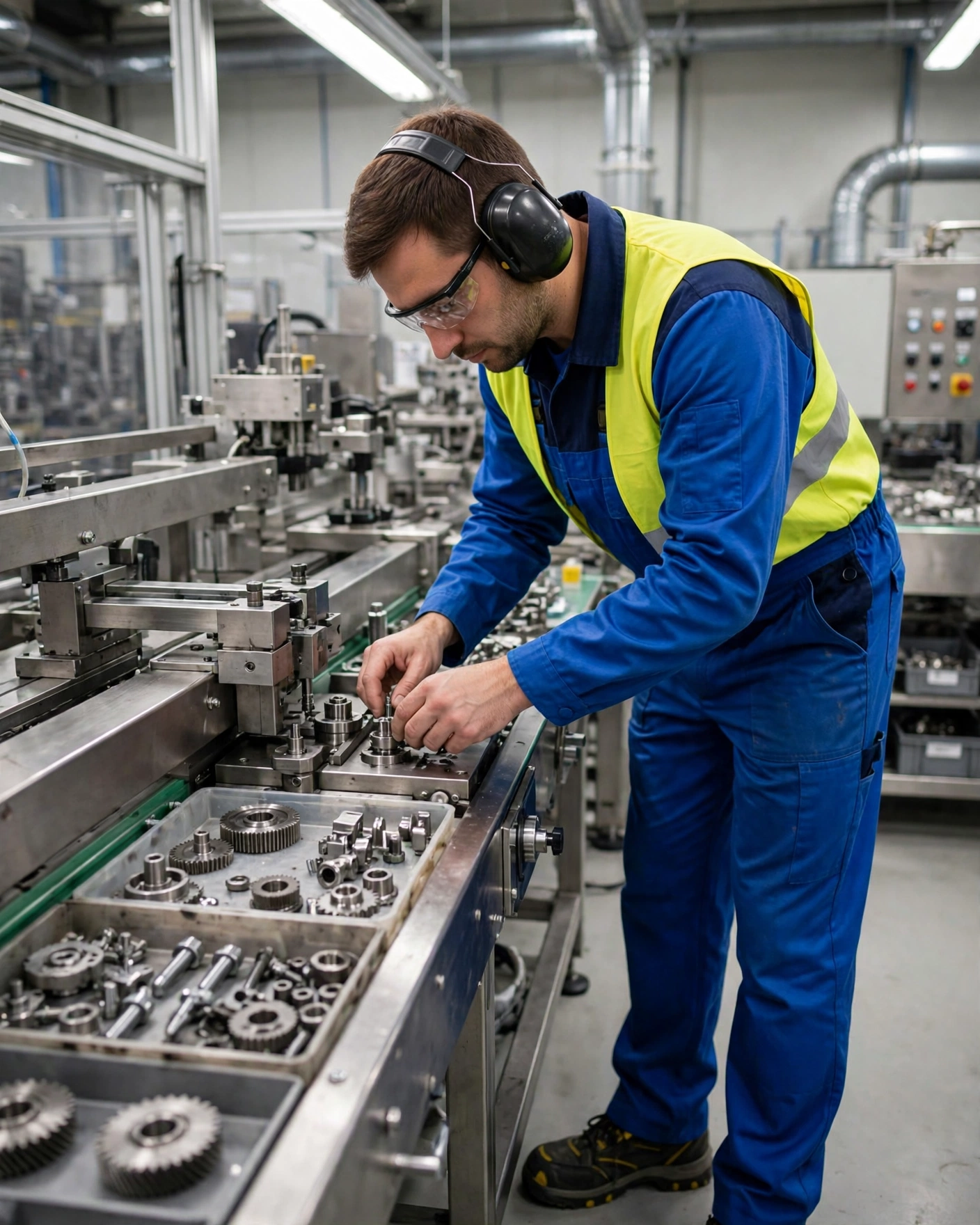
Factory jobs in Germany are hands on production roles. They suit people who like steady, organised work and do not mind shift work in a clean, modern plant. Factory workers run machines, assemble parts, pack products, and check quality. They work in car plants, food factories, electronics plants, and warehouses across Germany.
This guide explains what factory work in Germany actually involves. It covers what employers look for, where to find real listings, and how to apply safely. It is written for job seekers, and it does not promise a job, a visa, or sponsorship.
What factory work in Germany actually looks like
A factory day starts with a shift handover and a check of the line. The worker might feed parts into a machine or assemble a product on a line. They might pack finished goods into boxes or check products for faults. The work is often repetitive, and the pace is set by the line. A worker needs to be steady, careful, and able to keep the same quality all day.
The work changes with the factory. Car parts plants involve assembling, fitting, and checking parts, often with machines and robots nearby. Food factories focus on packing, labelling, and checking dates, with strict hygiene rules. Electronics plants need small, detailed assembly, with a clean bench and a steady hand. Logistics halls mean picking, packing, and loading, with a scanner and a trolley.
German factories are known for being organised and safe. Workers wear safety shoes, and in some areas a helmet, gloves, or ear protection. The hours are often shift work, with early, late, and night shifts. Weekend work is common in larger plants. Breaks are scheduled, and the team works to a plan. Turn up on time, follow the safety rules, and keep quality high. The team will want you beside them.
Where to find real factory jobs in Germany
The best place to start is Indeed Germany, which carries a lot of factory and production listings. The Federal Employment Agency job board, known as the Jobboerse of the Bundesagentur fuer Arbeit, is the other place to check. Search for factory worker, production worker, or production assistant, and the city or region you want to work in. Read the listing in full before you apply.
Large factories hire workers directly through their own websites and careers pages. They often list several roles at once. Temporary work agencies, known as Zeitarbeit, place factory workers on short and long term roles. This is a common way to start in Germany. A temporary agency can be a good way to try different factories. Read the contract carefully before you sign, and check who the employer is.
When you search, check what kind of factory work the listing asks for, and what shift it is. Some roles need experience with a machine or with packing, and some are open to new workers. Check whether the role is full time or part time and what the shifts look like. Check where the factory is and how you would get there.
What employers usually ask for
The first thing an employer asks for is proof you can do physical, repetitive work. They want someone who can keep a steady pace. Factory work does not usually need a formal qualification. Employers want to see that you are fit, reliable, and careful with your hands. Previous factory, packing, or warehouse work helps a lot. A reference from a past employer is worth more than a long resume.
The second thing is attention to detail and safety. A factory worker needs to follow the safety rules, wear the right protection, and keep the line clean. In a food factory the hygiene rules are strict, and in a car parts plant the quality checks are strict. Employers look for people who can learn the process quickly and keep it up all day. A mistake on the line costs time and money.
Employers also look for a valid work visa or the right to work in Germany. They will ask to see it before you start. Language matters more in Germany than in some other countries. The safety instructions and the team talk are often in German. Some factories work in English, and the listing should say so. Learning basic German helps a lot on the floor. Be honest about your language and your availability. The factory plans its shifts around the workers it can count on.
How pay is described in a listing
Pay for factory jobs in Germany is usually listed per hour or as a monthly salary for a full time role. The rate changes by region, by the factory, and by your experience. Shift work often pays differently from day work. Night and weekend shifts carry a supplement, and the listing should say how that works. A real listing states the rate clearly, or it says the rate is discussed at interview.
Read the listing for how pay is described. A listing that promises very high pay for very little work is a warning sign. Be wary when it has no factory or company name and no city. Never pay for a job, a certificate from an unknown provider, a uniform, or a visa. Wait until you have a written offer. A real factory pays you for your work, and it never asks you to pay to start on the line.
The visa question, honestly
Factory work in Germany is usually done by people who already have the right to work in Germany. That includes citizens, residents of the European Union, and people on work visas that allow factory work. The rules depend on your visa type, your nationality, and your experience, and they change from time to time.
If you are outside Germany and the European Union and want to work in a factory, be careful. Anyone who promises a factory job and a visa for a fee is not to be trusted. A real employer never asks you to pay for a job or a visa. Check the official immigration website for the visa you would need. Check that the employer and the factory are real before you send documents or pay anything. Do not pay anyone who says they can speed up a visa for a fee.
How to apply, step by step
Step 1: Get your documents ready
Gather a short resume that lists any factory, packing, warehouse, or production work you have done. Add references from a past employer if you have them. Have your work visa or proof of the right to work in Germany ready. Bring any language certificate if you hold one.
Step 2: Search properly on Indeed and the Jobboerse
Search Indeed Germany and the Jobboerse of the Federal Employment Agency for factory worker. Search by the city or region you want to work in. Read each listing in full. Check the factory or company name, the shifts, and the type of production. Check whether the role is full time or part time. Apply only to listings that name the employer.
Step 3: Write a short, specific application
Keep your resume to one or two pages. Put your factory or packing experience at the top. Say clearly which city you can work in and when you can start. Mention the machines you have used, the products you have packed, and the shifts you can work. Do not copy the job ad word for word. Write in your own words, and be honest about your experience and your German.
Step 4: Prepare for a practical interview
Factory interviews are often short and practical. Expect questions about your experience and whether you can work shifts and weekends. They will ask whether you can follow safety and hygiene rules. Some factories ask for a trial day on the line. Answer with examples from your own experience, and be honest about what you can do.
Step 5: Check the offer before you accept
Read the offer before you sign. Check the pay, the hours, the shifts, and the factory location. Check whether the role is full time, part time, or through a temporary agency. If it is through an agency, check who pays you and what the contract says. If anything in the offer is different from what the listing promised, ask about it before you sign.
What to avoid
Skip any listing with no factory or company name, no city, and only a phone number or messaging app. Never pay for a job, a certificate, a uniform, or a visa before you have a written offer. Keep your passport number and bank details to yourself until you have verified the employer. Turn down any role that asks you to work without the visa your situation needs. That is not allowed in Germany. If a listing promises very high pay for very little work, walk away.
Frequently asked questions about factory jobs in Germany
Do I need experience to work in a factory in Germany?
Most factories do not need a formal qualification, but they do need someone fit, reliable, and careful. Previous factory or packing work helps, and many factories train new workers on the line.
Do I need to speak German to work in a factory in Germany?
It helps a lot, because safety instructions and team talk are often in German. Some factories work in English, and the listing should say so, but learning basic German makes the job easier and safer.
How much do factory workers earn in Germany?
Pay is usually listed per hour or as a monthly salary, and it changes by region, by the factory, and by your experience. Night and weekend shifts often carry a supplement. Check the live listing for the rate, because it changes from employer to employer.
Is factory work in Germany shift work?
Yes, most factory roles include shift work, with early, late, and night shifts, and weekend work is common in larger plants. The listing should say what the shifts look like.
Can I work in a factory in Germany on a work visa?
Factory work in Germany is usually done by people who already have the right to work there. Check the conditions of your visa first, because the rules depend on your visa type and your nationality.
Related guides
Job804 shares job information and practical guides. Job804 is not an employer, not a recruitment agent, and does not guarantee a job, an interview, or a visa. Always check the live listing on Indeed Germany or the Jobboerse, and check visa conditions on the official immigration website before you apply or pay for anything. Never pay for a job offer.
Last checked: 21 November 2026. Check the live listing before you apply.
