
Introduction
Poultry farm jobs in New Zealand are hands on farm roles. They suit people who like working with animals, working outdoors and indoors, and keeping a steady routine. Poultry farm workers look after chickens, collect eggs, feed and water birds, and keep sheds clean. They work on farms across Waikato, Canterbury, and other regions.
This guide explains what poultry farm work in New Zealand actually involves. It covers what employers look for, where to find real listings, and how to apply safely. It is written for job seekers, and it does not promise a job, a visa, or sponsorship.
What poultry farm work in New Zealand actually looks like
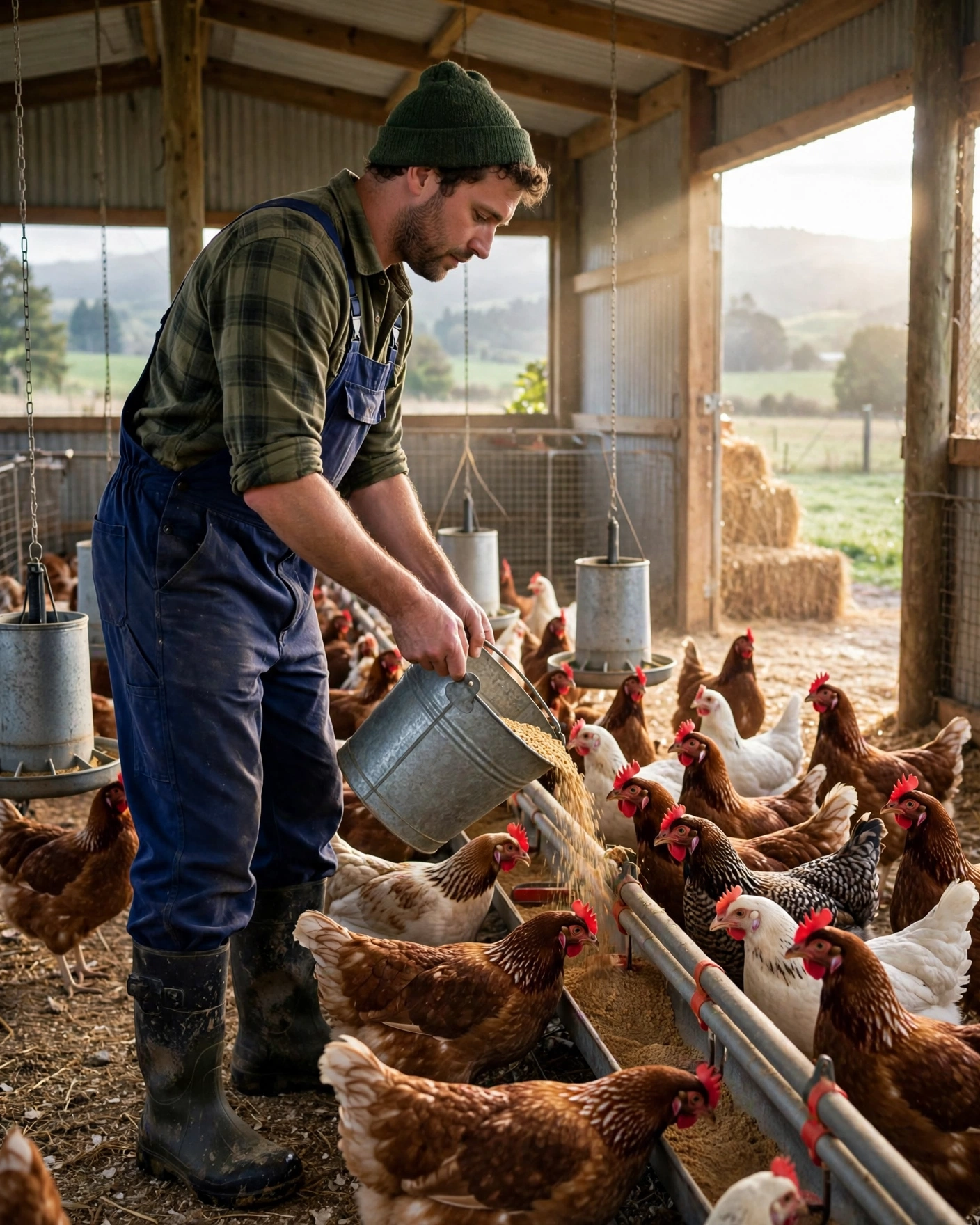
A poultry farm day starts early, often before sunrise, with feeding, watering, and checking the birds. The worker walks through the sheds and checks that the birds are healthy and active. They collect eggs from the laying sheds and note anything that looks wrong. On a broiler farm the birds are raised for meat. The work is feeding, checking growth, and keeping the litter dry. On a layer farm the work is collecting, grading, and packing eggs.
The work changes with the type of farm. On a free range farm the birds go outside during the day. The worker opens the sheds, checks the fences, and brings the birds back in at night. On a barn farm the birds stay inside. The work is more about ventilation, feeding, and keeping the sheds clean. In a hatchery the work is handling eggs, checking incubators, and caring for day old chicks.
Poultry sheds are warm, dusty, and noisy, and the smell is strong. Workers wear overalls, boots, and a mask for some tasks. They wash their hands and change boots between sheds to stop disease spreading. Biosecurity is the heart of the job. A disease outbreak can close a farm, and a good worker follows the hygiene rules every time. The hours are often early in the morning. Weekend work is common, because the birds need feeding and checking every day.
Where to find real poultry farm jobs in New Zealand
The best place to start is Seek New Zealand, which carries the most farm and rural listings in the country. Search for poultry farm worker, poultry farm hand, or chicken farm worker, and the region you want to work in. Read the listing in full before you apply. Trade Me Jobs is the second place to check. It often lists the same roles from farms and food producers.
Large poultry companies hire workers directly through their own websites and careers pages. They often list several roles at once, for shed work, egg grading, and processing. Rural recruitment agencies place poultry farm workers on short and long term roles. That can be a good way to start if you are new to the work and want to try it before you commit.
When you search, check where the farm is and how you would get there. Some poultry farms are close to towns, and some are out in the country, so transport matters. Check whether the listing mentions the roster, because early starts and weekend work are common. Check whether it says the role is full time, part time, or casual.
What employers usually ask for
The first thing an employer asks for is proof you can do physical work and keep a steady routine. Poultry farm work does not usually need a formal qualification. Employers want to see that you are fit, reliable, and comfortable working with animals. Previous farm, animal, or outdoor work helps a lot. A reference from a past employer is worth more than a long resume.
The second thing is care and hygiene. A poultry worker needs to notice when a bird is sick. Watch whether a shed is too hot or too cold, and whether the feed or water needs attention. Employers look for people who follow biosecurity rules, wash and change boots between sheds, and keep records of what they see. Speed matters too, because the eggs need collecting and the birds need feeding on time. Speed without care is not useful.
Employers also look for a valid work visa or the right to work in New Zealand. They will ask to see it before you start. A driving licence helps, because many farms need workers who can drive a farm ute or a tractor. The listing should say what licence you need. Be honest about your availability. The farm plans its week around the workers it can count on. A worker who leaves mid week is hard to replace.
How pay is described in a listing
Pay for poultry farm jobs in New Zealand is usually listed per hour. Some roles list a weekly salary for full time work. The rate changes by region, by the farm, and by your experience. A real listing states the hourly rate clearly, or it says the rate is discussed at interview.
Read the listing for how pay is described. A listing that promises very high pay for very little work is a warning sign. Be wary when it has no farm name and no region. Never pay for a job, a certificate from an unknown provider, a uniform, or a visa. Wait until you have a written offer. A real farm pays you for your work, and it never asks you to pay to start work.
The visa question, honestly
Poultry farm work in New Zealand is usually done by people who already have the right to work in New Zealand. That includes citizens, residents, and people on work visas that allow farm work. The rules depend on your visa type, your age, and your experience, and they change from time to time.
If you are outside New Zealand and want to work on a poultry farm, be careful. Anyone who promises a poultry farm job and a visa for a fee is not to be trusted. A real employer never asks you to pay for a job or a visa. Check the official immigration website for the visa you would need. Check that the employer and the farm are real before you send documents or pay anything. Do not pay anyone who says they can speed up a visa for a fee.
How to apply, step by step
Step 1: Get your documents ready
Gather a short resume that lists any farm, animal, or outdoor work you have done. Add references from a past employer if you have them. Have your driving licence ready if you hold one. Have your work visa or proof of the right to work in New Zealand ready.
Step 2: Search properly on Seek and Trade Me Jobs
Search Seek New Zealand and Trade Me Jobs for poultry farm worker and the region you want to work in. Read each listing in full. Check the farm or employer name, the region, the roster, and whether the role is full time or casual. Apply only to listings that name the employer and the farm.
Step 3: Write a short, specific application
Keep your resume to one or two pages. Put your farm or animal experience at the top. Say clearly which region you can work in and when you can start. Mention the animals you have worked with, the machines you can drive, and the farm tasks you know. Do not copy the job ad word for word. Write in your own words, and be honest about your experience.
Step 4: Prepare for a practical interview
Poultry farm interviews are often short and practical. Expect questions about whether you can work in a warm, dusty shed and whether you can keep a steady routine. They will ask whether you can work early mornings and weekends. Some farms ask for a short trial day in the sheds. Answer with examples from your own experience, and be honest about what you can do.
Step 5: Check the offer before you accept
Read the offer before you sign. Check the pay, the hours, the roster, and the farm location. Check whether the role is full time, part time, or casual. See whether accommodation is included and what it costs. If anything in the offer is different from what the listing promised, ask about it before you sign.
What to avoid
Skip any listing with no farm or employer name, no region, and only a phone number or messaging app. Never pay for a job, a certificate, a uniform, or a visa before you have a written offer. Keep your passport number and bank details to yourself until you have verified the employer. Turn down any role that asks you to work without the visa your situation needs. That is not allowed in New Zealand. If a listing promises very high pay for very little work, walk away.
Frequently asked questions about poultry farm jobs in New Zealand
Do I need experience to work on a poultry farm in New Zealand?
Most farms do not need a formal qualification, but they do need someone fit, reliable, and comfortable working with animals. Previous farm or animal work helps, and many farms train new workers on the job.
Is poultry farm work seasonal?
Poultry farms run all year, because the birds need feeding and checking every day. The hours can still change with demand, so check the roster in the listing.
How much do poultry farm workers earn in New Zealand?
Pay is usually listed per hour, and it changes by region, by the farm, and by your experience. Check the live listing for the rate, because it changes from employer to employer.
Do poultry farms provide accommodation?
Some farms offer a room or help with finding a place to live, and the listing should say so. Always check the cost before you accept, because accommodation is not always included.
Can I work on a poultry farm on a working holiday visa?
Working holiday visa holders often take farm work. Check the conditions of your visa first, because the rules depend on your visa type and your country.
Related guides
- Farm Jobs in New Zealand 2026
- Dairy Farm Jobs in New Zealand 2026
- Fruit Picking Jobs in New Zealand 2026
Job804 shares job information and practical guides. Job804 is not an employer, not a recruitment agent, and does not guarantee a job, an interview, or a visa. Always check the live listing on Seek New Zealand or Trade Me Jobs, and check visa conditions on the official immigration website before you apply or pay for anything. Never pay for a job offer.
Last checked: 21 November 2026. Check the live listing before you apply.
