
Introduction
Housekeeping jobs UK wide suit people who like clean, tidy work. They take pride in a room that looks right, and enjoy finishing each day with something visible done well. Housekeepers clean and prepare bedrooms, bathrooms, kitchens, and shared spaces. They work in hotels, care homes, holiday parks, offices, and private homes across the country.
This guide explains what housekeeping work in the UK actually involves. It covers what employers look for, where to find real listings, and how to apply safely. It is written for job seekers, and it does not promise a job, a visa, or sponsorship.
What housekeeping work in the UK actually looks like
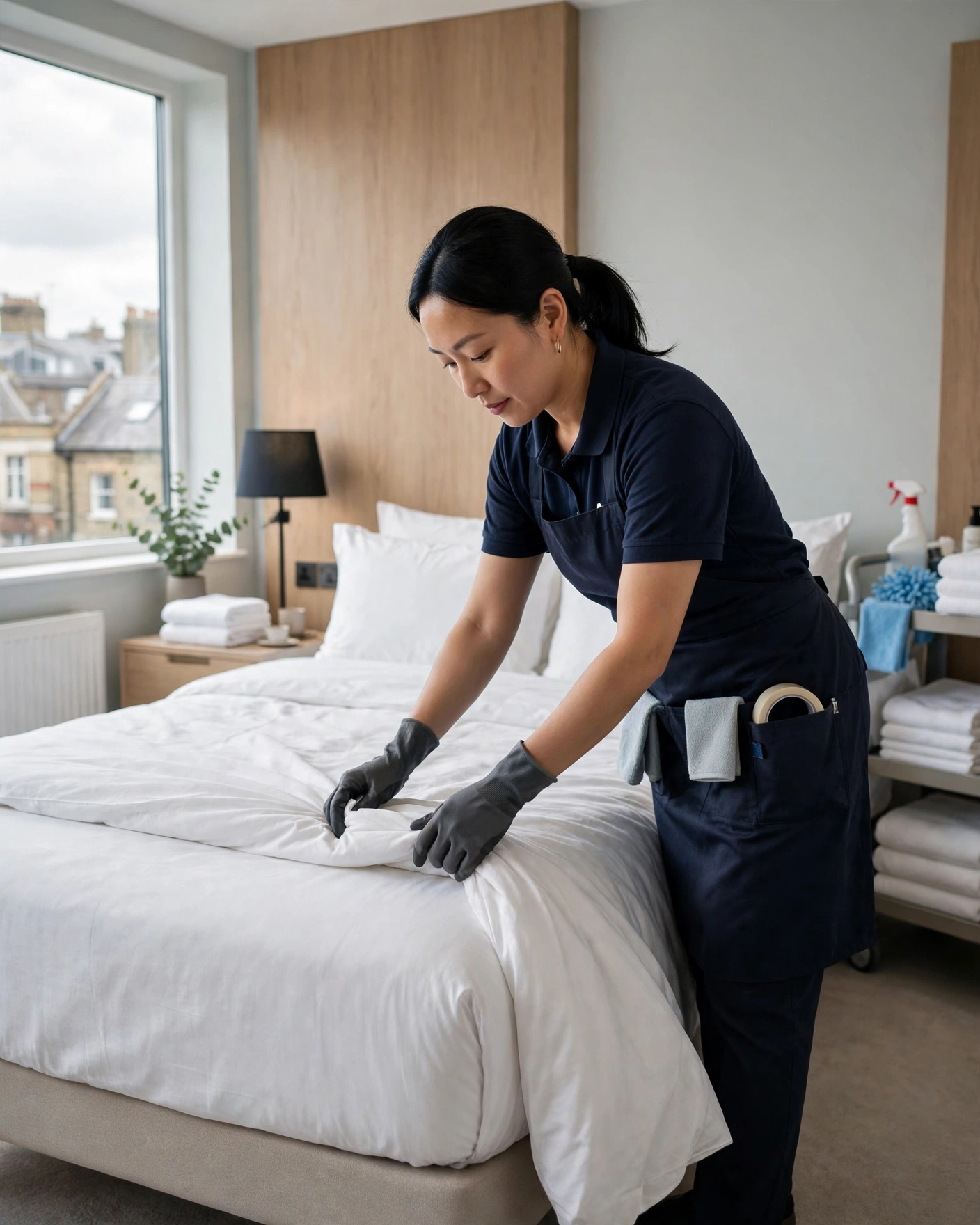
A housekeeper in the UK starts the day with a list of rooms or areas to clean. The list changes with the place. Hotel mornings are about turning over rooms after guests leave. The housekeeper changes bed linen, cleans bathrooms, dusts furniture, vacuums floors, and restocks towels, tea, coffee, and toiletries. Care home work also covers shared lounges, dining rooms, and corridors. It needs extra care around residents and their belongings. Private home work is different. The housekeeper may clean the whole house, do laundry and ironing, and keep the kitchen and bathrooms in good order.
A normal day is physical and steady. Housekeepers push a trolley or carry a caddy with cleaning products, cloths, and fresh linen. Start with the beds: strip them and make them again with clean sheets. Then wipe surfaces, clean toilets and showers, empty bins, and vacuum or mop floors. Check each room before marking it ready. A missed stain on a sheet or a dusty shelf is the kind of detail a guest notices first.
Where housekeepers work
Some housekeeping roles are in one building all day, and some cover several places. A housekeeper in a small hotel may clean ten to fifteen rooms in a shift. In a large hotel, the work is shared across a team, and each person has a set of rooms. In a holiday park or a serviced apartment block, the work comes in waves around check in and check out times, and weekends can be busy.
The work needs a good eye and a steady pace. A housekeeper learns how long a room should take. The housekeeper learns which products to use on each surface, and how to work around guests without getting in their way. Floors can be slippery after mopping. Use cleaning products the way the label says, with gloves on and the room aired. Hours are usually a full working week. Many hotels and care homes need weekend work, with early starts and some evening shifts.
Where to find real housekeeping jobs in the UK
The best place to start is Indeed UK, which carries the most housekeeping listings in the country. Search for housekeeper, hotel housekeeper, or housekeeping assistant, and read the listing in full before you apply. Reed is the second place to check, and it often lists the same roles from hotels, care homes, and cleaning companies.
Hotels hire in every main city, including London, Manchester, Birmingham, Edinburgh, and Bristol. Seaside towns and the countryside have holiday parks and country hotels too. Large hotel groups list several roles at once, from room attendant to head housekeeper. They often have a careers page on their own website. Care homes hire housekeepers all year, and cleaning companies place housekeepers in offices, schools, and private homes.
When you search, check where the job is based and how far it spreads. Some roles are in one hotel, and some cover several sites, so travel matters. Check whether the listing says the role is full time or part time, and whether it mentions live in accommodation, meals on shift, or weekend work. A real listing names the employer, the place, and the kind of housekeeping work involved.
What employers usually ask for
The main thing a hotel or care home looks for is a housekeeper who is reliable and thorough. The housekeeper needs to be careful with other people’s belongings. Experience counts. An employer wants to see work you have done in hotels, homes, or care settings, with references from a past employer. A housekeeper who turns up on time every day is worth a lot. Finishing rooms to a good standard matters more to a hotel than rushing.
Employers look for people who can work at a steady pace without being watched. A housekeeper works alone in rooms for much of the day. The employer needs to trust you to clean properly, report damage, and leave lost property where it should go. A basic knowledge of cleaning products and health and safety helps. Many employers give training on the job.
Some roles ask for a driving licence, because the housekeeper may travel between sites. Some ask for a background check, because the work is in care homes or private homes. Be honest about your experience, because a housekeeping manager will find out quickly once you are on a shift.
How pay is described in a listing
Pay for housekeeping jobs in the UK is usually listed per hour. Some roles list a yearly salary for a full time role. The rate changes by region, by the employer, and by your experience. A real listing states the hourly rate clearly, or it says the rate is discussed at interview.
Read the listing for how pay is described. A listing that promises very high pay for very little work is a warning sign. Watch out when it has no employer name and no place. Never pay for a job, a certificate, a uniform, or a visa before you have a written offer. A real hotel or care home pays you for your work. It never asks you to pay to start work.
The visa question, honestly
People who already have the right to work in the UK usually do housekeeping there. That includes citizens, residents, and people on work visas that allow this kind of work. The rules depend on your visa type and your situation.
If you are outside the UK and want to work as a housekeeper, be careful. Watch out for anyone who promises you a housekeeping job and a visa for a fee. A real employer never asks you to pay for a job or a visa. Check the official government website for the visa you would need. Check that the employer and the hotel or care home are real before you send documents or pay anything.
How to apply, step by step
Step 1: Get your documents ready
Gather a short resume that lists your cleaning or housekeeping experience and the kind of places you have worked in. Add any training you have completed. Add references from a past employer if you have them. Have your proof of the right to work in the UK ready. Keep copies of any certificates.
Step 2: Search Indeed UK and Reed for housekeeping jobs UK wide
Search Indeed UK and Reed for housekeeper and the place you want to work in. Read each listing in full. Check the employer name, the place, the kind of housekeeping work, and whether the role is full time or part time. Apply only to listings that name the employer and the place.
Step 3: Write a short, specific application
Keep your resume to one or two pages. Put your housekeeping experience at the top. Say clearly which place you can work in and when you can start. Mention the kind of housekeeping you know best, such as hotel rooms, care homes, or private homes. Do not copy the job ad word for word.
Step 4: Prepare for a practical interview
Expect questions about rooms you have cleaned. Expect questions about how you handle a complaint from a guest, and how you manage a busy shift. Some employers ask for a short trial shift. Answer with examples from your own experience.
Step 5: Check the offer before you accept
Read the offer before you sign. Look at the pay, the hours, and the place. Check whether meals or accommodation are included, and whether weekend work is part of the role. Note what uniform and cleaning products you need to bring and what the employer provides. If anything in the offer is different from what the listing promised, ask about it before you sign.
Training and standards for housekeepers in the UK
Housekeeping in the UK has no single licence. That matters for anyone who wants housekeeping jobs UK wide. There is no registration board for housekeepers, and you do not need a licence to clean a room. What matters is the standard the employer sets, and the training the employer gives.
The usual path starts with training on the job. A new housekeeper works with an experienced colleague and learns how each room should be done. Many hotels and care homes give training in health and safety. The training covers the safe use of cleaning chemicals and infection control, because those things protect guests, residents, and staff. A housekeeper who has done a course in cleaning or hospitality can mention it. It may help, but it is not required for most roles.
If you trained overseas, your experience still counts, and you can describe it in your application. Check the employer website for the current process, and be careful with any agent who promises a fast job for a fee.
Some roles ask for experience in a hotel. Some are open to a person with no experience who is willing to learn. Apply for roles that match the experience you hold, and say clearly where you are in the process.
What to avoid
Skip any listing that has no employer name, no place, and only a phone number or messaging app. Never pay for a job, a certificate, a uniform, or a visa before you have a written offer. Keep your passport number and bank details to yourself until you have verified the employer. Turn down any role that asks you to work without the visa your situation needs, because that is not allowed in the UK. Refuse to use a cleaning product in a way the label does not allow.
Frequently asked questions about housekeeping jobs in the UK
Do I need experience to work as a housekeeper in the UK?
Many hotels and care homes take on housekeepers with no experience and train them on the job. Experience helps, and it can mean a better shift or a higher rate, but a reliable person who is willing to learn can start without it.
How much do housekeeping jobs UK wide pay?
Pay is usually listed per hour, and it changes by region, by the employer, and by your experience. Check the live listing for the rate, because it changes from employer to employer.
Can I apply for housekeeping jobs UK wide from overseas?
You can apply from overseas, and some hotels hire housekeepers from other countries. You still need the right to work in the UK, so check that before you apply.
Is housekeeping work mostly in hotels or in private homes?
Both. Most housekeeping jobs are in hotels, care homes, and holiday parks. Some are in private homes, where the work also covers laundry, ironing, and cooking help.
Do hotels provide accommodation for housekeepers?
Some hotels and holiday parks offer live in accommodation, and the listing should say so. Check whether the cost is taken from your pay and what the room includes.
Related guides
Job804 shares job information and practical guides. Job804 is not an employer, not a recruitment agent, and does not guarantee a job, an interview, or a visa. Always check the live listing on Indeed UK or Reed. Check visa conditions on the official government website before you apply or pay for anything. Never pay for a job offer.
Last checked: 22 November 2026. Check the live listing before you apply.
