
Introduction
Warehouse jobs UK wide suit people who like active work and a steady pace. They enjoy finishing each day with orders packed and sent. Warehouse workers pick, pack, sort, and load goods in distribution centres, depots, and storage sites across the country.
This guide explains what warehouse work in the UK actually involves. It covers what employers look for, where to find real listings, and how to apply safely. It is written for job seekers, and it does not promise a job, a visa, or sponsorship.
What warehouse work in the UK actually looks like
A warehouse worker in the UK starts the day with a list of orders to pick. The list changes with the season. Retail warehouses start the morning by picking goods from shelves. Workers pack them into boxes and label them for delivery. Food warehouses also cover chilled and frozen areas. They need extra care with dates and temperatures. Parcel depots sort parcels by route, load vans, and keep the line moving.
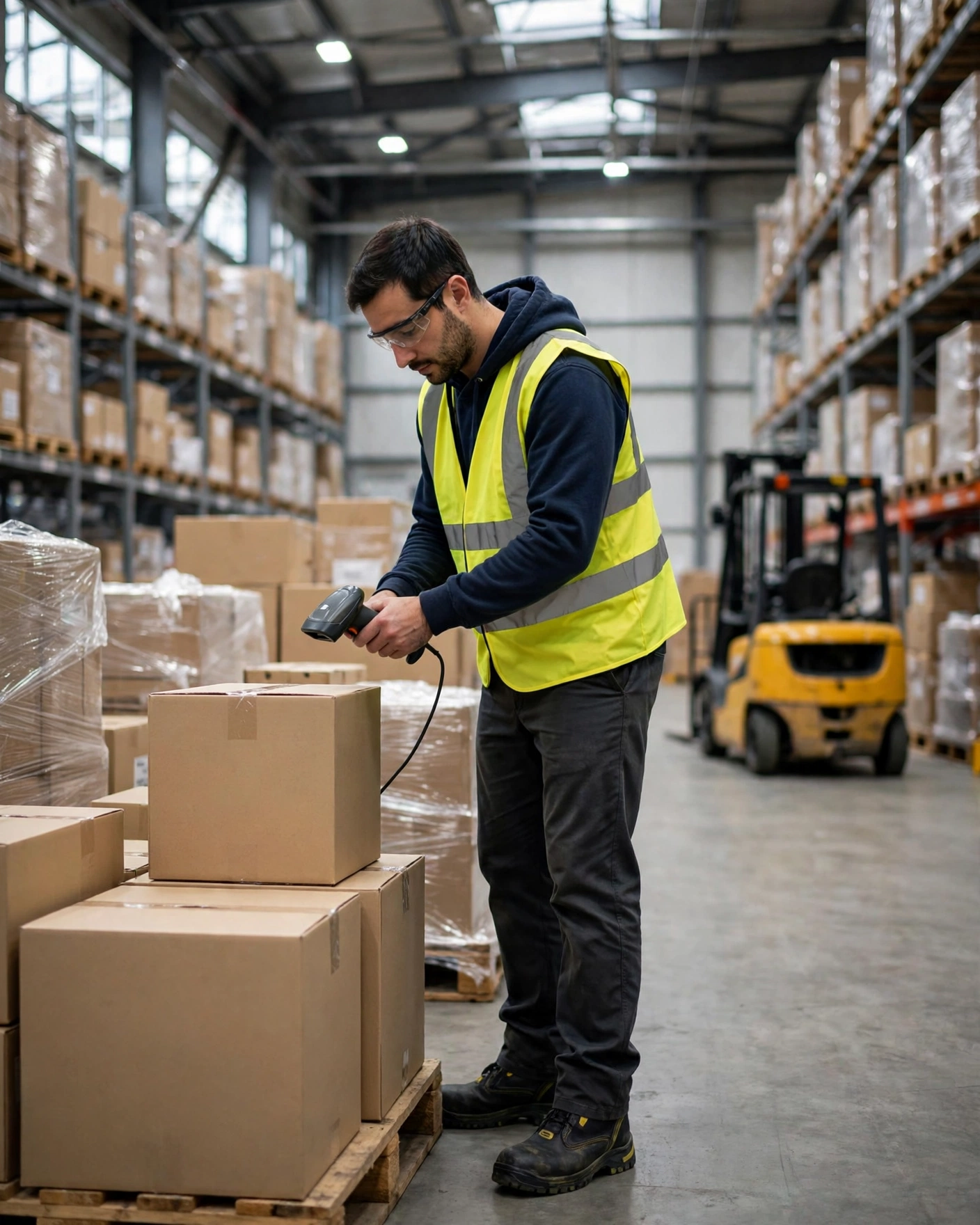
A normal day is physical and steady. Warehouse workers walk for much of the shift. They lift boxes, push trolleys, and use a hand held scanner to check each item. They stack pallets and wrap them. Then they move them with a pump truck or a forklift, if they are trained for it. They check each order before it is sealed. A wrong item in a box is the kind of mistake a customer notices first.
Some warehouse roles are in one building all day, and some cover several areas. A worker in a small warehouse may pick, pack, and load in the same shift. In a large distribution centre, the work is shared across a team, and each person has a set area. In a busy season, such as the run up to Christmas, the work comes in waves. Weekend and night shifts are common.
The work needs a good eye and a steady pace. A warehouse worker learns how long an order should take and where each product sits. They also learn how to work safely around forklifts and moving vehicles. Floors can be slippery, and boxes can be heavy. Lift in the right way, wear safety shoes, and use the equipment the employer provides. Hours are usually a full working week. Many warehouses run shifts, with early starts, late finishes, and some night work.
Where to find real warehouse jobs in the UK
The best place to start is Indeed UK, which carries the most warehouse listings in the country. Search for warehouse operative, warehouse picker, or packer, and read the listing in full before you apply. Reed is the second place to check. It often lists the same roles from retailers, logistics firms, and recruitment agencies.
Warehouses hire in every main city, including London, Manchester, Birmingham, Leeds, and Bristol. They also hire in towns near motorways, where distribution centres sit. Large retailers and logistics firms list several roles at once, from picker packer to forklift driver. They often have a careers page on their own website. Recruitment agencies place warehouse workers with firms all year. They can be useful if you are new to warehouse work.
When you search, check where the warehouse is based and how far the jobs spread. Some roles are in one building, and some cover several sites, so travel matters. Check whether the listing says the role is full time or part time. Note whether it mentions shift patterns, overtime, or weekend work. A real listing names the employer, the place, and the kind of warehouse work involved.
What employers usually ask for
The main thing a warehouse employer looks for is a reliable, careful worker. They want someone who can keep a steady pace. Experience counts. An employer wants to see work you have done in a warehouse, a shop, or a depot. References from a past employer help. A worker who turns up on time every day and picks orders correctly is worth more to a warehouse. Speed without care is not worth much.
Employers look for people who can work as part of a team and follow safety rules. A warehouse worker shares the floor with forklifts, trolleys, and other workers. The employer needs to trust you to look out for others, report damage, and keep walkways clear. A forklift licence helps, and some roles ask for one, but many roles do not need it.
Some roles ask for a driving licence, because the worker may drive between sites. Some ask for a background check, because the work is with valuable goods. Be honest about your experience, because a warehouse manager will find out quickly once you are on a shift.
How pay is described in a listing
Pay for warehouse jobs in the UK is usually listed per hour. Some roles list a yearly salary for a full time job. The rate changes by region, by the employer, and by your experience and shift pattern. Night and weekend shifts often pay more. A real listing states the hourly rate clearly, or it says the rate is discussed at interview.
Read the listing for how pay is described. A listing that promises very high pay for very little work is a warning sign. Watch out when it has no employer name and no place. Never pay for a job, a certificate from an unknown provider, a uniform, or a visa before you have a written offer. A real retailer or logistics firm pays you for your work. It never asks you to pay to start work.
The visa question, honestly
People who already have the right to work in the UK usually do warehouse work there. That includes citizens, residents, and people on work visas that allow this kind of work. The rules depend on your visa type and your situation.
If you are outside the UK and want to work in a warehouse, be careful. Watch out for anyone who promises you a warehouse job and a visa for a fee. A real employer never asks you to pay for a job or a visa. Check the official government website for the visa you would need. Check that the employer and the warehouse are real before you send documents or pay anything.
How to apply, step by step
Step 1: Get your documents ready
Gather a short resume that lists your warehouse or packing experience. List the kind of work you have done and any training you have completed, such as a forklift licence. Add references from a past employer if you have them. Have your proof of the right to work in the UK ready, and keep copies of any certificates.
Step 2: Search Indeed UK and Reed for warehouse jobs UK wide
Search Indeed UK and Reed for warehouse operative and the place you want to work in. Read each listing in full. Check the employer name, the place, and the kind of warehouse work. Check whether the role is full time, part time, or a shift role. Apply only to listings that name the employer and the place.
Step 3: Write a short, specific application
Keep your resume to one or two pages. Put your warehouse experience at the top. Say clearly which place you can work in and when you can start. Mention the kind of warehouse work you know best, such as picking, packing, or loading. Do not copy the job ad word for word.
Step 4: Prepare for a practical interview
Warehouse interviews are often practical. Expect questions about warehouses you have worked in. They may ask how you handle a busy shift and how you keep your picking accurate. Some employers ask for a short trial shift. Answer with examples from your own experience.
Step 5: Check the offer before you accept
Read the offer before you sign. Look at the pay, the hours, and the place. Check whether overtime or night shifts are included, and whether the role is temporary or permanent. Note what safety gear you need to bring and what the employer provides. If anything in the offer is different from what the listing promised, ask about it before you sign.
Training and safety for warehouse workers in the UK
Warehouse work in the UK has no single licence, and that matters for anyone who wants warehouse jobs UK wide. There is no registration board for warehouse workers, and you do not need a licence to pick and pack orders. What matters is the safety standard the employer sets, and the training the employer gives.
The usual path starts with training on the job. A new worker learns how to lift safely. They also learn how to use a scanner and a pump truck, and how to work around forklifts. Many warehouses give training in manual handling and health and safety, because those things protect workers and goods. A forklift licence is a separate qualification. It can mean a better shift or a higher rate, but it is not required for most picking and packing roles.
If you trained overseas, your experience still counts, and you can describe it in your application. Check the employer website for the current process. Be careful with any agent who promises a fast job for a fee.
When you look at listings, note what the employer asks for. Some roles ask for a forklift licence. Others are open to a person with no licence who is willing to learn the picking work first. Apply for roles that match the training you hold, and say clearly where you are in the process.
What to avoid
Skip any listing that has no employer name, no place, and only a phone number or messaging app. Never pay for a job, a certificate, a uniform, or a visa before you have a written offer. Keep your passport number and bank details to yourself until you have verified the employer. Turn down any role that asks you to work without the visa your situation needs. That is not allowed in the UK. Lift heavy boxes in the right way, and never walk in front of a moving forklift.
Frequently asked questions about warehouse jobs in the UK
Do I need experience to work in a warehouse in the UK?
Many warehouses take on workers with no experience and train them on the job. Experience helps, and it can mean a better shift or a higher rate. A reliable person who is willing to learn can start without it.
How much do warehouse jobs UK wide pay?
Pay is usually listed per hour, and it changes by region, by the employer, and by your shift pattern. Night and weekend shifts often pay more. Check the live listing for the rate, because it changes from employer to employer.
Can I apply for warehouse jobs UK wide from overseas?
You can apply from overseas, and some retailers and logistics firms hire warehouse workers from other countries. You still need the right to work in the UK, so check that before you apply.
Is warehouse work mostly day shifts or night shifts?
Both. Many warehouses run day shifts. Large distribution centres also run late and night shifts, because orders keep moving around the clock.
Do warehouses provide a forklift licence?
Some employers pay for forklift training after a worker has been with them for a while. The listing should say so. Check whether the training is included and whether you need a licence to start.
Related guides
Job804 shares job information and practical guides. Job804 is not an employer, not a recruitment agent, and does not guarantee a job, an interview, or a visa. Always check the live listing on Indeed UK or Reed. Check visa conditions on the official government website before you apply or pay for anything. Never pay for a job offer.
Last checked: 22 November 2026. Check the live listing before you apply.
