
Introduction
Construction worker jobs UK wide suit people who like physical work. You enjoy seeing a building take shape. Working outdoors in all kinds of weather suits you too. Construction workers build houses, offices, schools, hospitals, roads, and bridges across the country. The work runs from the first dig on an empty plot to the last coat of paint.
This guide explains what construction work in the UK actually involves. It covers what employers look for, where to find real listings, and how to apply safely. The guide is written for job seekers. It does not promise a job, a visa, or sponsorship.
What construction worker work in the UK actually looks like
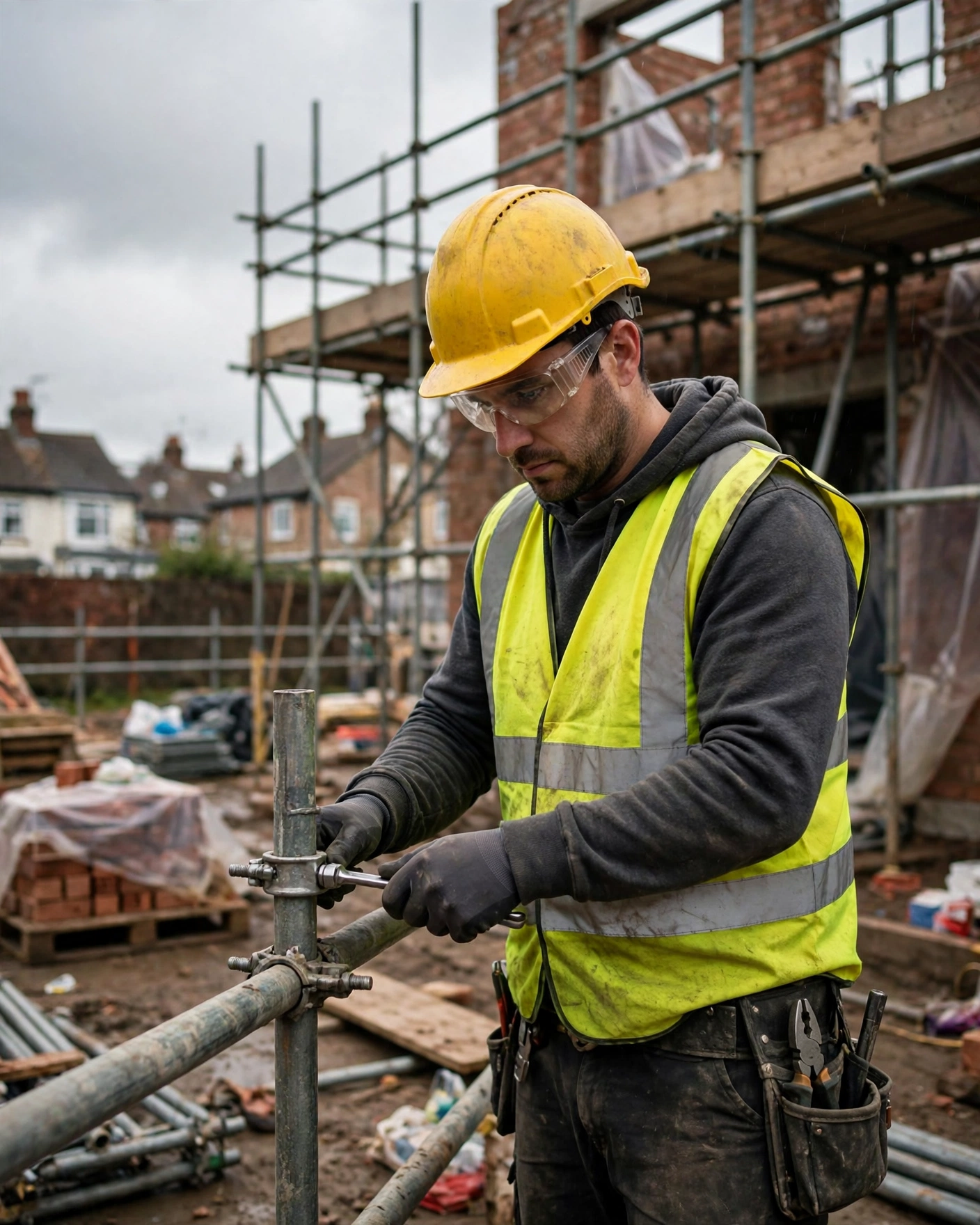
A construction worker in the UK works on a building site as part of a team. The work changes with the stage of the build and with the trade you work in. Labourers move materials, keep the site tidy, load and unload deliveries, and help skilled tradespeople with their work. Bricklayers build walls with bricks and blocks. Carpenters fit doors, floors, roofs, and staircases. Groundworkers dig foundations, lay drains, and prepare the ground before the building goes up. Steel fixers tie steel bars that go inside concrete. Scaffolders put up the platforms other workers stand on.
A normal day on site starts early, often around seven in the morning. The day begins with a short briefing from the site manager or supervisor. That briefing explains what the team is doing today and what the safety risks are. Then the work begins. Much of it is physical. You lift, carry, dig, mix, measure, and build, and you spend most of the day on your feet. The work moves at a steady pace. A building site runs on a schedule, and each trade needs the one before it to finish on time.
Weather, hours, and team work
Construction sites in the UK run in all weather. Rain, wind, and cold are part of the job. Sites have drying rooms and rest areas where workers take breaks and warm up. Work stops in very bad weather when it is unsafe, such as high winds on a scaffold. The site manager makes that call. Most sites work Monday to Friday. Some Saturday work happens when a project is behind schedule or a big concrete pour needs to finish.
The work is team work. A site has a manager, supervisors, skilled tradespeople, labourers, plant operators, and health and safety staff. Everyone has a part to play. You need to listen to instructions, work with the people next to you, and speak up when something looks unsafe. Turn up on time, work hard, and follow the safety rules. That worker is the one a site keeps on when the project moves to the next stage.
Where to find real construction worker jobs in the UK
Indeed UK is the best place to start. It carries construction worker and labourer listings across the country. Search for construction worker, general labourer, or the trade you know, such as bricklayer or carpenter. Add the town or city you want to work in. Read the listing in full before you apply. Reed is the second place to check. It often lists the same roles from construction companies and from recruitment agencies that supply workers to sites.
Construction agencies list roles on their own websites too. They often have a jobs page with site roles in the area they cover. If you want work in one town or city, check the local job boards and the noticeboards at builders merchants. Some smaller builders still advertise that way.
When you search, check where the site is and how you will get there. Sites start early, and public transport may not run in time. Check whether the listing says the role is full time or part time. Also check whether it is a direct job with a company or an agency role. A real listing names the employer or the agency, the area, and the work involved. It also says what tickets or cards you need to start.
The CSCS card and site safety in the UK, explained simply
Most building sites in the UK ask workers to hold a CSCS card. CSCS stands for Construction Skills Certification Scheme. The card shows that you have passed a health and safety test. It also shows that you hold the qualification for the work you do. There are different cards for different roles. A labourer holds a green labourer card. A skilled worker holds a card that matches their trade and qualification. The card has your photo on it. You show it at the site gate before you start.
To get a labourer card, you pass a health, safety and environment test. You take that short multiple choice test at a test centre. You also hold a basic health and safety qualification. The test covers the risks on a building site, such as falls, moving plant, electricity, and dust. It also covers what to do when something goes wrong. Many training providers run the course and the test together. The provider then issues the card for a set number of years.
Site safety and the site induction
Everyone on site takes safety in the UK seriously. Every worker has a part in it. Workers wear personal protective equipment, known as PPE, on site at all times. That means a hard hat, high visibility clothing, safety boots, and gloves. Eye protection and ear protection join the list when the work needs it. Your employer or the agency should provide PPE, or tell you what you need to bring.
A site induction is part of starting on any site. The induction explains where the toilets and rest areas are. It also shows where the first aid kit is and who the first aider is. It explains what to do if the fire alarm sounds and what the risks on that site are. A real site always runs an induction before you start work. If a site lets you start without one, treat that as a warning sign. Ask for the induction before you pick up a tool.
What employers usually ask for
Employers want a person who is fit, reliable, and willing to work hard. Construction work is physical. A worker needs to be on their feet all day, lifting and carrying in all weather. Experience counts. An employer wants to see work you have done on a site before, even if it was as a labourer. If you have worked in a trade, say so. Skilled workers are in demand.
A CSCS card matters for most site roles. Many employers will not take you on without one. A driving licence helps a lot. Sites are often away from bus routes and start early.
Employers look for people who can follow instructions and work safely. Site managers value a worker who listens at the morning briefing and wears PPE without being told. They also value a tidy work area. References matter too. A site manager wants to know you can be trusted on site. Have two references ready, from a past employer or a supervisor. Let them know a site manager may call them.
How pay is described in a listing
Employers usually list pay for construction worker jobs in the UK per hour. Some list a weekly rate for a full time role instead. The rate changes by region, by the trade, and by your experience and tickets. A real listing states the hourly rate clearly. Or it says you will discuss the rate at interview.
Read the listing to see how the employer describes pay. Some roles pay a higher rate for weekend work. Some pay extra for night shifts. So read the listing and ask about it at interview if it is not clear. Overtime is common on construction sites. The listing may say how overtime is paid. Treat a listing as a warning sign if it promises very high pay for very little work. That warning grows if it gives no employer name and no site location. Never pay for a job, a CSCS card, or a visa before you have a written offer. That rule covers cards from an unknown provider too. A real employer pays you for your work. It never asks you to pay to start work.
The visa question, honestly
Most construction work in the UK goes to people who already have the right to work here. That group includes citizens, residents, and people on work visas that allow this kind of work. The rules depend on your visa type and your situation.
Outside the UK? Be careful with anyone who promises a construction job and a visa for a fee. A real employer never asks you to pay for a job or a visa. Check the official government website for the visa you would need. Check that the employer and the agency are real before you send documents or pay anything.
How to apply, step by step
Step 1: Get your documents ready
Gather a short resume that lists your work experience and any trade training. Add any tickets or cards you hold, such as a CSCS card. Add two references from a past employer or supervisor. Let them know a site manager may call them. Have proof of your right to work in the UK ready. Keep copies of any training certificates.
Step 2: Search Indeed and Reed for construction worker jobs UK wide
Search Indeed UK and Reed for construction worker, general labourer, or the trade you know. Add the town or city you want to work in. Read each listing in full. Check the employer or agency name, the site location, and the hours. Also check what tickets or cards the role needs. Apply only to listings that name the employer or the agency and the area.
Step 3: Write a short, specific application
Keep your resume to one or two pages. Put your construction experience at the top. Say clearly which trades you know and when you can start. Mention your CSCS card and any tickets you hold. Do not copy the job ad word for word.
Step 4: Prepare for an interview
Construction interviews are often short and practical. Be ready to answer questions about a time you worked as part of a team. Think about what you would do if you saw something unsafe on site. Prepare to explain how you handle early starts and physical work. Answer with examples from your own experience. Be honest about what you can do.
Step 5: Check the offer before you accept
Read the offer before you sign. Check the pay, the hours, the days, and whether travel is covered. Ask whether the employer provides PPE and pays for your CSCS card. Find out whether the work is direct with a company or through an agency. Find out what happens when the project ends too. If anything in the offer is different from what the listing promised, ask about it before you sign.
What to avoid
Avoid a listing that has no employer or agency name, no site location, and only a phone number or messaging app. Never pay for a job, a CSCS card, or a visa before you have a written offer. Never send your passport number or bank details to an employer or agency you have not verified. Turn down a role that asks you to work without the CSCS card the site needs. Most sites will not let you through the gate without that card. Refuse a role that asks you to work without the visa your situation needs. Always wear PPE. Never work on a scaffold or a machine you have not been trained to use.
Frequently asked questions about construction worker jobs in the UK
Do I need a CSCS card to work in construction in the UK?
Most building sites ask for one. Many will not let you through the gate without it. The labourer card needs a health, safety and environment test and a basic health and safety qualification. Check the listing to see which card the role needs.
How much do construction worker jobs UK wide pay?
Employers usually list pay per hour. It changes by region, by the trade, and by your experience and tickets. Skilled trades usually pay more than general labouring. Weekend and night work often pays extra. Check the live listing for the rate, because it changes from site to site.
Can I apply for construction worker jobs UK wide from overseas?
You can apply from overseas. Some construction companies hire workers from other countries. You still need the right to work in the UK, so check that before you apply.
Is construction work mostly outdoors?
A lot of it is outdoors, because buildings go up in the open air. Some work is indoors once the building is weather tight, such as fitting doors, floors, and kitchens. The listing should say where the work takes place.
Do construction companies provide training?
Many companies provide training, including site inductions, safety training, and help with CSCS cards and extra tickets. Check what training the employer provides and whether it is paid.
Related guides
- Construction Worker Jobs in New Zealand 2026
- Construction Worker Jobs in Canada 2026
- Caregiver Jobs in UK 2026
Job804 shares job information and practical guides. Job804 is not an employer, not a recruitment agent, and does not guarantee a job, an interview, or a visa. Always check the live listing on Indeed UK or Reed. Also check visa conditions on the official government website before you apply or pay for anything. Never pay for a job offer.
Last checked: 25 November 2026. Check the live listing before you apply.
