
Introduction
Dairy farm jobs UK wide suit people who like working with animals. You enjoy being outdoors. Early starts and a steady daily routine suit you too. Dairy farm workers look after cows, milk them, feed them, and keep the farm running. The work changes with the seasons and with the age of the herd.
This guide explains what dairy farm work in the UK actually involves. It covers what employers look for, where to find real listings, and how to apply safely. The guide is written for job seekers. It does not promise a job, a visa, or sponsorship.
What dairy farm work in the UK actually looks like
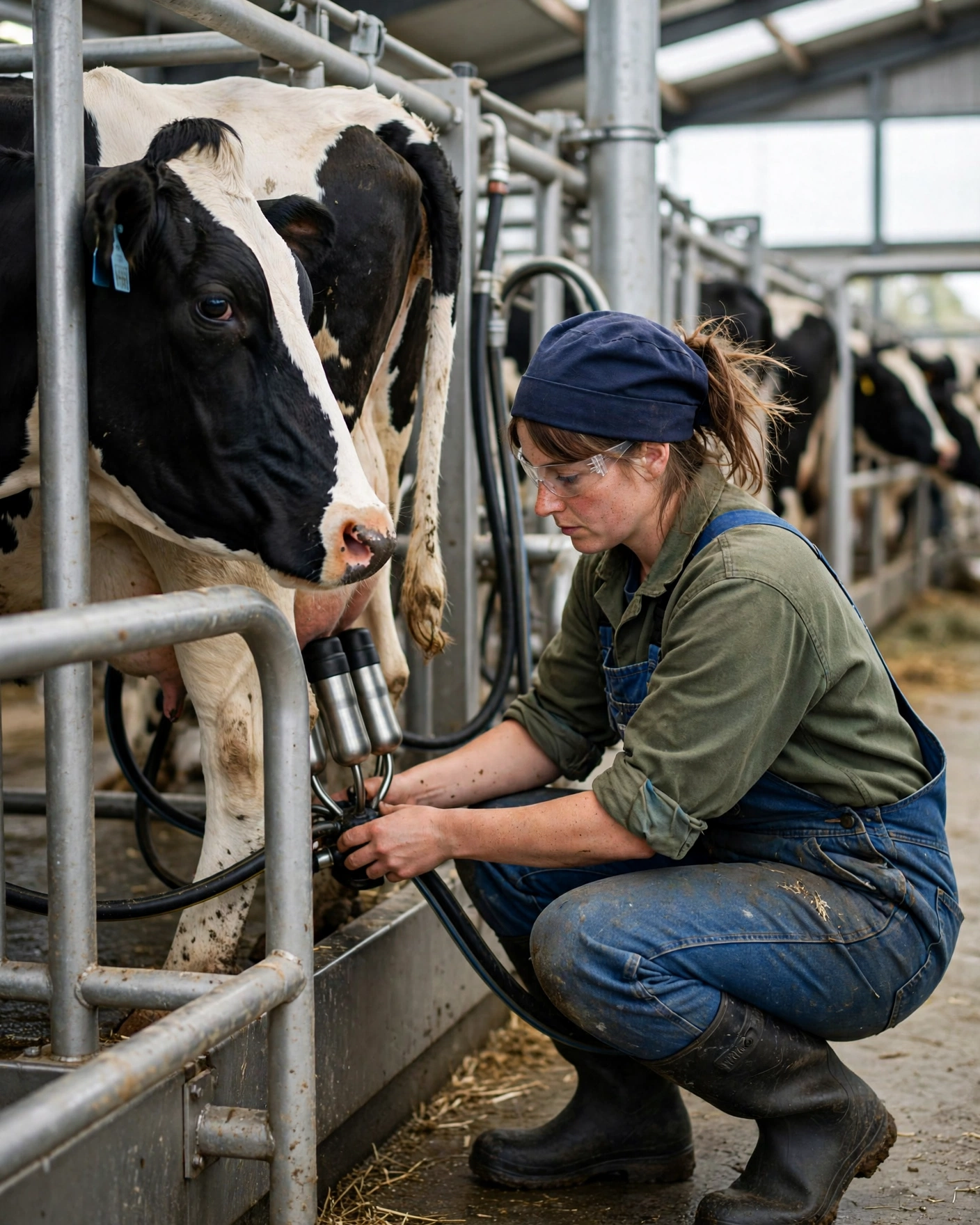
A dairy farm worker in the UK looks after a herd of milking cows. The work follows the cows. The day starts early, often around five in the morning. The cows need milking before the milk tanker arrives. The worker brings the cows in from the field or the shed. The worker milks them in the parlour, then feeds them and checks them over.
The work changes through the day. After milking, the worker feeds the cows and gives them fresh water. Next, the worker checks for any cow that is lame, ill, or off its feed. Then the worker cleans the milking parlour and the equipment. The worker also beds the sheds with fresh straw or sand and scrapes the yards. In the afternoon the worker milks the cows again and repeats the same checks. The work is physical, with a lot of walking, lifting, and bending, and it runs in all weather.
Cows, calves, and hours on the farm
Dairy farms in the UK keep cows in different ways. Some cows live in sheds through the winter and graze in the fields in summer. Some farms keep cows indoors all year. The worker needs to know where each group of cows is. The worker also needs to know which cows are milking, which are dry, and which are due to calve. Young calves need feeding and checking too. The worker often looks after them as well.
Hours on a dairy farm are usually full time. Early starts and weekend work are common, because cows need milking every day of the year. Some farms offer live in accommodation, with a house or a cottage on the farm. That offer is common in rural areas where there is no town nearby. The work can be in a quiet village or out in the countryside. A driving licence helps a lot in that setting.
Where to find real dairy farm jobs in the UK
Indeed UK is the best place to start. It carries dairy farm and farm worker listings across the country. Search for dairy farm worker, dairy stockperson, or farm worker. Add the town or county you want to work in. Read the listing in full before you apply. Reed is the second place to check. It often lists the same roles from farms and from recruitment agencies that supply workers to farms.
Farm recruitment agencies list roles on their own websites too. They often have a jobs page with dairy roles in the areas they cover. Farming magazines and websites list dairy roles as well. Some farms advertise on their own websites or on noticeboards at agricultural suppliers. If you want work in one county, check the local job boards. Some smaller farms still advertise that way.
When you search, check where the farm is and how you will get there. Dairy farms are often in rural areas with little public transport. Check whether the listing says the role is full time or part time. Also check whether accommodation is included. A real listing names the farm or the agency, the area, and the work involved. It also says what experience you need to start.
Milking parlours and the dairy routine, explained simply
The milking parlour is the heart of a dairy farm. Workers milk the cows there. There are a few kinds of parlour. A herringbone parlour has the cows standing in two rows, angled like the bones of a fish. The worker milks them from a pit between the rows. A rotary parlour has the cows standing on a slowly turning platform. The worker stays in one place while the cows come round. A robotic milking system lets the cows walk in when they choose. A robot does the milking, while the worker checks the system and the cows.
Milking follows the same steps each time. The worker brings the cows in, checks each cow, cleans the teats, and fits the milking unit. Next, the machine milks the cow, and the milk flows into a bulk tank. The tank cools the milk and keeps it until the tanker collects it. The worker watches for any sign of mastitis, which is an infection of the udder. Keep any cow that looks unwell back, and let the farmer or the vet check it.
The daily dairy routine and cleanliness
The dairy routine runs twice a day, morning and afternoon, and it never stops. Between milkings the worker feeds the cows, checks the calves, and cleans the parlour. The worker also does general farm work, such as fencing, bedding, and feeding young stock. In spring the worker helps with calving, when cows give birth. In summer the worker helps with silage and hay, when grass is cut and stored for winter feed.
Cleanliness matters a lot in dairy work. Milk is food, so workers must keep it clean. Workers wash the parlour and the equipment after every milking. Workers must also follow the hygiene rules the farm sets. A farm that keeps its parlour clean and its cows healthy produces better milk. A worker who takes pride in that is worth a lot to the farmer.
What employers usually ask for
Farmers want a person who is reliable, hard working, and good with animals. Dairy work is physical. A worker needs to be on their feet all day, in all weather, with early starts. Experience counts. A farmer wants to see work you have done with cattle before. That work can come from a family farm or a smallholding. If you have milked cows before, say so. Farmers ask for that experience most.
A driving licence helps a lot. Dairy farms are often in rural areas and start early. Cows need milking every day of the year, so expect weekend and bank holiday work. A tractor licence or experience with farm machinery helps too. The worker often drives a tractor to feed cows or move bales.
Farmers look for workers who can follow a routine and notice when something is wrong. Spotting a lame cow or a cow that is off its feed is worth a lot to a farmer. The same applies to a calf that needs attention. References matter too. A farmer is trusting you with their animals and their livelihood. Have two references ready, from a past employer or a supervisor. Let them know a farmer may call them.
How pay is described in a listing
Farmers usually list pay for dairy farm jobs in the UK per hour. Some list a weekly or annual salary for a full time role instead. The rate changes by region, by the size of the farm, and by your experience. A real listing states the rate clearly. Or it says you will discuss the rate at interview.
Read the listing to see how the farm describes pay. Some roles include accommodation on the farm. The listing should say whether rent is charged and how much. Some roles pay a higher rate for weekend work. So read the listing and ask about it at interview if it is not clear. Overtime is common on dairy farms, especially at calving time and at silage time. The listing may say how overtime is paid. Treat a listing as a warning sign if it promises very high pay for very little work. That warning grows if it gives no farm name and no area. Never pay for a job, a certificate, or a visa before you have a written offer. A real farmer pays you for your work. It never asks you to pay to start work.
The visa question, honestly
Most dairy farm work in the UK goes to people who already have the right to work here. That group includes citizens, residents, and people on work visas that allow this kind of work. The rules depend on your visa type and your situation.
Outside the UK? Be careful with anyone who promises a farm job and a visa for a fee. A real employer never asks you to pay for a job or a visa. Check the official government website for the visa you would need. Check that the farm and the agency are real before you send documents or pay anything.
How to apply, step by step
Step 1: Get your documents ready
Gather a short resume that lists your work experience with animals and any farm training. Add any machinery tickets you hold, such as a tractor licence. Add two references from a past employer or supervisor. Let them know they may be called. Have proof of your right to work in the UK ready. Keep copies of any training certificates.
Step 2: Search Indeed and Reed for dairy farm jobs UK wide
Search Indeed UK and Reed for dairy farm worker, dairy stockperson, or farm worker. Add the town or county you want to work in. Read each listing in full. Check the farm or agency name, the location, and the hours. Also check whether accommodation is included. Apply only to listings that name the farm or the agency and the area.
Step 3: Write a short, specific application
Keep your resume to one or two pages. Put your farm and animal experience at the top. Say clearly what you know, such as milking, calf rearing, or tractor work, and when you can start. Mention your driving licence and any machinery tickets you hold. Do not copy the job ad word for word.
Step 4: Prepare for an interview
Dairy farm interviews are often short and practical. Be ready to answer questions about a time you handled a difficult animal. Think about how you would spot a sick cow. Prepare to explain how you handle early starts and physical work. Some farmers ask you to spend a trial morning on the farm. Answer with examples from your own experience. Be honest about what you can do.
Step 5: Check the offer before you accept
Read the offer before you sign. Check the pay, the hours, the days, and whether accommodation is included and what it costs. Ask whether the farm provides meals or transport. Find out what happens at calving time and at silage time, when the hours are longer. If anything in the offer is different from what the listing promised, ask about it before you sign.
What to avoid
Avoid a listing that has no farm or agency name, no location, and only a phone number or messaging app. Never pay for a job, a certificate, or a visa before you have a written offer. Never send your passport number or bank details to a farm or agency you have not verified. Turn down a role that asks you to work without the visa your situation needs. Ask the farmer for training before you work with animals. Never enter a pen with a bull or a freshly calved cow without asking the farmer first.
Frequently asked questions about dairy farm jobs in the UK
Do I need experience to work on a dairy farm in the UK?
Most farms take on workers with some experience with animals. Milking experience helps a lot. A farm will train you in its own routine. Farms often take on a worker who is willing to learn and turns up on time.
How much do dairy farm jobs UK wide pay?
Farmers usually list pay per hour or as a salary. It changes by region, by the size of the farm, and by your experience. Some roles include accommodation, which the listing should describe. Check the live listing for the rate, because it changes from farm to farm.
Can I apply for dairy farm jobs UK wide from overseas?
You can apply from overseas. Some farms hire workers from other countries. You still need the right to work in the UK, so check that before you apply.
Is dairy farm work mostly early mornings?
Yes, because workers milk cows early in the morning and again in the afternoon, every day of the year. The listing should say what hours the role uses and whether weekend work is needed.
Do dairy farms provide accommodation?
Many farms provide accommodation, especially in rural areas, with a house or a cottage on the farm. Check what accommodation is offered, what it costs, and whether it is included in the pay.
Related guides
- Dairy Farm Jobs in Australia 2026
- Farm Jobs in New Zealand 2026
- Fruit Picking Jobs in Australia 2026
Job804 shares job information and practical guides. Job804 is not an employer, not a recruitment agent, and does not guarantee a job, an interview, or a visa. Always check the live listing on Indeed UK or Reed. Also check visa conditions on the official government website before you apply or pay for anything. Never pay for a job offer.
Last checked: 25 November 2026. Check the live listing before you apply.
