
Introduction
Welder jobs in Canada are steady, skilled roles that suit people who like hands on work and take pride in a clean weld. Canada is building homes, ships, pipelines, and factories, and welders are needed in every province. A qualified welder who is careful, reliable, and good with people is a welder every employer wants.
This guide explains what welder work in Canada actually involves, what ticket you need, where to find real listings, and how to apply safely. It is written for job seekers, and it does not promise a job, a visa, or sponsorship.
What welder work in Canada actually looks like
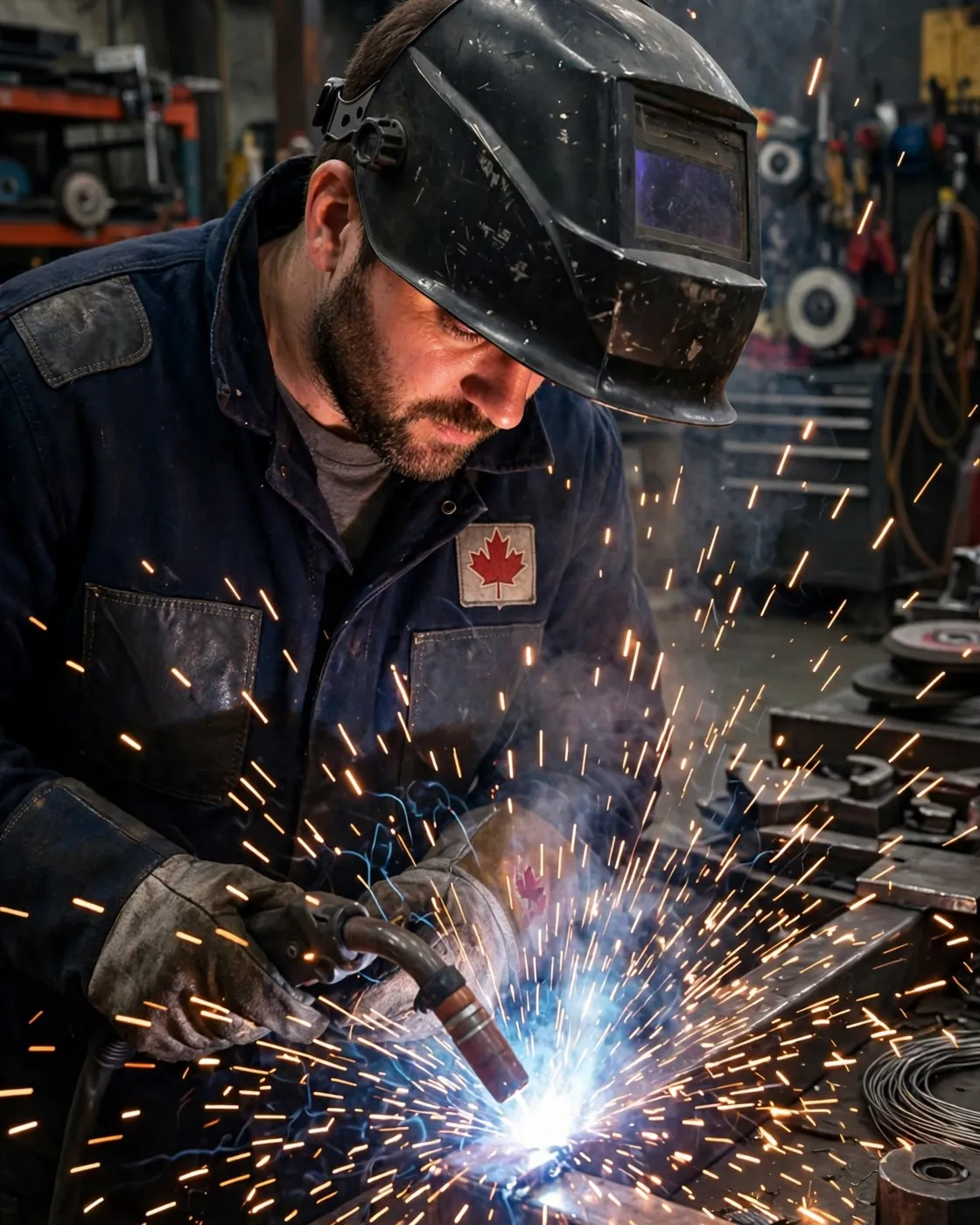
A welder’s day depends on the job. In a fabrication shop, you weld steel parts to a drawing, working at a bench with a set routine. On a construction site, you weld structural steel, following plans and the welding code. In a shipyard or a factory, you weld pipe, plate, and machinery, often in awkward positions and in all weather.
Most welder roles are full time, with regular daytime hours. Some roles need shift work, especially in factories and shipyards that run around the clock. The work is physical: standing, bending, working in tight spaces, and wearing heavy protective gear. You need to be comfortable working with heat, sparks, and fumes, and comfortable following strict safety rules.
The hardest part is not the physical work. It is the standard. A bad weld can fail and hurt someone, so the rules are strict and the checks are thorough. A welder who follows the procedure, tests their work, and speaks up when something is unsafe is a welder a company wants to keep.
Where to find real welder jobs in Canada
The best place to start is Job Bank, the official Government of Canada job site. Job Bank lists welder roles from employers across the country, and every listing shows the employer name, the location, and the requirements. Indeed Canada is the second place to check. Search for welder and the province or city you want to work in, and read the listing in full before you apply.
Large fabrication companies and shipyards hire directly through their own careers pages, and unions also list work for members. If a listing is on a company careers page, it is real. If a listing is only on a social media post with no company name and only a phone number, treat it with caution.
When you search, use the type of welding as well as the role. MIG, TIG, stick, and flux core welding are different skills, and the listing usually says which one it needs. Read the listing for which type it is before you apply.
What employers usually ask for
The first thing an employer asks for is a trade ticket or a welding qualification. In Canada, welders are certified by the province, and the rules are different in each province. Most provinces need an apprenticeship of about three years, followed by a trade exam, to become a journeyperson welder. The Red Seal endorsement is a national standard that lets a qualified welder work in most provinces without requalifying. Check the rules for the province where you want to work before you apply.
Employers also look for a clean driving record, because many welder roles need a vehicle to get to sites. Some roles ask for a criminal record check, especially for work in schools and hospitals. A high school diploma or equivalent is usually needed, and good English communication skills matter, because you read drawings and talk to other trades all day.
Previous experience helps a lot. A qualified welder with several years of experience is in high demand. A welder with no experience can still find work as an apprentice, but the role will be an apprenticeship, not a journeyperson role, and the pay is lower while you train.
How pay is described in a listing
Pay for welder jobs in Canada is usually listed per hour or as an annual salary. The rate changes by province, by city, and by the type of work. A journeyperson welder in a big city is usually paid more than an apprentice in a small town. Pipe welders and pressure welders are usually paid more than general fabricators. Overtime is common, and it is usually paid at a higher rate.
Read the listing for how pay is described. A real listing states the hourly rate or the annual salary, or it says the rate is discussed at interview. A listing that promises very high pay for very little work, with no employer name and no location, is a warning sign. Never pay for a job, a ticket course from an unknown provider, or a visa before you have a written offer.
The visa question, honestly
Welder work is one of the few trades in Canada where some employers do sponsor foreign workers, because there is a real shortage of welders. Sponsorship usually needs a recognised trade qualification and several years of experience, and the employer must show they tried to hire in Canada first. Some provinces have immigration streams for skilled trades, and the process takes months.
If you are outside Canada and want to work as a welder, be careful with anyone who promises you a welder job and a visa for a fee. A real employer never asks you to pay for a job or a visa. Check the official immigration website for the visa you would need, and check that the employer is real before you send documents or pay anything. If your trade qualification is from another country, check whether it needs to be recognised in Canada before you apply.
How to apply, step by step
Step 1: Get your ticket and documents ready
Get your trade ticket sorted first, or start the apprenticeship if you do not have one yet. Have your driving licence ready, and have your qualification documents ready, including any recognition paperwork if your qualification is from another country.
Step 2: Search properly on Job Bank and Indeed
Search Job Bank and Indeed Canada for welder and the province or city you want to work in. Read each listing in full. Check the employer name, the type of welding, the ticket needed, and whether the role is journeyperson or apprentice. Apply only to listings that name the employer and the work.
Step 3: Write a short, specific application
Keep your resume to one page. Put your ticket, your Red Seal endorsement if you hold one, and your experience at the top. Mention the types of welding you can do: MIG, TIG, stick, or flux core. Do not copy the job ad word for word. Write in your own words, and say clearly which province you can work in and when you can start.
Step 4: Prepare for a weld test
Welder interviews are usually short, and many employers ask you to do a weld test. A weld test is a short practical test where the employer watches you weld a sample joint. Turn up on time, bring your own helmet and gloves if you have them, and work carefully. A clean weld test is worth more than a good interview.
Step 5: Check the offer before you accept
Read the offer before you sign. Check the pay, the hours, the type of work, and whether tools and protective gear are provided. Check whether the role is journeyperson or apprentice, because that changes the pay. If anything in the offer is different from what the listing promised, ask about it before you sign.
The weld test is the interview
In welding, the weld test matters more than the interview. An employer does not learn much from talking to you. An employer learns from watching you weld for twenty minutes. Turn up early, set up your station neatly, and work slowly and carefully. A clean, even weld beats a fast, messy one every time. Check your work, clean the joint, and do not rush.
A weld test is also your chance to judge the shop. Look at how the supervisor treats the team. Check whether the shop is clean and organised. Notice whether people wear their protective gear. A shop that is clean, calm, and organised is a shop worth working in. A shop that is dirty, chaotic, and careless about safety is not, no matter what the pay is.
What to avoid
Avoid a listing that has no employer name, no location, and only a phone number or messaging app. Never pay for a job, a ticket course from an unknown provider, or a visa before you have a written offer. Send your passport number or bank details only to an employer you have verified. Turn down a role that asks you to do welding work without the right ticket, because that is illegal in Canada and it puts you and others at risk. If a listing promises very high pay for very little work, walk away.
Frequently asked questions about welder jobs in Canada
What ticket do I need to work as a welder in Canada?
You need a provincial trade ticket, usually earned through an apprenticeship of about three years and a trade exam. The Red Seal endorsement lets a qualified welder work in most provinces. Check the rules for the province where you want to work.
Can I work as a welder in Canada without experience?
You can start as an apprentice with no experience, but the role will be an apprenticeship, not a journeyperson role, and the pay is lower while you train. A journeyperson role needs a ticket and experience.
How much do welders earn in Canada?
Pay is usually listed per hour or as an annual salary, and it changes by province, city, and the type of work. Journeyperson welders are paid more than apprentices, and pipe and pressure welding usually pay more than general fabrication. Check the live listing for the rate.
Can a welder job lead to a visa in Canada?
Sometimes. Some employers sponsor welders, and some provinces have streams for skilled trades. Sponsorship needs a recognised qualification and experience, and the process takes months. Check the official immigration website for the current rules.
What is the difference between MIG, TIG, and stick welding?
MIG is fast and used for general fabrication. TIG is slow and precise, used for thin metal and stainless steel. Stick is versatile and used outdoors and on construction sites. Many listings say which type they need, so read the listing before you apply.
Related guides
- Construction Worker Jobs in Canada 2026
- Factory Jobs in Canada 2026
- How to Find Real Jobs on Seek and Indeed and Avoid Fake Job Offers
Job804 shares job information and practical guides. Job804 is not an employer, not a recruitment agent, and does not guarantee a job, an interview, or a visa. Always check the live listing on Job Bank or Indeed Canada, and check visa conditions on the official immigration website before you apply or pay for anything. Never pay for a job offer.
Last checked: 17 November 2026. Check the live listing before you apply.
