
Introduction
Plumber jobs in Australia are steady, skilled roles that suit people who like hands on work and solving problems. Australia is building homes, offices, and factories faster than it can train plumbers, and companies across the country hire plumbers all year. A qualified plumber who is careful, reliable, and good with people is a plumber every employer wants.
This guide explains what plumber work in Australia actually involves, what licence you need, where to find real listings, and how to apply safely. It is written for job seekers, and it does not promise a job, a visa, or sponsorship.
What plumber work in Australia actually looks like
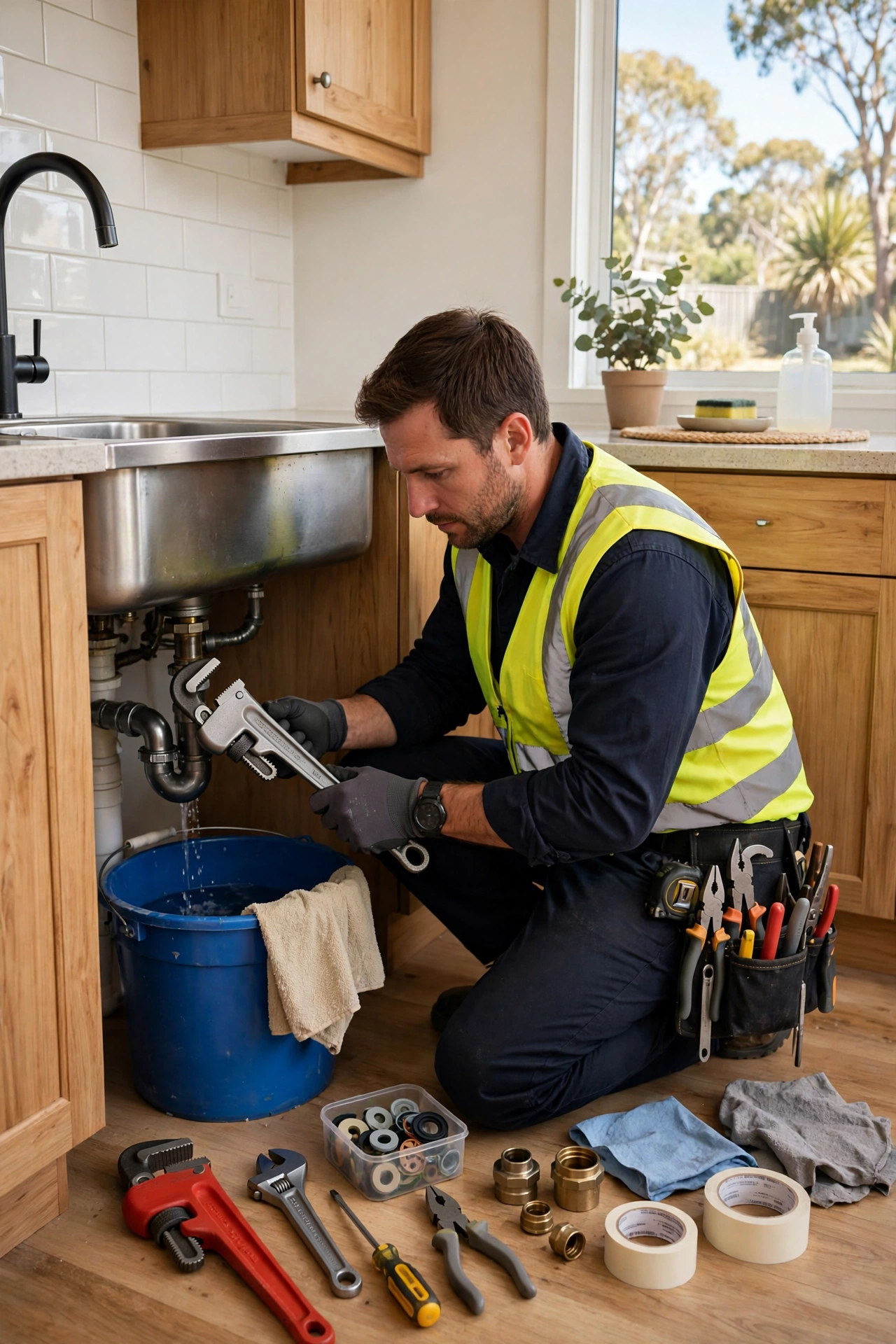
A plumber’s day depends on the job. On a construction site, you install pipes, fixtures, and hot water systems in new homes and buildings, following plans and the plumbing code. Maintenance work means fixing leaks, blocked drains, and broken taps in homes, offices, and factories, tracing a problem and repairing it. Commercial jobs involve installing and maintaining large systems in hospitals, schools, and shopping centres.
Most plumber roles are full time, with regular daytime hours. Some roles need on call work, especially in maintenance, where a burst pipe at night needs fixing. The work is physical: standing, bending, working in tight spaces, and carrying tools and pipe. You need to be comfortable working in roof spaces, under floors, and in all weather, because construction sites run in rain and heat.
The hardest part is not the physical work. It is the responsibility. A mistake in plumbing can flood a home, so the rules are strict and the checks are thorough. A plumber who follows the code, tests their work, and speaks up when something is unsafe is a plumber a company wants to keep.
Where to find real plumber jobs in Australia
The best place to start is Seek. Seek lists plumber roles from employers across Australia, and every listing shows the employer name, the location, and the requirements. Indeed Australia is the second place to check. Search for plumber and the city you want to work in, and read the listing in full before you apply.
Large plumbing companies hire directly through their own careers pages, and unions also list work for members. If a listing is on a company careers page, it is real. If a listing is only on a social media post with no company name and only a phone number, treat it with caution.
When you search, use the type of work as well as the role. Construction, maintenance, and commercial plumbers do different work with different hours. Read the listing for which type it is before you apply.
What employers usually ask for
The first thing an employer asks for is a licence. In Australia, plumbers are licensed by the state, and the rules are different in each state. Most states need an apprenticeship of about four years, followed by a trade exam, to become a licensed plumber. A licence in one state does not always let you work in another state, so check the rules for the state where you want to work before you apply.
Employers also ask for a clean driving record, because many plumber roles need a vehicle to get to sites. Some roles ask for a police check, especially for work in schools and hospitals. A high school diploma or equivalent is usually needed, and good English communication skills matter, because you talk to customers and other trades all day.
Previous experience helps a lot. A qualified plumber with several years of experience is in high demand. An apprentice with no experience can still find work, but the role will be an apprenticeship, not a licensed plumber role, and the pay is lower while you train.
How pay is described in a listing
Pay for plumber jobs in Australia is usually listed per hour or as an annual salary. The rate changes by state, by city, and by the type of work. A licensed plumber in a big city is usually paid more than an apprentice in a small town. Commercial plumbers are usually paid more than residential plumbers. Overtime is common in construction, and it is usually paid at a higher rate.
Read the listing for how pay is described. A real listing states the hourly rate or the annual salary, or it says the rate is discussed at interview. A listing that promises very high pay for very little work, with no employer name and no location, is a warning sign. Never pay for a job, a licence course from an unknown provider, or a uniform before you have a written offer.
The visa question, honestly
Plumber work is one of the few trades in Australia where some employers do sponsor workers, because there is a real shortage of plumbers. Sponsorship usually needs a recognised trade qualification and several years of experience, and the employer must show they tried to hire in Australia first. Some states have nomination programs for skilled trades, and the process takes months.
If you are outside Australia and want to work as a plumber, be careful with anyone who promises you a plumber job and a visa for a fee. A real employer never asks you to pay for a job or a visa. Check the official immigration website for the visa you would need, and check that the employer is real before you send documents or pay anything. If your trade qualification is from another country, check whether it needs to be recognised in Australia before you apply.
How to apply, step by step
Step 1: Get your licence and documents ready
Get your trade licence sorted first, or start the apprenticeship if you do not have one yet. Have your driving licence ready, and have your qualification documents ready, including any recognition paperwork if your qualification is from another country.
Step 2: Search properly on Seek and Indeed
Search Seek and Indeed Australia for plumber and the city you want to work in. Read each listing in full. Check the employer name, the type of work, the licence needed, and whether the role is licensed plumber or apprentice. Apply only to listings that name the employer and the work.
Step 3: Write a short, specific application
Keep your resume to one page. Put your licence and your experience at the top. Mention the types of work you have done: construction, maintenance, or commercial. Do not copy the job ad word for word. Write in your own words, and say clearly which state you can work in and when you can start.
Step 4: Prepare for a practical interview
Plumber interviews are usually short and practical. Expect questions about how you would find a leak, what you would do if you found unsafe pipework, and how you work with other trades. Answer with examples from your own experience.
Step 5: Check the offer before you accept
Read the offer before you sign. Check the pay, the hours, the type of work, and whether a vehicle and tools are provided. Check whether the role is licensed plumber or apprentice, because that changes the pay. If anything in the offer is different from what the listing promised, ask about it before you sign.
Licensing by state is the job
In plumbing, the licence is the job. Without the right state licence, you cannot work as a plumber in Australia, no matter how much experience you have. The licence is also what separates a real plumber job from a fake one. A real employer asks for your licence number. A fake employer does not ask, or asks you to pay for a licence from an unknown provider.
Each state has its own licensing body, and the rules are different in each one. A licence in New South Wales does not always let you work in Victoria or Queensland. If you trained in another country, your qualification may need to be assessed before you can take the Australian trade exam. Start that process early, because it takes time, and a recognised qualification is what opens the door to the best jobs.
What to avoid
Avoid a listing that has no employer name, no location, and only a phone number or messaging app. Never pay for a job, a licence course from an unknown provider, or a uniform before you have a written offer. Send your passport number or bank details only to an employer you have verified. Turn down a role that asks you to do plumbing work without the right licence, because that is illegal in Australia and it puts you and others at risk. If a listing promises very high pay for very little work, walk away.
Frequently asked questions about plumber jobs in Australia
What licence do I need to work as a plumber in Australia?
You need a state trade licence, usually earned through an apprenticeship of about four years and a trade exam. Each state has its own licensing body, so check the rules for the state where you want to work.
Can I work as a plumber in Australia without experience?
You can start as an apprentice with no experience, but the role will be an apprenticeship, not a licensed plumber role, and the pay is lower while you train. A licensed plumber role needs a licence and experience.
How much do plumbers earn in Australia?
Pay is usually listed per hour or as an annual salary, and it changes by state, city, and the type of work. Licensed plumbers are paid more than apprentices, and commercial work usually pays more than residential work. Check the live listing for the rate.
Can a plumber job lead to a visa in Australia?
Sometimes. Some employers sponsor plumbers, and some states have nomination programs for skilled trades. Sponsorship needs a recognised qualification and experience, and the process takes months. Check the official immigration website for the current rules.
What is the difference between a plumber and a gasfitter?
A plumber works with water, drainage, and sewerage. A gasfitter works with gas lines and appliances. Many Australian plumbers hold both licences, and a plumber with a gas licence is more likely to be hired.
Related guides
- Factory Jobs in Australia 2026
- Delivery Driver Jobs in Australia 2026
- How to Write a CV for Cleaning, Housekeeping, and Farm Jobs
Job804 shares job information and practical guides. Job804 is not an employer, not a recruitment agent, and does not guarantee a job, an interview, or a visa. Always check the live listing on Seek or Indeed Australia, and check visa conditions on the official immigration website before you apply or pay for anything. Never pay for a job offer.
Last checked: 17 November 2026. Check the live listing before you apply.
