
Introduction
Housekeeping jobs in New Zealand are steady, year round roles that suit people who want regular hours and a clear job. Hotels, motels, lodges, and resorts across the country hire housekeepers all year, and many of them hire people with no experience and train them on the job. The work is fast and physical, and it is one of the most common entry level roles in New Zealand hospitality.
This guide explains what housekeeping work in New Zealand actually involves, what employers usually ask for, where to find real listings, and how to apply safely. It is written for job seekers, and it does not promise a job, a visa, or sponsorship.
What housekeeping work in New Zealand actually looks like
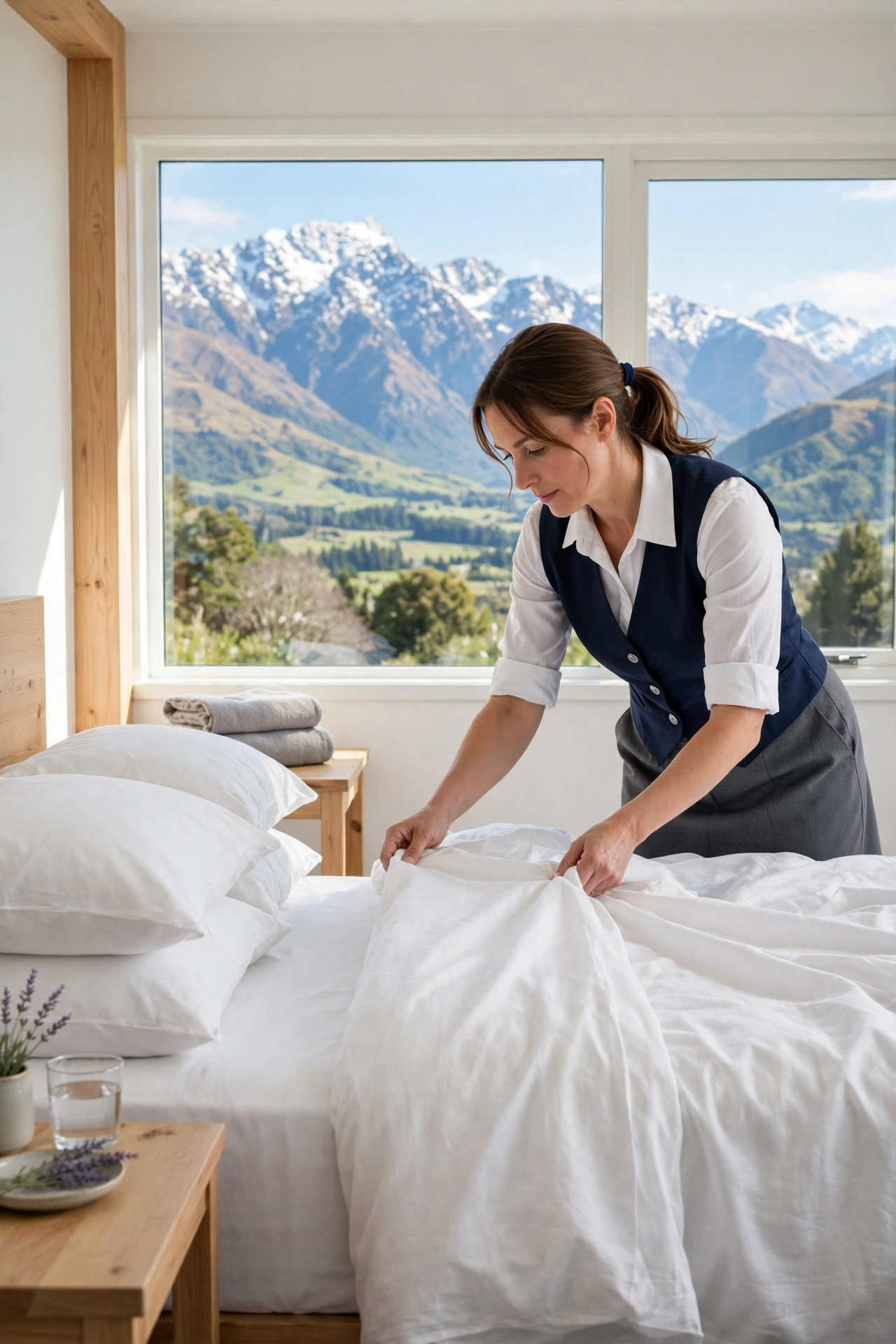
A housekeeper’s day in New Zealand depends on the workplace. In a hotel, you work to a room count. You turn over a set number of rooms in a shift, following the same checklist in each one: bed, bathroom, surfaces, floor, restock. A supervisor checks a few rooms during the day, and a room that fails the check comes back to you. In a motel, the work is similar but smaller, and you often clean the whole property with one or two other staff. In a lodge or a resort, the rooms are larger and the standard is higher, and you may also clean the restaurant and the common areas.
Most housekeeping roles are full time, with shifts of eight hours. Weekend work is normal in hotels and motels, and the pace is set by the number of rooms on your list. The work is physical: standing, walking, bending, and lifting cleaning equipment for a full shift. New Zealand winters are cold in the south, and the work is indoors, but the pace is fast, especially in the busy summer season when tourists arrive.
The hardest part is not the physical work. It is the pace and the standard. New Zealand hotels and lodges run at a high standard, and the checks are thorough. A housekeeper who works fast without cutting corners is a housekeeper a hotel wants to keep.
Where to find real housekeeping jobs in New Zealand
The best place to start is Seek New Zealand. Seek lists housekeeping roles from hotels, motels, lodges, and resorts across the country, and every listing shows the employer name, the location, and the requirements. Indeed New Zealand is the second place to check. Search for housekeeping and the city you want to work in, and read the listing in full before you apply.
Large hotel groups hire directly through their own careers pages. Groups like Accor, Hilton, and Millennium hire housekeepers across New Zealand, and their websites list open roles by hotel. If a listing is on a hotel careers page, it is real. If a listing is only on a social media post with no company name and only a phone number, treat it with caution.
When you search, use the city as well as the role. Housekeeping jobs in Auckland, Queenstown, and Rotorua are the most common, but they also have the most applicants. Tourist towns like Queenstown and Wanaka often have fewer applicants, and some employers in those towns provide accommodation.
What employers usually ask for
The first thing an employer asks for is the right to work in New Zealand. Most housekeeping roles are for people who already have work rights, such as citizens, residents, and working holiday visa holders. A work visa is needed for most housekeeping roles, and the employer will ask for proof before you start.
Employers also look for previous housekeeping or cleaning experience, but many hotels hire housekeepers with no experience and train them on the job. What matters more is attitude: turning up on time, working fast, following the checklist, and keeping a good manner with guests. A housekeeper who is reliable and quick is a housekeeper a hotel wants to keep.
Some roles ask for good English communication skills, because you talk to guests and supervisors all day. Some ask for experience with cleaning chemicals and equipment. If you have hotel experience, say so in your application, because it puts you in a smaller group of candidates.
How pay is described in a listing
Pay for housekeeping jobs in New Zealand is usually listed per hour. The rate changes by city and by the type of employer. A housekeeper in a downtown Auckland hotel is usually paid more than a housekeeper in a small town motel. Weekend shifts usually pay more than weekday shifts, but check the listing for the exact arrangement, because it changes from employer to employer.
Read the listing for how pay is described. A real listing states the hourly rate, or it says the rate is discussed at interview. A listing that promises very high pay for very little work, with no employer name and no location, is a warning sign. Never pay for a job, a training course from an unknown provider, or a uniform before you have a written offer.
The visa question, honestly
Housekeeping work is not usually a sponsored role in New Zealand. Most employers hire people who already have the right to work in New Zealand, such as citizens, residents, and working holiday visa holders. The working holiday visa is the most common path for young travellers who want housekeeping work in New Zealand.
If you are outside New Zealand and want to work as a housekeeper, be careful with anyone who promises you a housekeeping job and a visa for a fee. A real employer never asks you to pay for a job or a visa. Check the official immigration website for the visa you would need, and check that the employer is real before you send documents or pay anything.
How to apply, step by step
Step 1: Get your documents ready
Get a one page resume that lists your work history and any housekeeping or cleaning experience, even if it was short. Have your work visa or permit details ready, because employers will ask. If you have a reference from a past employer, have it ready too.
Step 2: Search properly on Seek and Indeed
Search Seek New Zealand and Indeed New Zealand for housekeeping and the city you want to work in. Read each listing in full. Check the employer name, the location, the hours, and whether accommodation is provided. Apply only to listings that name the employer and the hotel or motel.
Step 3: Write a short, specific application
Keep your resume to one page. Put your experience and your availability at the top. Mention any experience in hotels, cleaning, or customer service. Do not copy the job ad word for word. Write in your own words, and say clearly which city you can work in and when you can start.
Step 4: Prepare for a short interview
Housekeeping interviews are usually short and practical. Expect questions about how you would clean a room, what you would do if a guest complained, and whether you can work weekends. Answer with examples from your own experience, even if that experience is from a different job.
Step 5: Check the offer before you accept
Read the offer before you sign. Check the pay, the hours, the shift pattern, and whether the role is full time, part time, or casual. Check whether a uniform is provided and whether meals are included on shift. If anything in the offer is different from what the listing promised, ask about it before you sign.
Hotel, motel or lodge: the choice that decides your day
Housekeeping work in New Zealand splits into three kinds, and the choice decides what your day looks like. In a hotel, you work to a room count, with a team, and a supervisor checking your work. The pace is fast, the shifts are regular, and you always have someone to ask for help. In a motel, the property is smaller, the team is smaller, and you often clean the whole place with one or two other staff. The pace is steadier, and you know every room. In a lodge or a resort, the rooms are larger and the standard is higher, and you may also clean the restaurant and the common areas.
Hotels suit people who like routine and teamwork. Motels suit people who like a quieter day and a small team. Lodges suit people who like a high standard and a beautiful place to work. Before you apply, ask the employer which kind the role is, how many rooms are on the list, and how much time you get per room. A role that gives you enough time per room is a role worth taking, and a role that rushes you from room to room is not.
What to avoid
Avoid a listing that has no employer name, no location, and only a phone number or messaging app. Never pay for a job, a training course from an unknown provider, or a uniform before you have a written offer. Send your passport number or bank details only to an employer you have verified. Turn down a role that asks you to work without the right visa, because that puts you at risk. If a listing promises very high pay for very little work, walk away.
Frequently asked questions about housekeeping jobs in New Zealand
Do I need experience to work as a housekeeper in New Zealand?
No. Many hotels hire housekeepers with no experience and train them on the job. A good attitude, reliability, and speed matter more than experience for entry level roles.
How much do housekeepers earn in New Zealand?
Pay is usually listed per hour, and it changes by city and employer. A housekeeper in a downtown Auckland hotel is usually paid more than a housekeeper in a small town motel. Check the live listing for the rate.
Can I get a sponsored visa as a housekeeper in New Zealand?
Usually not. Most employers hire people who already have the right to work in New Zealand, such as citizens, residents, and working holiday visa holders.
What is the difference between housekeeping and cleaning in New Zealand?
Housekeeping is the term hotels use for cleaning guest rooms and public areas. Cleaning is the term used for offices and homes. The work is similar, but the pace and the standard are different.
Do hotels in New Zealand provide accommodation for housekeepers?
Some do, especially in tourist towns like Queenstown and Wanaka. Check the listing for whether accommodation is provided, because it changes from employer to employer.
Related guides
- Cleaner Jobs in New Zealand 2026
- Waiter Jobs in New Zealand 2026
- How to Write a CV for Cleaning, Housekeeping, and Farm Jobs
Job804 shares job information and practical guides. Job804 is not an employer, not a recruitment agent, and does not guarantee a job, an interview, or a visa. Always check the live listing on Seek New Zealand or Indeed New Zealand, and check visa conditions on the official immigration website before you apply or pay for anything. Never pay for a job offer.
Last checked: 17 November 2026. Check the live listing before you apply.
