
Introduction
Fruit picking jobs in Canada are seasonal, hands on roles. They suit people who like working outdoors and do not mind a physical day. Pickers work in orchards and berry fields across British Columbia, Ontario, and Quebec. They gather apples, cherries, blueberries, strawberries, and grapes while the harvest is running. The season moves from crop to crop, so the work changes through the summer and into the autumn.
This guide explains what fruit picking work in Canada actually involves. It covers what farms look for, where to find real listings, and how to apply safely. It is written for job seekers, and it does not promise a job, a visa, or sponsorship.
What fruit picking work in Canada actually looks like
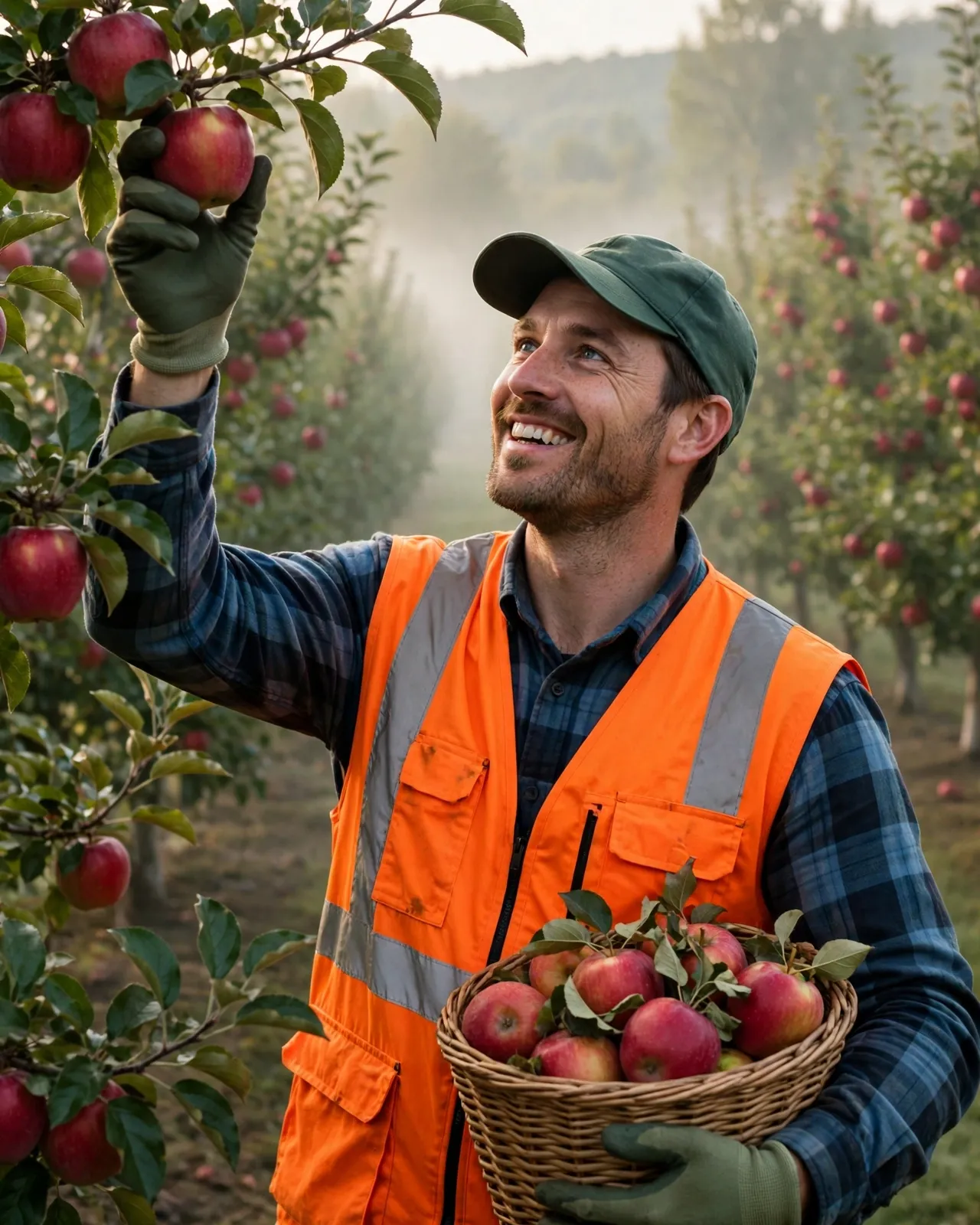
A picker day starts early, often before the heat builds up. In an orchard you might be on a ladder, filling picking bags with apples or pears. Then you carry them to a bin at the end of the row. In a berry field the work is lower to the ground, with buckets and crates. The pace is set by how fast the fruit ripens. Some farms pay by the hour and some pay by the bin or bucket. The listing should say which one it is before you start.
The work changes with the crop. Cherry picking is fast and short, with ladders and long days while the fruit is ready. Blueberry picking is steadier, with rows that go on for a long way and a rhythm you settle into. Apple picking is the longest season of the lot, running from late summer into autumn. It often includes sorting and packing work once the harvest slows down.
Most picking is done outdoors in all kinds of weather. A summer morning can be cool and damp, the middle of the day can be hot and dusty, and rain does not always stop the harvest. You need to be comfortable on your feet all day, bending, reaching, and carrying, and you need to be able to keep a steady pace without damaging the fruit. Pickers who are careful with the fruit get asked back, because bruised fruit cannot be sold.
Where to find real fruit picking jobs in Canada
The best place to start is Job Bank, the Canadian government job board, which lists farm and harvest roles from employers across the country. Search for fruit picking and the province you want to work in, and read the listing in full before you apply. Indeed Canada is the second place to check, and it often lists the same roles from large orchards and farm labour companies.
Large orchards in the Okanagan Valley in British Columbia hire pickers directly through their own websites and seasonal job pages. Farms in Ontario around Niagara and Norfolk County do the same, and they often list the start date, the crop, and the type of housing in the ad. Farm labour contractors also place pickers on short harvest jobs, which can be a good way to start if you are new to the area and want to try a few different farms.
When you search, use the province as well as the role. Fruit picking in British Columbia is different from fruit picking in Ontario or Quebec. British Columbia has the longest season, with cherries first and apples last. Ontario has a strong berry and grape season. Quebec has a shorter season but steady work on apple and berry farms. Check the start date carefully, because a harvest that starts in June will not wait for someone who arrives in August.
What employers usually ask for
The first thing an employer asks for is proof you can do physical work outdoors. Fruit picking does not usually need a formal qualification, but employers want to see that you can keep up with the pace, follow instructions, and work a full day on your feet. Previous farm or outdoor work helps, and a reference from a past employer is worth more than a long resume.
The second thing is reliability. Harvest work runs on a tight schedule, and a farm needs people who turn up on time every day the crop is ready. If you miss the morning start, the crew is short and the fruit waits for no one. Employers remember the pickers who show up in the rain and finish the row, and those are the people who get called first next season.
Employers also look for a valid work permit or the right to work in Canada, and they will ask to see it before you start. Some farms provide shared housing for seasonal workers, and if they do, the listing should say what it costs and what is included. Ask about transport to the orchard too, because some farms are a long way from the nearest town and there may be no bus.
How pay is described in a listing
Pay for fruit picking jobs in Canada is usually listed per hour, or per bin or bucket for piece rate work. The rate changes by province, by the crop, and by the farm. A real listing states the rate clearly, or it says the rate is discussed at interview. Piece rate work can pay more on a good day, but it depends on your speed and the quality of the fruit, so read the listing carefully before you decide.
Read the listing for how pay is described. A listing that promises very high pay for very little work, with no employer name and no farm location, is a warning sign. Never pay for a job, a ticket, a uniform, or a visa before you have a written offer. A real farm pays you for your work, and it never asks you to pay to start picking.
The visa question, honestly
Canada runs seasonal farm worker programs, and fruit picking is one of the jobs those programs cover, but the rules depend on your country, your age, and the program you apply through. Most farms hire people who already have the right to work in Canada, such as citizens, permanent residents, and people on work permits that allow farm work.
If you are outside Canada and want to pick fruit there, be careful with anyone who promises you a picking job and a visa for a fee. A real employer never asks you to pay for a job or a visa. Check the official immigration website for the visa you would need, and check that the employer and the farm are real before you send documents or pay anything. The application takes time, and a harvest start date can pass while paperwork is still moving, so start early.
How to apply, step by step
Step 1: Get your documents ready
Gather a short resume that lists any farm, outdoor, or physical work you have done, and add references from a past employer if you have them. Have your passport and your work permit or proof of the right to work in Canada ready. If you have a driving licence, mention it, because some farms need drivers for the harvest crew.
Step 2: Search properly on Job Bank and Indeed
Search Job Bank and Indeed Canada for fruit picking and the province you want to work in. Read each listing in full. Check the employer name, the farm location, the crop, the start date, and whether housing is provided. Apply only to listings that name the employer and the farm.
Step 3: Write a short, specific application
Keep your resume to one or two pages. Put your physical work experience at the top, and say clearly which province you can work in and when you can start. Mention any farm work you have done before, and be honest about your fitness for a full day of outdoor work. Do not copy the job ad word for word.
Step 4: Prepare for a practical interview
Fruit picking interviews are often short and practical. Expect questions about whether you can work outdoors in all weather, whether you can lift and carry a full picking bag, and whether you can start on the date the harvest needs. Some farms ask for a short trial morning. Answer with examples from your own experience, and be honest about what you can do.
Step 5: Check the offer before you accept
Read the offer before you sign. Check the pay, whether it is hourly or piece rate, the hours, the farm location, and whether housing and transport are included. Check whether the role is for one harvest or the full season, and what happens if the weather stops work for a day. If anything in the offer is different from what the listing promised, ask about it before you sign.
Your pace and your reputation
In fruit picking, your pace and your care with the fruit travel with you. A picker who works steadily, handles the fruit gently, and finishes the row gets called back. A picker who rushes, bruises the fruit, or leaves half a row behind does not. Farm managers talk to each other, and crew leaders remember the good pickers by name.
Look after your body, because a harvest season is long and the work is hard on your back and knees. Wear good boots, a hat, and sunscreen, drink water through the day, and take the breaks the farm gives you. A picker who stays healthy through the season earns more than one who burns out in the first week.
What to avoid
Do not apply to a listing that has no employer name, no farm location, and only a phone number or messaging app. Never pay for a job, a ticket, a uniform, or a visa before you have a written offer. Keep your passport number and bank details private until you have verified the employer. Turn down any role that asks you to work without a proper work permit, because that is not allowed in Canada. If a listing promises very high pay for very little work, walk away.
Frequently asked questions about fruit picking jobs in Canada
Do I need experience to pick fruit in Canada?
Most farms do not need previous picking experience, but they do need people who can work a full day outdoors and keep a steady pace. Previous farm or outdoor work helps, and a good reference is worth a lot.
When is the fruit picking season in Canada?
The season usually runs from late spring to autumn. Cherries come first, then berries, then apples and grapes. British Columbia has the longest season, while Ontario and Quebec run a shorter one.
How much do fruit pickers earn in Canada?
Pay is usually listed per hour or per bin, and it changes by province, by the crop, and by the farm. Check the live listing for the rate, because it changes from employer to employer.
Can I work as a fruit picker in Canada without a work permit?
No. You need the right to work in Canada, such as a work permit that allows farm work. Be careful with anyone who says you can work without one, and check the official immigration website.
Is housing provided for fruit pickers in Canada?
Some farms provide shared housing for seasonal workers, and some do not. If housing is offered, the listing should say what it costs and what is included. Ask before you accept the role.
Related guides
- Farm Jobs in Canada 2026
- Fruit Picking Jobs in Australia 2026
- How to Find Real Jobs on Seek and Indeed and Avoid Fake Job Offers
Job804 shares job information and practical guides. Job804 is not an employer, not a recruitment agent, and does not guarantee a job, an interview, or a visa. Always check the live listing on Job Bank or Indeed Canada, and check visa conditions on the official immigration website before you apply or pay for anything. Never pay for a job offer.
Last checked: 19 November 2026. Check the live listing before you apply.
