
Introduction
Kitchen helper jobs in New Zealand are busy, hands on roles. They suit people who want to start in hospitality and learn the kitchen from the ground up. Kitchen helpers work in restaurants, cafes, hotels, hospitals, and school kitchens in Auckland, Wellington, Christchurch, and smaller towns. They wash dishes, prepare ingredients, clean work areas, and support the cooks through service.
This guide explains what kitchen helper work in New Zealand actually involves. It covers what employers look for, where to find real listings, and how to apply safely. It is written for job seekers, and it does not promise a job, a visa, or sponsorship.
What kitchen helper work in New Zealand actually looks like
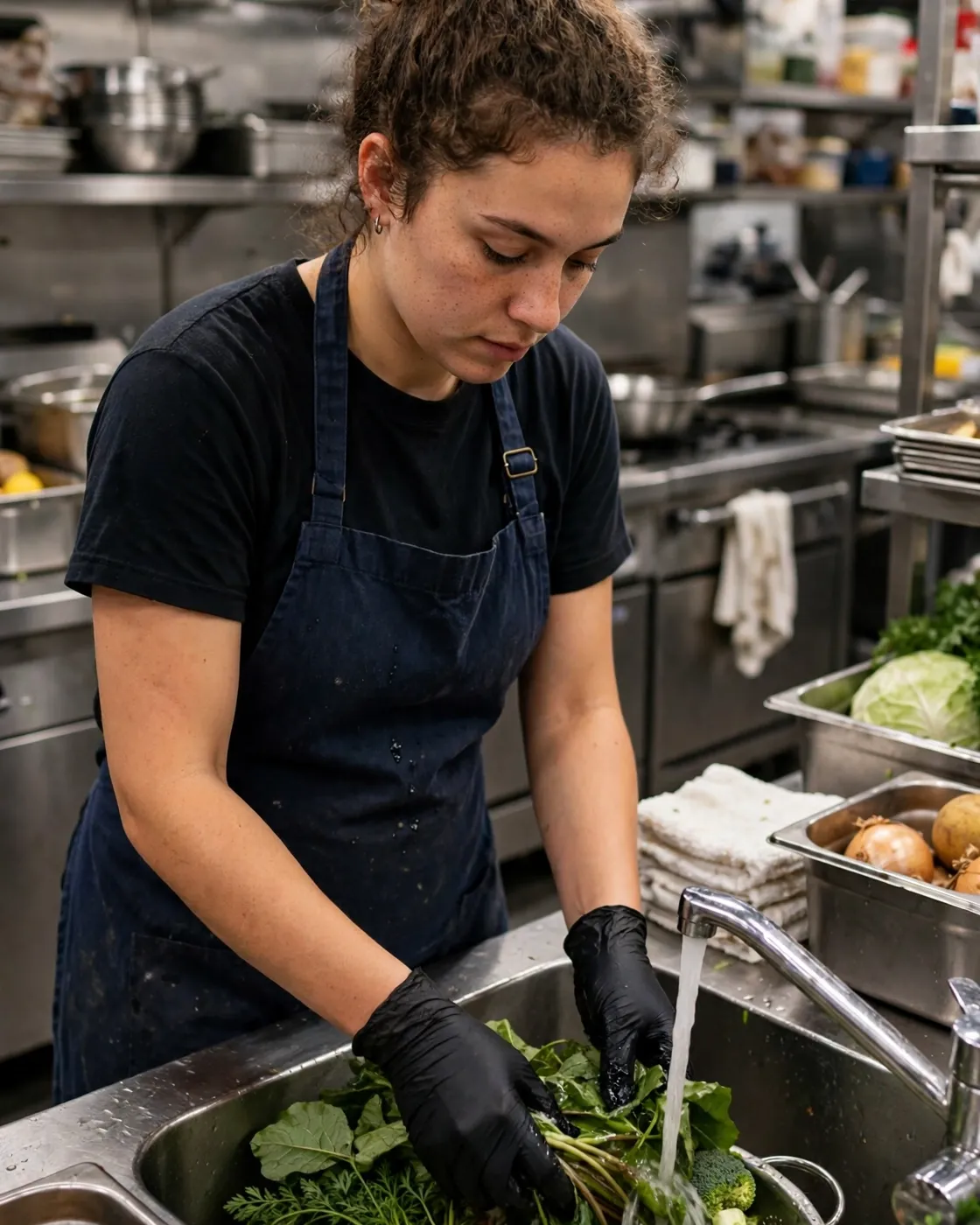
A kitchen helper day starts before service. Clean the work areas, check the stock, and help the cooks with prep. You might be washing vegetables, peeling potatoes, portioning ingredients, and stacking clean dishes for the line. Once service starts, the pace picks up fast. Wash dishes as they come back, keep the benches clear, and fetch what the cooks need.
The work changes with the kitchen. A cafe kitchen helper works a fast breakfast and lunch service, with simple prep and a lot of dishwashing. A restaurant kitchen helper works a longer dinner service, with more complex prep and more pressure on keeping the line clean. A hotel or hospital kitchen helper works set menus for large numbers, with early starts and strict food safety rules.
Most kitchen helper work is done in hot kitchens on your feet all day. You need to be comfortable with heat, steam, and noise, and able to keep a steady pace through a full service. Kitchen helpers who stay calm when the dishes pile up get asked back, because a clean kitchen is a fast kitchen. A kitchen helper who learns the recipes and the routine can move up to a cook role, and many head chefs started this way.
Where to find real kitchen helper jobs in New Zealand
The best place to start is Seek New Zealand, which carries the most kitchen and hospitality listings in the country. Search for kitchen helper and the city you want to work in, and read the listing in full before you apply. Trade Me Jobs is the second place to check, and it often lists the same roles from restaurant groups, hotels, and catering companies.
Large restaurant groups and hotels hire kitchen helpers directly through their own careers pages. Cafes and pubs list roles on their own websites and on local job boards, and they often say whether the role is full time, part time, or casual in the ad. Hospitality staffing agencies also place kitchen helpers on short term roles, which can be a good way to start if you are new to a city and want to try different kitchens.
When you search, use the city as well as the role. Kitchen helper jobs in Auckland are different from kitchen helper jobs in a smaller town. City kitchens have more competition and more fine dining work. Smaller town kitchens may offer more hours and a steadier roster, and some offer staff meals. Check whether the listing mentions split shifts, because many kitchens split the day into lunch and dinner service.
What employers usually ask for
The first thing an employer asks for is proof you can work hard and keep up with a busy kitchen. Kitchen helper work does not usually need a formal qualification, but employers want to see that you can follow instructions, work fast, and keep a clean work area. Previous kitchen or cleaning work helps, and a reference from a past employer is worth more than a long resume.
The second thing is food safety. Most kitchens need a basic food hygiene certificate, and some need a food safety certificate for the role. If you do not have one yet, it is a short course and it is worth doing before you apply, because many employers will not let you start without it. Some kitchens also ask for a first aid certificate, which helps too.
Employers also look for reliability and a good attitude. Kitchens run on a tight roster, and a helper who turns up on time for every shift, including weekends and evenings, is worth keeping. Some roles ask for a driving licence, especially for jobs in smaller towns. Previous experience helps, but kitchens do hire people with no experience and train them on the job, because the work can be learned quickly by someone willing to work hard.
How pay is described in a listing
Pay for kitchen helper jobs in New Zealand is usually listed per hour. The rate changes by city, by the type of kitchen, and by your experience. A real listing states the hourly rate clearly, or it says the rate is discussed at interview. Weekend and evening work usually pays more than a standard weekday, and the listing should say whether the role is full time, part time, or casual.
Read the listing for how pay is described. A listing that promises very high pay for very little work, with no employer name and no kitchen location, is a warning sign. Never pay for a job, a certificate from an unknown provider, a uniform, or a visa before you have a written offer. A real kitchen pays you for your work, and it never asks you to pay to start washing dishes.
The visa question, honestly
Kitchen work in New Zealand is usually done by people who already have the right to work in New Zealand, such as citizens, residents, and people on work visas that allow hospitality work. The rules depend on your visa type, your age, and your experience, and they change from time to time.
If you are outside New Zealand and want to work as a kitchen helper, be careful with anyone who promises you a kitchen job and a visa for a fee. A real employer never asks you to pay for a job or a visa. Check the official immigration website for the visa you would need, and check that the employer and the kitchen are real before you send documents or pay anything. Do not pay anyone who says they can speed up a visa for a fee.
How to apply, step by step
Step 1: Get your documents ready
Gather a short resume that lists any kitchen, cleaning, or hospitality work you have done, and add references from a past employer if you have them. Get a basic food hygiene certificate if you do not have one. Have your work visa or proof of the right to work in New Zealand ready.
Step 2: Search properly on Seek and Trade Me Jobs
Search Seek New Zealand and Trade Me Jobs for kitchen helper and the city you want to work in. Read each listing in full. Check the employer name, the kitchen location, the type of food, the roster, and the certificates needed. Apply only to listings that name the employer and the kitchen.
Step 3: Write a short, specific application
Keep your resume to one or two pages. Put your kitchen or cleaning experience at the top, and say clearly which city you can work in and when you can start. Mention any food safety training you have, and be honest about your experience. Do not copy the job ad word for word.
Step 4: Prepare for a practical interview
Kitchen helper interviews are often short and practical. Expect questions about whether you can work in a hot kitchen, whether you can keep up with a busy service, and whether you can work weekends and evenings. Some kitchens ask for a short trial shift. Answer with examples from your own experience, and be honest about what you can do.
Step 5: Check the offer before you accept
Read the offer before you sign. Check the pay, the hours, the roster, the kitchen location, and whether staff meals are included. Check whether the role is full time, part time, or casual, and what that means for your hours. If anything in the offer is different from what the listing promised, ask about it before you sign.
Your work area and your reputation
In a kitchen, your work area and your reputation travel with you. A helper who turns up on time, keeps a clean bench, washes dishes fast, and helps the cooks without being asked gets called back. A helper who leaves a mess, disappears during service, or complains about the work does not. Head chefs talk to each other, and kitchen managers remember the good ones.
Look after your knives and your tools, keep your food hygiene certificate current, and take the food safety rules seriously. A clean kitchen is what keeps a restaurant open and customers safe. A good record is worth as much as a clean bench, and it is what keeps you working in the better kitchens, and moving up to a cook role when you are ready.
What to avoid
Do not apply to a listing that has no employer name, no kitchen location, and only a phone number or messaging app. Never pay for a job, a certificate, a uniform, or a visa before you have a written offer. Keep your passport number and bank details private until you have verified the employer. Turn down any role that asks you to work without a food hygiene certificate, because that is not allowed in most New Zealand kitchens. If a listing promises very high pay for very little work, walk away.
Frequently asked questions about kitchen helper jobs in New Zealand
Do I need a qualification to work as a kitchen helper in New Zealand?
Most kitchens do not need a formal qualification, but they do need a basic food hygiene certificate and someone who can work hard and keep up. Previous kitchen or cleaning work helps, and a good reference is worth a lot.
What is a food hygiene certificate and do I need one?
A food hygiene certificate shows you know how to handle food safely. Most kitchens need one, and it is a short course, so it is worth doing before you apply.
How much do kitchen helpers earn in New Zealand?
Pay is usually listed per hour, and it changes by city, by the type of kitchen, and by your experience. Check the live listing for the rate, because it changes from employer to employer.
Can I work as a kitchen helper in New Zealand without experience?
Yes, many kitchens hire people with no experience and train them on the job. You will need a food hygiene certificate and a willingness to start with the basic tasks, such as washing dishes and cleaning.
Can a kitchen helper become a cook in New Zealand?
Yes, many cooks started as kitchen helpers. If you learn the recipes, watch the cooks, and ask to help with prep, a good kitchen will give you more to do, and you can move up to a cook role.
Related guides
- Kitchen Helper Jobs in Australia 2026
- Kitchen Helper Jobs in Canada 2026
- Waiter Jobs in New Zealand 2026
Job804 shares job information and practical guides. Job804 is not an employer, not a recruitment agent, and does not guarantee a job, an interview, or a visa. Always check the live listing on Seek New Zealand or Trade Me Jobs, and check visa conditions on the official immigration website before you apply or pay for anything. Never pay for a job offer.
Last checked: 19 November 2026. Check the live listing before you apply.
