
Introduction
Apple picking jobs UK listings appear each year when orchards in Kent, Herefordshire, Worcestershire and other fruit growing counties need hands at harvest time. Apples do not ripen all at once. Growers need people who can turn up, work steadily and handle fruit with care, because a bruised apple loses value fast.
This guide explains the work in plain terms. You will find what a normal day looks like, where real listings appear, how pay is usually described, what employers tend to ask for and what the visa position is. Nothing here promises a job. The aim is to help you read a listing properly, prepare well and avoid the traps that catch new applicants every season. Apple picking suits people who like physical work outdoors and do not mind early starts, ladders and changeable weather.
What the work actually looks like
An apple picking day starts early. Crews gather at a meeting point, collect picking bags or buckets, and walk to the orchard rows assigned for the day. A supervisor explains which variety is ready, what colour and size to look for, how to twist the fruit off the spur without breaking it and where full bags or bins go. Pickers then work along a row, checking each apple, picking only fruit at the right stage and placing it gently in the bag.
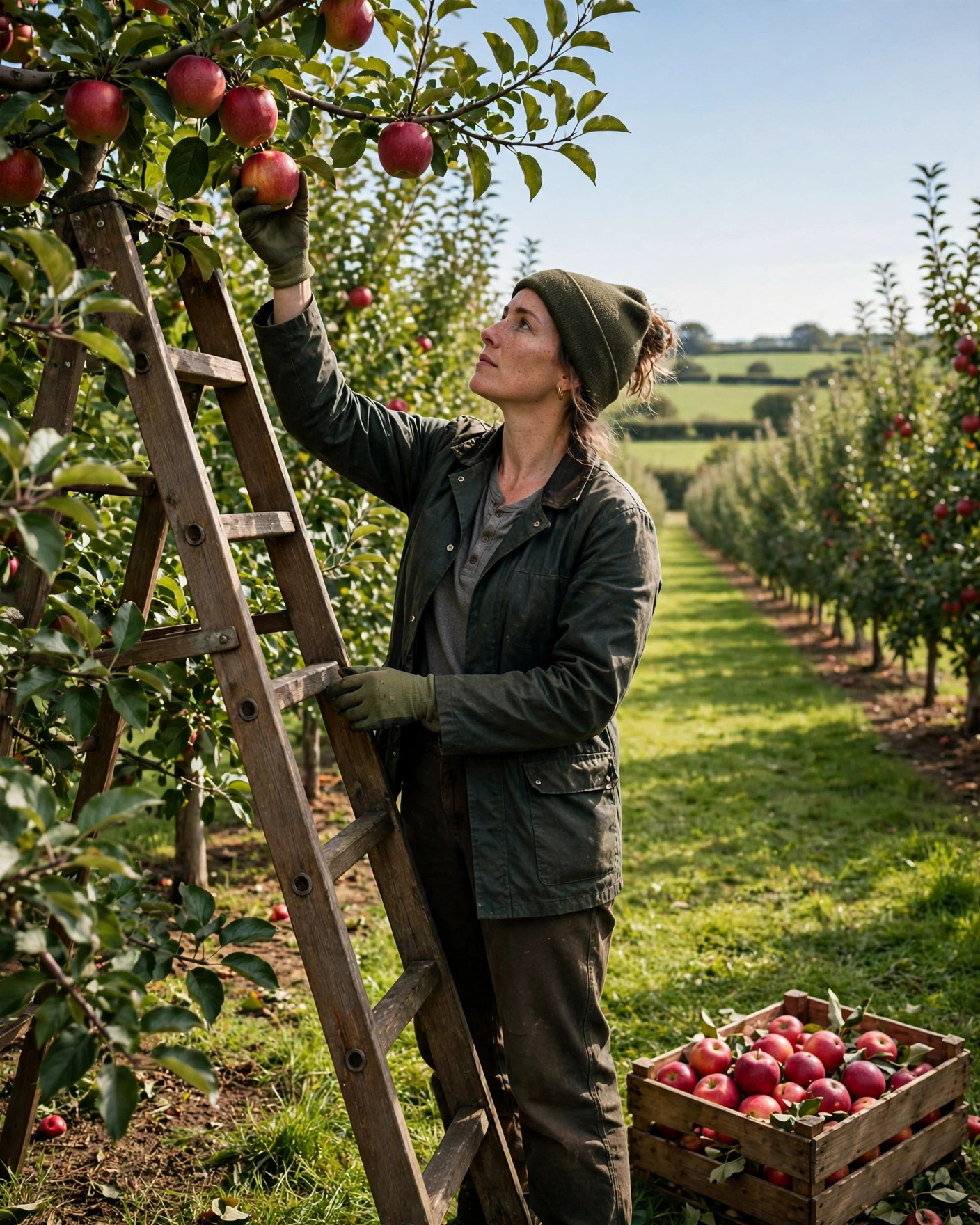
Orchard work is outdoors all day. You move between trees and use steps or a ladder for higher fruit. The ground can be soft after rain, so sturdy footwear matters. The pace is steady, and experienced pickers move with a rhythm that new starters learn over days, not hours. A hat, sunscreen and layers you can remove help you stay comfortable.
Quality matters as much as speed. Packhouses grade apples by size, colour and skin condition, so careful handling is part of the job from the start. You learn to hold fruit lightly, avoid dropping apples into the bag and keep your containers clean. Supervisors check bins through the day and give short, direct feedback. Farms value reliability more than speed in the first week.
Where to find real listings
Indeed UK and Reed carry most of the apple picking jobs UK readers will see. Search with the exact phrase from this guide, then try close variants such as apple picker, orchard worker, fruit picker and harvest worker. Add a county or town name when you know where you can travel to. Kent, Herefordshire, Worcestershire, Gloucestershire and Lincolnshire appear often, and other orchard areas list roles as different varieties ripen.
Read the listing in full before you apply. A genuine listing names the crop, the location, the start date or harvest window, the working pattern and the way pay is described. It states whether accommodation is provided, what it costs if there is a charge and how transport to the orchard works. A listing that hides the location, gives no employer name and asks you to message a private number deserves a careful second look. Grower association pages and local farm websites also list harvest roles directly.
Orchards, ladders and grading
Orchards are laid out in rows, and each row holds one variety at a similar stage of ripeness. That layout helps pickers work in order, row by row, without missing trees. Dwarf trees keep much of the fruit within reach, while older tall trees need ladders for the top branches. A supervisor shows new pickers which rows are ready and which rows to leave, because picking underripe fruit hurts the pack out. Learning to spot the right colour and size takes practice.
Ladders are a normal part of apple picking, and safety training covers them before you climb. A ladder should sit firm on level ground and lean at a safe angle. You climb with care, keep both hands free while you move, and pick into a bag worn across your body. Never overreach, and never stand on the top rungs. If a ladder feels unsteady, step down and tell your supervisor.
Grading starts in the orchard, not in the packhouse. Pickers sort as they go, putting good fruit in the picking bag and leaving damaged fruit aside as directed. At the end of a row, fruit is tipped gently into a bin. In the packhouse, apples are graded by size, colour and skin marks, and fruit that fails the grade goes to juice or processing.
What employers usually ask for
Most apple picking listings ask for very little formal experience. A willingness to work outdoors, good physical fitness for a full shift on your feet and reliability across the harvest period matter more than a certificate. Some growers welcome returning pickers, and some prefer people who have picked before, but many roles are open to beginners who can show they understand the work and will turn up each day.
The right to work in the UK is checked before employment starts. Employers ask for documents that prove that right, and they keep a record as the law requires. Have those documents ready before you apply, and be honest about your status. A farm cannot change immigration rules for an applicant, and a listing that suggests it can is not one to trust. Language needs are practical, not academic. You need enough English to understand safety instructions, grading directions and shift information. Farms give training on handling fruit and hygiene.
How pay is described in a listing
Pay is described in general terms in listings, and this guide follows that same care. A listing usually states an hourly rate or a piece rate, the working pattern and whether overtime or weekend work is available. It may state pay per hour or pay per month depending on the pattern of work. Check the live listing for the exact figure, because rates change between farms, varieties and seasons, and a figure copied from an old guide can mislead you.
Read the pay section with the hours beside it. A role with long hours in a busy harvest week and short hours in a slow week will feel very different from a role with steady hours. Ask how hours are set, who sets the rota and how much notice you get for changes. Some farms pay by the bin or by weight, and the listing should explain the rate and the minimum it guarantees. A genuine employer gives a contract or a written statement of terms, explains the pay date and provides a payslip. Keep your payslips and your contract in one place.
The visa question, honestly
Apple picking in the UK is seasonal work, and the right to take that work depends on the visa or status you hold. If you already have the right to work in the UK, you can apply in the same way as any other job. If you do not, check whether a lawful route applies to you before you apply, and do that check on the official UK government website, not on a social media post or a message from a stranger.
Sponsorship for apple picking roles is limited and not automatic. Many orchards do not sponsor visas for picking roles, and a listing that promises a visa to every applicant is not giving you an honest picture. Some growers work with licensed sponsors for seasonal horticulture work, and the Seasonal Worker visa route exists for horticulture. That route is narrow, time limited and tied to a licensed sponsor and a specific role. Never pay anyone for a visa or a job. If you are already in the UK on a visa, check what work that visa allows before you apply.
How to apply
Step 1: Pick a county and a place you can reach
Decide where you can live or travel for the season. Kent suits people who can reach the south east orchards. Herefordshire and Worcestershire suit people who can reach the west midlands orchards. Check the distance, the travel time and the accommodation position before you shortlist a role. A role you can reach reliably each day is worth more than a role that looks good on a screen and is hard to get to.
Step 2: Read three live listings in full
Open three live listings on Indeed UK or Reed and read each one from the title to the last line. Compare the variety, the location, the dates, the hours, the pay description and the accommodation note. Look for the employer name and the application route. Save the links in your notes and write one line beside each one that says why it fits you.
Step 3: Prepare a short and honest application
Give your name, your contact details, your availability, your location and whether you can travel to the orchard. Say plainly if you have picked before and name the crop if you can. Say if you have not picked before and explain why you want the work. Say honestly if you are comfortable with ladders. Attach a simple CV if the listing asks for one, and make sure your phone number and email address are correct.
Step 4: Apply through the route the employer names
Apply through Indeed UK, Reed, the grower website or the application form named in the listing. Do not send money, do not share passport scans with a private message account and do not apply through a link sent by a stranger. Keep a copy of what you sent and the date you sent it. If the employer asks for documents, share them only through the official application route or in person at the farm.
Step 5: Prepare for the first shift before you hear back
Buy sturdy footwear, a hat, sunscreen, waterproof layers and a reusable water bottle. Check the travel route and the meeting time. Keep your right to work documents in one folder. If the farm offers the role, you will be ready to start without a last minute rush. If the farm asks you to attend an induction, turn up on time, listen to the safety briefing and ask about any instruction you do not understand.
What to avoid
Avoid any offer that asks you to pay for a job, a visa, a certificate or a guaranteed place. Avoid listings with no employer name, no location and no clear duties. Avoid recruiters who will only talk on a private messaging app, who change the pay figure during the chat or who ask for your passport details before you have seen a contract. Avoid copying a salary figure from an old post or a social media comment into your plans. Check the live listing instead.
Avoid applying for a role that does not fit your visa conditions. That mistake wastes your time and the employer time, and it can cause serious problems if you start work you are not allowed to do. Avoid starting work without a written statement of terms, a pay date and a clear way to contact your supervisor. A post that promises high pay, free housing, free travel and a visa to everyone is promising too much at once.
Frequently asked questions
Do I need experience to pick apples in the UK?
Most listings welcome beginners. Employers look for reliability, physical fitness for outdoor work and a willingness to learn the grading standard. Experience helps you pick faster. A beginner who turns up on time and keeps quality high is a strong candidate.
How long does the apple picking season last?
The length depends on the variety and the farm. Some roles cover one variety and last a few weeks. Others move from one variety to another and run for several months. The listing should state the expected start and the likely length.
Is accommodation provided for apple pickers?
Some growers provide on site accommodation, and the listing should state the cost, if any, and what is included. Some roles expect you to arrange your own place to stay. Check the location, the travel options and the cost before you accept a role. Shared accommodation is common, and the terms should be written down before you move in.
Can I apply for apple picking jobs from outside the UK?
You can apply, but you need the right to work in the UK before you can take the job. The Seasonal Worker visa route exists for horticulture, and it is tied to a licensed sponsor and a specific role. Sponsorship is limited and not automatic. Check the official UK government website for the current rules, and never pay anyone for a visa or a job offer.
What should I wear for my first shift?
Wear sturdy closed footwear with a good grip, layers you can add or remove, a waterproof jacket and a hat. Carry sunscreen, water and a packed lunch. Keep your phone charged and keep your right to work documents ready for the induction. Ask the farm about gloves, and follow the safety briefing for ladders, steps and farm vehicles.
Related guides
Job804 shares job information and practical guides. Job804 is not an employer, not a recruitment agent, and does not guarantee a job, an interview, or a visa. Always check the live listing on Indeed UK or Reed, and check visa conditions on the official government website before you apply or pay for anything. Never pay for a job offer.
Last checked: 26 November 2026. Check the live listing before you apply.
