
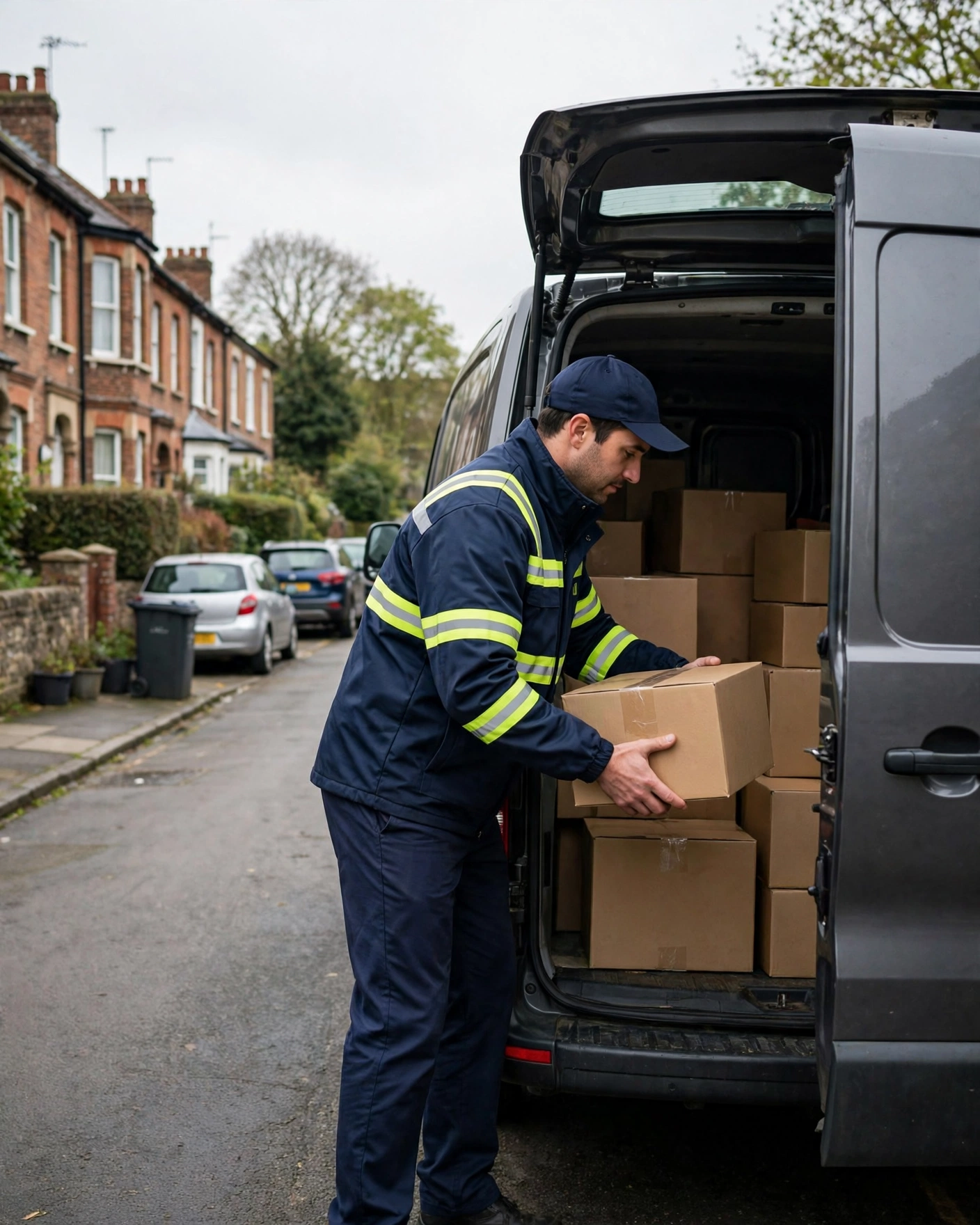
Introduction
Delivery driver jobs UK wide suit people who like being out on the road. You enjoy working on your own. A round finished on time gives you pride. Delivery drivers carry parcels, food, and goods to homes and businesses across the country. It ranges from a single van load in a small town to hundreds of drops a day in a city.
This guide explains what delivery work in the UK actually involves. It covers the vehicle question, where to find real listings, and how to apply safely. The guide is written for job seekers. It does not promise a job, a visa, or sponsorship.
What delivery driver work in the UK actually looks like
A delivery driver in the UK collects parcels or goods from a depot. The driver loads them into a van and delivers them to the addresses on the round. The work changes with the kind of delivery. A parcel courier delivers boxes to homes and businesses. That work often means a multi-drop round with dozens or hundreds of stops. A food delivery driver collects orders from restaurants and takes them to customers. That work often happens in the evening. A supermarket delivery driver takes grocery orders to homes in a set time slot. A white goods driver delivers large items such as fridges and washing machines. That driver often fits them in place too.
A normal day starts at the depot. The driver checks the manifest first. Next, the driver loads the van in the right order and plans the route. The loading order matters. The first drop should sit at the front of the van and the last drop at the back. Then the driver is out on the road for most of the day. The driver drives from one address to the next and carries parcels to doors. A signature or a photo serves as proof of delivery.
Physical work, hours, and the road
Delivery work is physical. It means lifting boxes, walking up driveways and stairs, and getting in and out of the van all day. It also means working in all weathers, because parcels still need to go out when it rains. A driver needs a good sense of direction and a calm head in traffic. The round has to be finished on time.
Hours in delivery work are often long, with early starts common. The first parcels leave the depot in the morning. Some drivers work full time for one company. Others work part time or on a flexible pattern. Evening and weekend work is common, because that is when people are home to take a parcel.
Where to find real delivery driver jobs in the UK
Indeed UK is the best place to start. It carries delivery driver jobs UK wide across the country. Search for delivery driver, van driver, or courier driver. Add the town or city you want to work in. Read the listing in full before you apply. Reed is the second place to check. It often lists the same roles from delivery firms and from recruitment agencies that supply drivers to depots.
Delivery company websites are also worth checking. Parcel firms, supermarkets, and food delivery firms list driver roles on their own careers pages. They often have roles in the town where the depot is. Recruitment agencies that specialise in driving list delivery driver roles on their own websites too. They often have a branch in the town where the work is.
When you search, check where the depot is and how you will get there. This matters for early starts when the buses are not yet running. Check whether the listing says the role is full time or part time. Also check whether it is parcels, food, or supermarket delivery. A real listing names the employer or the agency, the area, and the kind of delivery. It also says what the work involves.
The vehicle question and multi-drop rounds, explained simply
The first question in delivery work is whose van you drive. Some employers provide a company van. The firm owns the van, pays for the insurance and the servicing, and often pays for the fuel. The driver turns up at the depot, takes the van keys, and drives the round. This is the usual pattern for supermarket delivery, for large parcel firms, and for white goods delivery. It is the simpler choice for a driver who does not own a van.
Other employers ask the driver to use their own van. This is common for courier work, where firms pay the driver per parcel or per drop. The driver owns the van, pays for the insurance, the servicing, and the fuel. The pay has to cover those costs. Before you take a role like this, work out the costs honestly. A van that breaks down or needs new tyres comes out of your own pocket. A real employer will tell you clearly whether the role uses a company van or your own van. Treat a listing that hides this as a warning sign.
A multi-drop round is the heart of parcel delivery. The driver has a list of addresses, often dozens or more, and must deliver to each one in turn. The round follows a planned order, street by street. That plan stops the driver crossing the town more than needed.
Some rounds pay per drop, and some pay per hour. Read the listing to see which pattern the role uses. Ask at interview how many drops the round has and how long it usually takes.
What employers usually ask for
Employers want a driver who is safe, reliable, and careful with parcels. Experience counts. An employer wants to see driving work you have done. Share the names of past employers and the kinds of delivery you did. If you have driven a van before, say so. That experience counts.
You need a full driving licence. Most employers ask for a clean licence with few or no points. Many employers ask for a licence held for a year or more, because the insurer sets that rule. Employers look for people who know the local area or can learn it fast. Depot managers value a driver who can read a manifest and use a scanner or a phone app. They also value polite talk with customers.
Be honest about your driving record. An employer will check it before you start. If you are new to delivery driving, say so. Say what you can bring from your last job. Many drivers start as a driver’s mate or on a small round. They learn the work there, and move on to a bigger round once they have experience.
How pay is described in a listing
Employers usually list pay for delivery driver jobs in the UK per hour. Some list a rate per drop for courier work instead. The rate changes by region, by the kind of delivery, and by your experience. A real listing states the hourly rate or the per drop rate clearly. Or it says you will discuss the rate at interview.
Read the listing to see how the employer describes pay. Some roles pay a higher rate for weekend work. Some pay a higher rate for evening work. So read the listing and ask about it at interview if it is not clear. Treat a listing as a warning sign if it promises very high pay for very little work. That warning grows if it gives no employer name and no area. Never pay for a job, a certificate from an unknown provider, or a visa before you have a written offer. A real employer pays you for your work. It never asks you to pay to start work.
The visa question, honestly
Most delivery driver work in the UK goes to people who already have the right to work here. That group includes citizens, residents, and people on work visas that allow this kind of work. The rules depend on your visa type and your situation.
Outside the UK? Be careful with anyone who promises a delivery job and a visa for a fee. A real employer never asks you to pay for a job or a visa. Check the official government website for the visa you would need. Check that the employer and the agency are real before you send documents or pay anything.
How to apply, step by step
Step 1: Get your documents ready
Gather a short resume that lists your driving experience, any delivery work, and the kinds of vehicles you have driven. Add two references from past employers. Let them know an employer may call them. Have your driving licence ready, with a note of any points on it. Have proof of your right to work in the UK ready too.
Step 2: Search Indeed UK and Reed for delivery driver jobs UK wide
Search Indeed UK and Reed for delivery driver, van driver, or courier driver. Add the town or city you want to work in. Read each listing in full. Check the employer or agency name, the area, and the kind of delivery. Also check whether the role uses a company van or your own van. Apply only to listings that name the employer or the agency and the area.
Step 3: Write a short, specific application
Keep your resume to one or two pages. Put your driving experience at the top. Say clearly which area you can work in and when you can start. Mention the kinds of delivery you know best, such as parcels, food, or supermarket delivery. Do not copy the job ad word for word.
Step 4: Prepare for an interview
Delivery driver interviews are often practical. Be ready to answer questions about a time you finished a round on time when the day went wrong. Think about what you would do if a parcel could not be delivered. Prepare to explain how you would handle a customer who is upset. Some employers ask for a short driving assessment. Answer with examples from your own experience. Be straight and honest from the first minute.
Step 5: Check the offer before you accept
Read the offer before you sign. Check the pay, the hours, the days, and whether the van is yours or the company’s. Ask whether fuel and insurance are covered. Find out whether the employer pays for any extra training. If anything in the offer is different from what the listing promised, ask about it before you sign.
What to avoid
Avoid a listing that has no employer or agency name, no area, and only a phone number or messaging app. Never pay for a job, a certificate, or a visa before you have a written offer. Never send your passport number or bank details to an employer or agency you have not verified. Turn down a role that hides whether the van is yours or the company’s. The costs are very different in each case. Refuse a role that asks you to drive without the licence your situation needs. Say no to a role that asks you to work without the visa your situation needs. Wait for a written offer that states the pay and the hours before you start work.
Frequently asked questions about delivery driver jobs in the UK
Do I need my own van to work as a delivery driver in the UK?
It depends on the role. Many employers provide a company van. The firm pays for the insurance and servicing. Courier work often asks for your own van. The driver pays for the insurance, servicing, and fuel in that case. The listing should say which pattern the role uses.
How much do delivery driver jobs UK wide pay?
Employers usually list pay per hour, or as a rate per drop for courier work. It changes by region, by the kind of delivery, and by your experience. Weekend and evening work often pay more. Check the live listing for the rate, because it changes from employer to employer.
Can I apply for delivery driver jobs UK wide from overseas?
You can apply from overseas. Some employers hire drivers from other countries. You still need the right to work in the UK and a valid UK driving licence. So check that before you apply.
Is delivery work mostly parcels or food?
Most delivery work is parcels, because parcel firms run large multi-drop rounds every day. Food and supermarket delivery also exist, often in the evenings and at weekends. The listing should say which kind of delivery the role involves.
Do employers provide training?
Most employers provide training when you start. Check what training the employer provides and whether it is paid.
Related guides
Job804 shares job information and practical guides. Job804 is not an employer, not a recruitment agent, and does not guarantee a job, an interview, or a visa. Always check the live listing on Indeed UK or Reed. Also check visa conditions on the official government website before you apply or pay for anything. Never pay for a job offer.
Last checked: 25 November 2026. Check the live listing before you apply.
