
Introduction
Clean rooms and tidy public spaces sit behind every good stay in Italy, and housekeeping teams do that work. Hotels, guesthouses, agriturismo farms and holiday apartments across the country hire housekeeping staff through the year, and demand rises sharply when tourists arrive. Housekeeping jobs Italy searches stay popular because the work is practical, many roles do not need a long formal qualification to start, and hotels often hire in teams.
This guide explains the work as it really is. It covers what housekeeping involves on a normal shift, how the work differs between a city hotel, a boutique hotel and an agriturismo, where seasonal peaks appear on the coast and in the mountains, where real listings are posted, what employers usually ask for, how pay is described, and what the visa rules look like for people outside the European Union.
What the work actually looks like
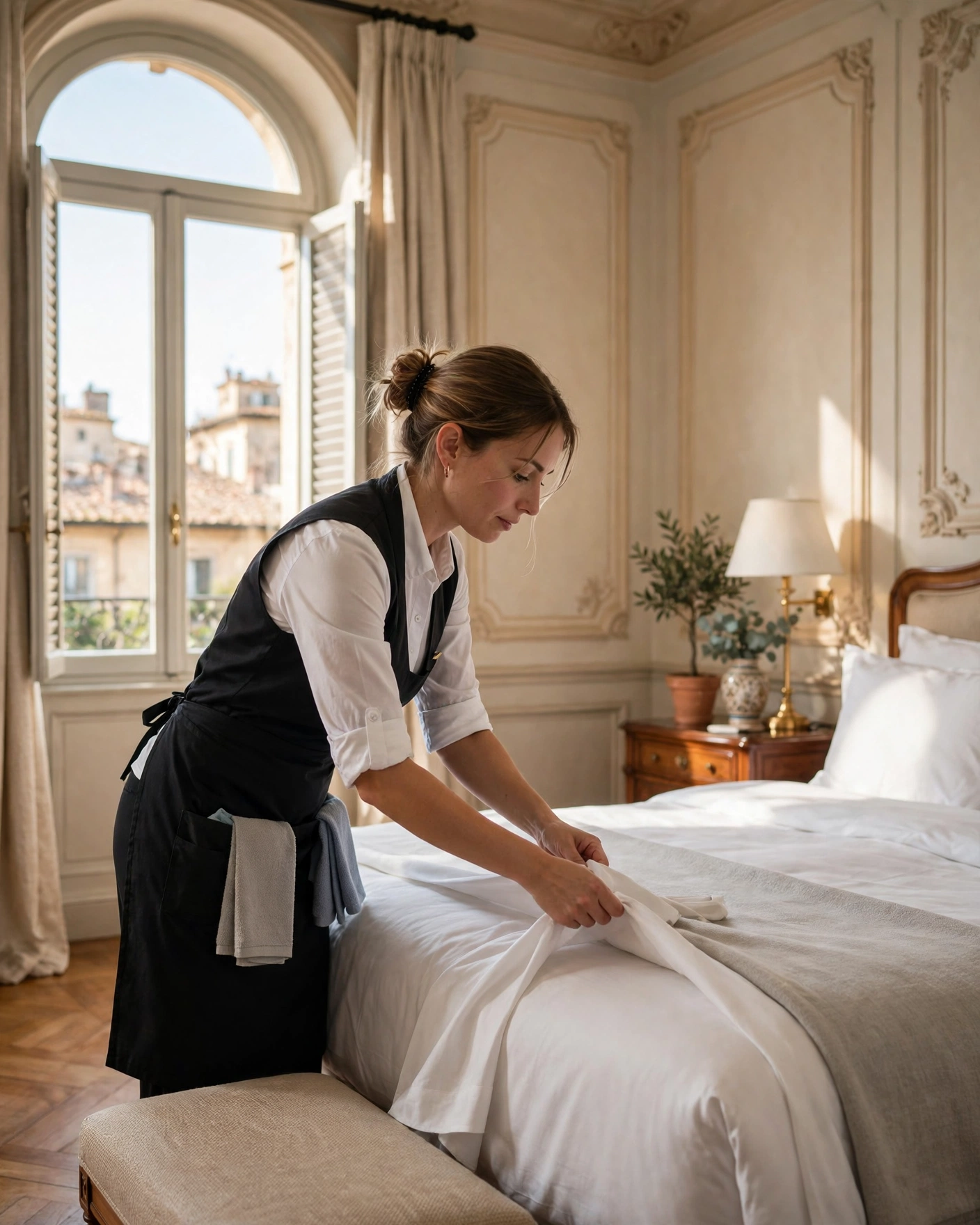
Housekeeping in Italy means cleaning guest rooms, changing bed linen and towels, cleaning bathrooms, vacuuming floors and restocking supplies. A room attendant works from a list of rooms each day, and each room has a set standard to meet. Beds are made to the hotel standard, surfaces are wiped, mirrors and glass are polished, and the bathroom is cleaned and checked. Small details matter, because guests notice a dusty shelf or a stained towel at once.
Mornings are the busiest part of the day. Guests check out, rooms need turning over fast, and new guests arrive in the afternoon. A room attendant learns to work quickly without cutting corners, and the housekeeping supervisor checks rooms before they are marked ready. Laundry is part of the work in smaller hotels, where staff may wash, dry and fold linen. Larger hotels send laundry out, and staff focus on rooms and public areas.
Public areas need care too. Lobbies, corridors, lifts and stairwells are cleaned daily, and dining rooms are tidied between services. Cleaning products and equipment need safe handling, and hotels train staff on which product suits each surface. Shifts usually start in the morning, and weekend work is common because hotels are busiest then. Standing, bending and lifting are part of every shift, and the work is physical.
Agriturismo and boutique hotels versus city hotels, and seasonal peaks
Housekeeping in Italy is not one job. The setting changes the work, and the three settings below show how.
Agriturismo and rural stays
An agriturismo is a farm stay, often in Tuscany, Umbria, Piedmont or Sicily, where guests stay on a working farm and eat local food. Housekeeping here covers a small number of rooms or apartments, and the work feels personal. Guests stay longer, they talk with the hosts, and the rooms often have rustic features such as stone floors and wooden beams that need care.
Staff in an agriturismo often do more than clean rooms. They may help with breakfast service, tend gardens or prepare apartments for new arrivals. Italian is useful here, because hosts and many guests speak it, and the farm setting is quiet and rural. Transport matters, because an agriturismo may sit far from a bus stop or a town. Ask about transport and accommodation before you accept a rural role.
Boutique hotels
Boutique hotels are small, stylish hotels with a strong character, and they are common in Rome, Florence, Venice and along the Amalfi Coast. Housekeeping in a boutique hotel follows high standards, and the details matter more than in a large hotel. Rooms may have delicate fabrics, artwork and designer furniture, and staff are trained to clean each item the right way.
Guests in boutique hotels expect personal service, and housekeeping staff may leave a note, arrange fresh flowers or prepare a turndown service in the evening. The team is small, so each person covers more ground. English helps with international guests, and Italian helps with the team and with local suppliers. A tidy, discreet manner suits this setting well.
City hotels and seasonal peaks
City hotels in Milan, Rome and Florence are larger, and housekeeping there is organised in teams with a clear chain of command. A head housekeeper runs the department, supervisors check floors, and room attendants work to a daily room list. The pace is faster, the standards are written down, and training is structured. Career paths are clearer here, and a room attendant can move into a supervisor role with experience.
Seasonal peaks shape hiring across the country. Coastal towns, lakes and islands hire extra housekeeping staff from spring through autumn, and the Amalfi Coast, Sardinia and Sicily are busiest in summer. Mountain resorts in the Alps and the Dolomites hire for the winter ski season, and the work there runs from December into spring. Seasonal contracts end when the season ends, so check the dates on the listing before you apply.
Where to find real listings
Indeed Italy is one of the main places to search for housekeeping jobs, and listings there show the employer, the location and the requirements. Search by role and city, such as addetta alle pulizie in Rome or housekeeping in Milan, and read the full listing before you apply. Hotel groups also post openings on their own career pages, and those listings are often the freshest.
Staffing agencies handle many hotel roles in Italy. Randstad, Adecco, Manpower and Gi Group all list housekeeping and hotel service roles, and they recruit for hotels, resorts and events across the country. A real agency never charges the job seeker for a placement, and it should show you the employer name and the contract terms before you sign anything. If an agency asks for money first, walk away.
What employers usually ask for
Experience is the first thing most employers look for. A hotel hiring a room attendant wants someone who has cleaned rooms to a set standard before, and who can turn a room over in the time allowed. A small guesthouse may accept less experience if the person is reliable, tidy and willing to learn. Your CV should name the places you worked, the type of cleaning you did, and the size of the properties you handled.
Attention to detail sits near the top of most listings. Employers look for people who notice small things, such as a mark on a mirror or a towel folded the wrong way. Reliability matters just as much, because a missing team member slows the whole floor. Language skills help as well. Italian is useful in every hotel, because the team speaks it and many guests speak it. English is expected in hotels that serve international guests.
How pay is described
Pay for housekeeping jobs in Italy is usually described as an hourly rate or a monthly salary, and it varies by city, employer, role and experience. A room attendant in a Milan hotel earns a different amount from a housekeeper in a small rural agriturismo, and that gap is normal. Collective agreements cover many hospitality roles in Italy, and those agreements set minimum terms for pay, hours and holidays in the businesses they cover.
Listings sometimes mention meals during shifts or accommodation in tourist areas. Treat those extras as part of the whole offer, not as a replacement for pay. A staff meal during a shift is common in hotels, and it is worth having, but it does not change the salary on the contract. Seasonal roles in resorts sometimes include staff accommodation, and the contract should state what is included.
The visa question honestly
Citizens of the European Union, the European Economic Area and Switzerland do not need a visa to work in Italy. They can move, live and work there under freedom of movement rules, and they register their residence after arrival. Citizens of other countries need a work visa or a residence permit that allows work, and the visa must be in place before the job starts.
Italy runs yearly quotas for non-EU workers through the Decreto Flussi system. Each year the government sets how many work permits are available for different sectors, and employers apply for a quota place for the worker they want to hire. The number of places is limited, and the timing follows the government calendar. No agent can guarantee a visa, and no employer can promise one on your behalf. Visa decisions are made by Italian authorities, not by recruiters or by the hotel.
How to apply
A careful application takes a little time, and it shows the employer that you are serious. These steps keep the process simple and honest.
Step 1: Choose the setting and the region
Pick one setting that fits your experience, such as a city hotel, a boutique hotel or an agriturismo, and one region you would like to live in. A focused search in Rome, Milan, Tuscany or a coastal region gives better results than applying for every housekeeping job in the country.
Step 2: Prepare a clear CV and a short cover note
Write a CV that lists your housekeeping experience in order, with the employer name, the dates and the type of cleaning you did. Add your language levels and a reference contact if you have one. Keep the cover note short, and say why this hotel or farm stay and this role suit you.
Step 3: Apply through the real listing
Send your application through the portal, the agency page or the employer career page where you found the listing. Attach your CV as a PDF and include the documents the listing asks for. Avoid sending the same message to many employers at once, because a tailored note reads better and gets more replies.
Step 4: Prepare for the interview and the trial shift
Employers often call shortlisted housekeepers for a short interview first, and then invite them to a trial shift. Learn a little about the hotel, its rooms and its style before the call. Plan your travel, confirm the trial date and time, and ask whether the trial is paid.
Step 5: Read the contract and apply for the visa
When an offer comes, read the contract in full before you sign it. Check the job title, the salary, the hours, the start date and the notice period. If you need a visa, follow the official Italian process with the contract and the documents the embassy asks for. Keep copies of everything you send.
What to avoid
Never pay for a job offer. A real employer in Italy does not charge a housekeeper for a contract, a trial shift or a visa letter. If someone asks for money before you have a signed contract, the offer is not genuine. The same rule covers agents who charge a fee for a placement or for a guaranteed visa.
Fake listings are a real problem in overseas job searches. Watch for listings with no employer name, no clear location, or a salary that looks far above the normal range. A listing that uses only a messaging app for contact and avoids a proper interview should raise a warning sign. Search the employer name online and check whether the hotel or farm stay exists. If an offer feels rushed or secretive, slow down and check it before you send anything.
FAQ
Do I need experience to get a housekeeping job in Italy?
Experience helps, and most hotels prefer someone who has cleaned rooms to a set standard before. Small guesthouses and agriturismo farms may accept less experience if the person is reliable, tidy and willing to learn. A reference from a hotel, a guesthouse or a cleaning job at home can strengthen an application from someone new to the work.
What is the difference between a room attendant and a head housekeeper?
Room attendants clean guest rooms and public areas to a set standard each day. A head housekeeper runs the whole housekeeping department, plans rosters, trains staff, checks rooms and orders supplies. The head housekeeper role needs years of experience, and it is a natural next step for a room attendant who learns the standards well.
Can I find seasonal housekeeping work in Italy?
Yes, and seasonal work is common. Coastal towns, lakes and islands hire extra housekeeping staff from spring through autumn, and mountain resorts hire for the winter ski season. Seasonal contracts end when the season ends, so check the dates on the listing before you apply. Some seasonal roles include staff accommodation, and the contract should state that clearly.
Do I need to speak Italian to work in housekeeping in Italy?
Italian helps in every hotel, because the team speaks it and many guests speak it. Hotels that serve international guests also use English, so a housekeeper with strong cleaning skills and little Italian can still find work. Learning Italian improves your options a lot, and it matters more in rural stays and small towns where guests speak little English.
How long does the visa process take for a non-EU housekeeper?
Processing times vary by country, by visa type and by how complete the application is. Italy runs yearly quotas through Decreto Flussi, and the timing follows the government calendar. Some applications move in weeks, and others take months, so apply as early as you can. A complete application with a signed contract and the documents the embassy asks for moves faster than one with missing papers.
Related guides
Job804 shares job information and practical guides. Job804 is not an employer, not a recruitment agent, and does not guarantee a job, an interview, or a visa. Always check the live listing on Seek, Indeed, or the employer official website, and check visa conditions on the official immigration website before you apply or pay for anything. Never pay for a job offer.
Last checked: 28 November 2026. Check the live listing before you apply.
