
Introduction
Germany needs caregivers in care homes, hospitals and home care services. An ageing population, staff shortages and growing demand for elder care have made this a steady field. Caregiver jobs in Germany suit people who are patient, kind and willing to learn German. Work involves helping older people and people with health needs in daily life. Tasks include personal care, meals, mobility help and companionship.
Care work in Germany is regulated. Qualifications, language level and recognition rules matter more here than in many other job fields. Employers look for training, experience and a clear path to recognition. People with a nursing or care qualification from another country need to check how that qualification maps to German rules. People without a care qualification may still find assistant roles, with training on the job.
This guide explains what caregiver jobs in Germany involve in 2026. Readers will find the daily tasks, recognition of foreign qualifications, German language level, care homes versus home care, where to find real listings, what employers usually ask for, how pay is described, and the visa rules that apply. Nothing here promises a job or a visa. Listings change often, and each employer sets its own terms. Checking the live listing and the official immigration website stays the best way to confirm the details before applying.
What the work actually looks like
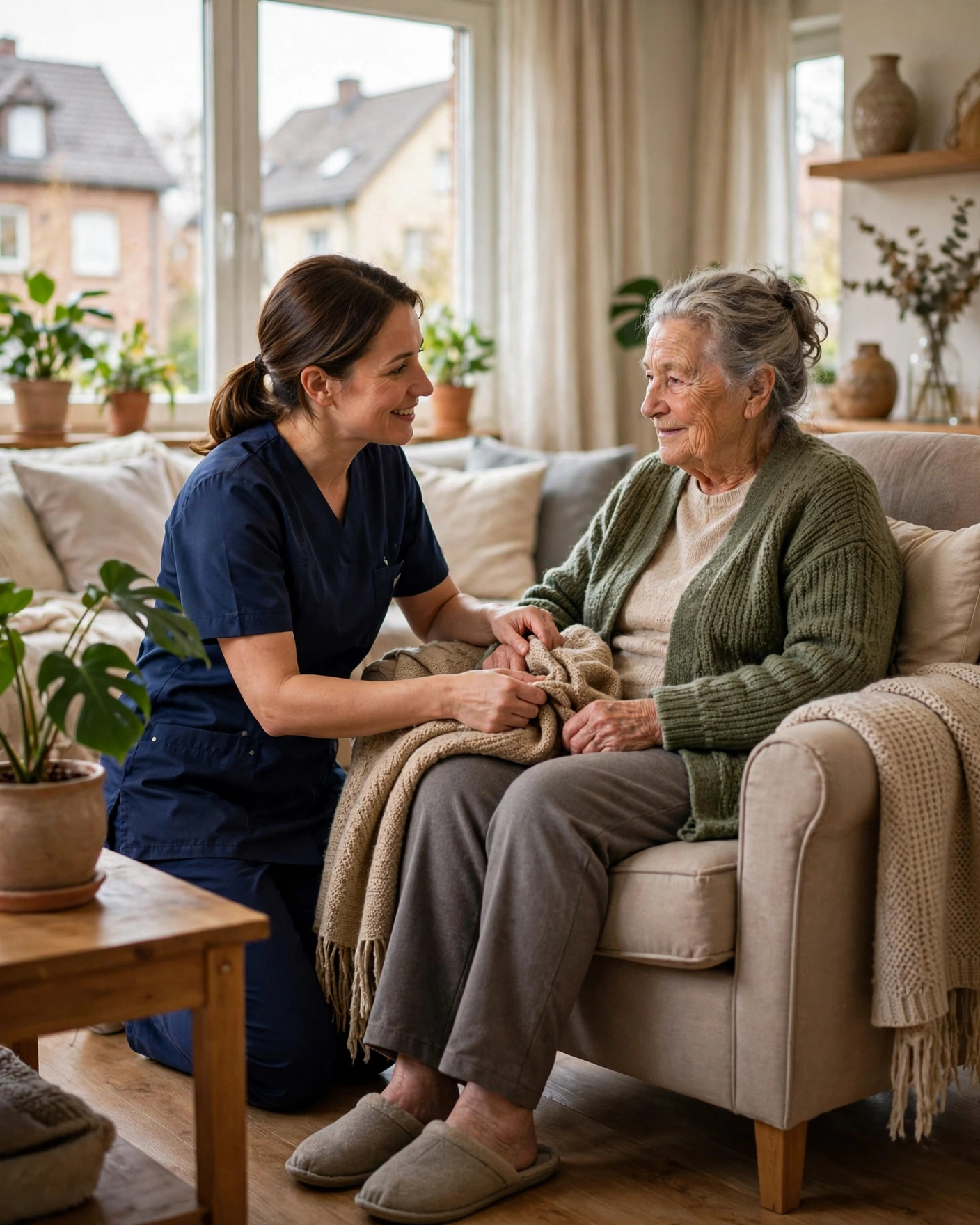
Care work centres on daily living. Caregivers help clients wash, dress, eat and move around the home or care home. They help with medication reminders, as directed by nurses and doctors. Walks, exercises and social activities are part of the day too. Caregivers talk with clients, listen to worries and keep notes on health and mood changes.
Care homes run on shifts. Morning shifts help residents get up, wash and eat breakfast. Day shifts cover meals, activities and personal care. Evening shifts help residents settle for the night. Night shifts cover checks and urgent needs. Rotas change weekly, and weekend work is common. Team work matters, since nurses, care assistants and other staff share tasks and hand over notes at shift changes.
Home care work is different. Caregivers visit clients in their own homes, often alone. Each visit has a set list of tasks and a set time. Travel between visits is part of the day. Workers need to plan routes, keep records and report concerns to the care service. Home care suits people who like independence and one to one contact. Care homes suit people who like team work and a fixed workplace.
Recognition of foreign qualifications, German language level, care homes versus home care
Recognition is the formal process that checks a foreign care or nursing qualification against German standards. The competent authority in the German state where the person wants to work handles the case. Applicants submit certificates, transcripts, work history and proof of language level. The authority may grant full recognition, ask for extra training or an exam, or ask for a period of supervised work. Each case depends on the training content and the country of issue.
German language level matters for recognition and for daily work. Care roles often ask for B1 or B2 German on the Common European Framework. B1 covers everyday conversation and basic work tasks. B2 covers more complex talks with clients, families and medical staff. Language certificates from recognised test providers are the usual proof. Studying German before arrival helps a lot, since care work needs clear speech with older people who may speak slowly or with a local accent.
Care homes offer a structured setting. Teams work together, nurses are on site, and training is often provided. Shifts are set, and support is close by. Home care offers more independence and varied days, with travel between clients. Pay, hours and support differ between the two settings. Some workers prefer the team feel of a care home. Others prefer the personal contact of home visits. Trying an assistant role first can help a new worker learn which setting fits best.
Where to find real listings
The Federal Employment Agency portal, known as the Bundesagentur für Arbeit, lists care jobs across Germany. Its job search covers care homes, home care services and hospitals. Listings often give the employer name, the work location, the main tasks, the qualification asked for and the working hours. People in Germany can visit a local office for help. People outside Germany can search the online portal to learn what employers are asking for.
Indeed Germany lists caregiver jobs from employers and recruitment firms. Search terms such as caregiver, care assistant, nurse, elderly care and home care help narrow the results. Each listing shows the poster, the location and the basic terms. Readers should check whether the poster is the care home itself or a third party. Direct employer listings often give clearer detail about shifts, training and recognition support.
Care providers also post jobs on their own websites. Large care home groups and home care services list openings by town and region. These listings often explain the team, the shift pattern and the training offered. Checking the provider website gives a fuller picture than a short job board post. Job titles and terms vary, so reading the full listing matters more than the headline.
Social media groups and chat groups can share care job posts, yet they need extra care. A post in a group is not proof that the job is real. Cross check the employer name, the location and the contact details against the Federal Employment Agency portal, Indeed Germany or the employer official website. When a post has no employer name, no clear location and no written terms, treat it as unverified and move on.
What employers usually ask for
A care qualification or relevant experience helps most. Employers look for nursing training, care certificates or past work with older people, people with disabilities or hospital patients. Experience in a care home, home care or family care is useful to mention. People without a formal qualification may still find assistant roles, with training provided.
German language is a key requirement. Most employers ask for B1 or B2 German, with a certificate as proof. Care work needs clear talks with clients, families, nurses and doctors. Workers who speak German with confidence find the job easier and safer. Studying German to at least B1 before applying is a sensible goal for most applicants.
Personal qualities matter in care. Employers look for patience, kindness, reliability and respect for privacy. Shift work, weekend work and night work are common, so flexibility helps. A clean record check is often required for work with vulnerable people. Health checks and proof of vaccinations may also be asked for, depending on the employer and the state rules.
How pay is described
Pay for caregiver jobs in Germany is usually described by the hour or by the month. Hourly pay suits part time and home care work with varied hours. Monthly pay suits full time care home roles with fixed shifts. Listings often state the pay range, the working hours and whether extra pay applies for nights, weekends and holidays. Some roles add training support, travel help or meals during shifts. Those extras vary by employer and should be written in the contract.
Pay changes with region, employer, qualification and experience. Qualified nurses earn more than care assistants. Large care providers in cities may pay more than small services in rural areas. Night and weekend shifts may carry a different rate. None of these points guarantee a set figure. Readers should compare several live listings in the same region to see the normal range.
Deductions also matter. Tax, social insurance and health insurance can reduce take home pay. A listing that shows a monthly figure without saying what is deducted leaves out half the picture. Asking the employer for a written breakdown before signing helps avoid surprises. Written terms beat spoken promises every time.
The visa question honestly
EU citizens need no visa to work as a caregiver in Germany. Citizens of EU states, Iceland, Liechtenstein, Norway and Switzerland can live and work in Germany without a work visa. They still need to register their address and meet employer rules on qualifications and language. Recognition of a foreign qualification may still be needed for regulated care roles.
Non-EU citizens need a work visa for care jobs in Germany. The visa route depends on the qualification, the job offer and the language level. Skilled worker rules cover people with a recognised qualification and a job offer in Germany. Recognition matters for caregivers, since regulated roles need the authority to confirm the qualification. A job offer alone does not guarantee a visa. Immigration decisions sit with the German authorities, not with a recruiter or a care provider.
Never pay for sponsorship. Real employers do not charge workers for a job offer or a visa. Anyone who promises a visa or sponsorship for a fee is making a promise they cannot keep. Fees for genuine services should be clear, written and tied to a real service. People outside Germany should check the official immigration website for the latest rules before paying anything or signing a contract.
How to apply
Step 1: Check your qualification and language level
Gather your care or nursing certificates, transcripts and work references. Check your German level against B1 or B2. Take a recognised language test if you do not hold a certificate yet. Start the recognition check early, since it can take time.
Step 2: Shortlist real care employers
Use the Federal Employment Agency portal and Indeed Germany to find care homes and home care services with a clear name, location and job description. Save listings that give shifts, tasks, pay terms and recognition support. Skip listings that hide the employer name or give only a phone number and a promise.
Step 3: Prepare a simple resume
Write a short resume with work history, care experience, language skills and contact details. Keep it honest and plain. Mention care home work, home care, hospital work or family care. Add a short note about why care work in Germany appeals to you.
Step 4: Contact the employer in writing
Send a short message or email with the resume attached. Ask about shifts, training, recognition help, pay deductions and the visa route that applies. Keep copies of every reply. Written answers help compare offers and spot vague promises.
Step 5: Read the contract before signing
Read the full contract in a language you understand. Check tasks, hours, shifts, rest days, pay, deductions, training, insurance and the end date. Ask questions about any unclear clause. Sign only when the terms match the listing and the written replies.
What to avoid
Never pay for a job offer. Real care employers do not charge workers for a place in a care home or a home care team. Fees for a visa, a guaranteed job, sponsorship or a fast track offer are warning signs. Walk away from any person who asks for money before you have a written contract and a clear employer name.
Fake listings often share the same marks. They promise high pay for light work, hide the employer name, use only a chat app for contact and push for a quick payment. They may copy photos from real care homes and add a false location. Checking the employer on the Federal Employment Agency portal, Indeed Germany or the employer official website exposes most fakes.
Agents who promise visas or sponsorship for a fee deserve the same caution. A licensed service can help with paperwork, yet it cannot decide a visa outcome or a recognition decision. Ask for a written service list, a clear fee and a receipt. Check reviews and records before paying anything. When doubt remains, contact the employer directly or seek advice from an official source.
FAQ
Do I need a care qualification to work as a caregiver in Germany?
A qualification helps a lot, though assistant roles exist for people without one. Regulated care roles need recognition of a foreign qualification. Assistant roles often provide training on the job. The listing should state the qualification asked for.
What German level do I need for caregiver jobs?
Most employers ask for B1 or B2 German, with a certificate as proof. B1 covers everyday talks and basic work tasks. B2 covers more complex talks with clients, families and medical staff. Higher German opens more roles and more responsibility.
Is care home work or home care work better in Germany?
Care homes offer team work, fixed workplaces and nurses on site. Home care offers independence, one to one contact and travel between clients. The better choice depends on whether you prefer team work or solo visits. Trying an assistant role first can help you decide.
Do EU citizens need a visa for caregiver jobs in Germany?
EU citizens need no visa to work in Germany. Citizens of EU states, Iceland, Liechtenstein, Norway and Switzerland can live and work without a work visa. They still need to register their address and meet employer rules on qualifications and language.
Can a caregiver job in Germany lead to a longer stay?
Non-EU workers with a recognised qualification and a job offer may apply under skilled worker rules. Longer stay depends on visa rules, employer need and personal circumstances. No employer or agent can guarantee a longer stay or a visa.
Related guides
Job804 shares job information and practical guides. Job804 is not an employer, not a recruitment agent, and does not guarantee a job, an interview, or a visa. Always check the live listing on Seek, Indeed, or the employer official website, and check visa conditions on the official immigration website before you apply or pay for anything. Never pay for a job offer.
Last checked: 28 November 2026. Check the live listing before you apply.
