
Introduction
Cook jobs in Canada are steady, hands on roles that suit people who enjoy working in a kitchen and feeding people well. Cooks work in restaurants, cafes, hotels, hospitals, schools, and catering companies across the country, from busy downtown kitchens to small town diners where the same regulars come in every morning.
This guide explains what cook work in Canada actually involves, what skills employers look for, where to find real listings, and how to apply safely. It is written for job seekers, and it does not promise a job, a visa, or sponsorship.
What cook work in Canada actually looks like
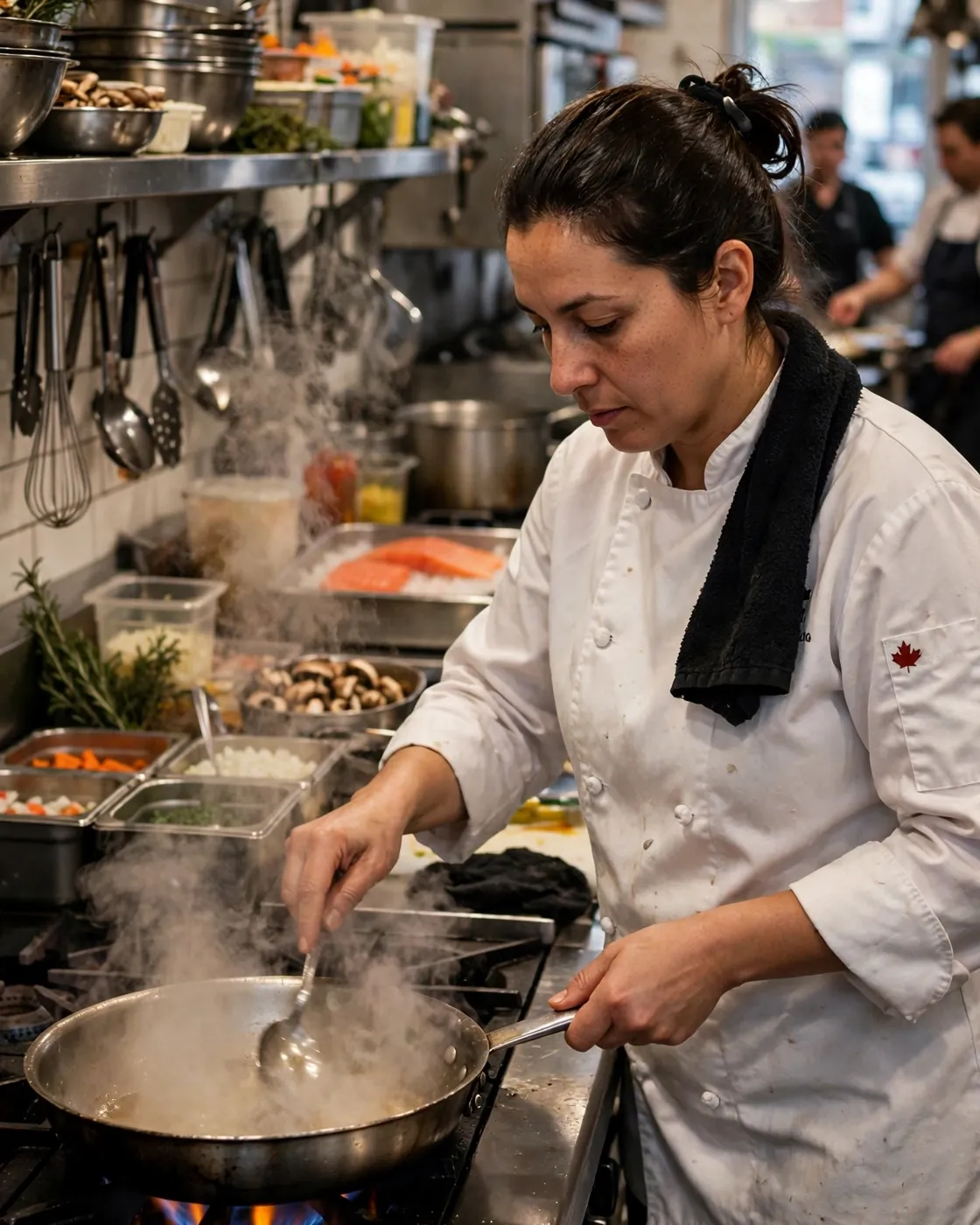
A cook’s day depends on the kitchen. Restaurant work can start with prepping vegetables, sauces, and meats for the dinner service, then working the line when orders come in fast. Cafe work is steadier, with breakfast and lunch dishes made to order. Hotel work can mean cooking for a buffet, a banquet, or room service, sometimes all in the same shift.
The work is fast and physical. You are on your feet for the whole shift, working near hot stoves, ovens, and fryers, lifting heavy pots, and moving quickly between stations. A kitchen runs on timing. If one dish is late, the whole table waits, so cooks learn to work clean, stay calm under pressure, and communicate clearly with the rest of the team.
Most cook roles are shift work. Lunch and dinner services mean evenings, weekends, and public holidays are busy times. Some kitchens split shifts, with a break in the middle of the day. Ask the employer how the roster is set before you accept a role, because the hours are very different from a standard office job.
Where to find real cook jobs in Canada
The best place to start is Indeed Canada, which carries the most cook listings across the country. Search for cook and the city you want to work in, and read the listing in full before you apply. Job Bank, the official Government of Canada job site, is the second place to check, and every listing there shows the employer name, the location, and the requirements.
Large restaurant groups and hotel chains hire cooks directly through their own careers pages. Hotels in Toronto, Vancouver, and Montreal list kitchen roles by property, and their websites show what kind of restaurant or banquet work is involved. Small independent restaurants often advertise on local job boards and in their own windows, so it is worth walking around the area you want to work in.
When you search, use the city as well as the role. Cook jobs in Toronto are different from cook jobs in a small town in Alberta. City kitchens offer more roles and more competition. Smaller towns may offer fewer applicants, but they may also ask you to cook a wider range of dishes with a smaller team.
What employers usually ask for
The first thing an employer asks for is kitchen experience. Some restaurants hire line cooks with a year or two of experience. Some hire prep cooks with less experience and train them up. A food handler certificate, such as FoodSafe in British Columbia or a provincial equivalent, is often asked for, and it is a short course that is worth doing before you apply.
Employers also look for speed, cleanliness, and a calm manner under pressure. A cook who can keep their station tidy, follow a recipe exactly, and stay polite when the orders pile up is a cook a head chef wants to keep. Some roles ask for experience with a particular cuisine, such as Italian, Indian, or Chinese cooking, so mention the cuisines you know best in your application.
A culinary diploma helps, but it is not always required. Many cooks learn on the job, starting as a dishwasher or prep cook and working their way up to the line. What matters most is that you can cook well, work fast, and turn up on time for every shift.
How pay is described in a listing
Pay for cook jobs in Canada is usually listed per hour. The rate changes by province, by city, and by the type of kitchen. A cook in a downtown Toronto restaurant is usually paid more than a cook in a small town cafe. Hotels and hospitals sometimes pay more than small restaurants, and they may also offer steadier hours.
Read the listing for how pay is described. A real listing states the hourly rate, or it says the rate is discussed at interview. A listing that promises very high pay for very little work, with no employer name and no location, is a warning sign. Never pay for a job, a certificate from an unknown provider, or a uniform before you have a written offer.
The visa question, honestly
Cook work is not usually a sponsored role in Canada. Most restaurants hire people who already have the right to work in Canada, such as citizens, permanent residents, and people on open work permits. A cook role on its own rarely leads to sponsorship, and a restaurant that promises it easily should be checked carefully.
If you are outside Canada and want to work as a cook, be careful with anyone who promises you a cook job and a visa for a fee. A real employer never asks you to pay for a job or a visa. Check the official immigration website for the visa you would need, and check that the employer is real before you send documents or pay anything.
How to apply, step by step
Step 1: Get your documents ready
Gather a resume that lists your kitchen experience, the cuisines you can cook, and any certificates you hold, including a food handler certificate. Have references from a previous head chef or restaurant manager ready. If you have photos of dishes you have cooked, keep them ready to show, but do not send them with a first application unless the listing asks for them.
Step 2: Search properly on Indeed and Job Bank
Search Indeed Canada and Job Bank for cook and the city you want to work in. Read each listing in full. Check the employer name, the location, the type of kitchen, and the shift pattern. Apply only to listings that name the employer and the restaurant.
Step 3: Write a short, specific application
Keep your resume to one or two pages. Put your kitchen experience and your certificates at the top. Mention the cuisines you cook best and the stations you have worked, such as grill, saute, or prep. Do not copy the job ad word for word. Write in your own words, and say clearly which city you can work in and which shifts you can do.
Step 4: Prepare for a short interview and a trial
Cook interviews are often short and practical. Expect questions about how you would handle a busy service, what you would do if an ingredient ran out, and how you keep your station clean. Many restaurants ask for a trial shift in the kitchen. Treat it as a real shift, turn up on time, and work clean.
Step 5: Check the offer before you accept
Read the offer letter before you sign. Check the pay, the hours, the shift pattern, and whether meals are provided. Check whether the role is full time or part time, and what that means for your hours. If anything in the offer is different from what the listing promised, ask about it before you sign.
Speed, cleanliness, and consistency
In a kitchen, the three things that matter are speed, cleanliness, and consistency. A dish that tastes great once and average the next time is a problem. Cleanliness matters just as much: a station that is clean at the start of service and a mess by the middle is a problem. Consistency matters too: a cook who is fast on Monday and slow on Friday is a problem.
Good cooks build habits. They prep before service, they clean as they go, they taste as they cook, and they check every plate before it leaves the kitchen. Those habits are what turn a new cook into a cook a head chef trusts with the busy nights.
What to avoid
Do not apply to a listing that has no employer name, no location, and only a phone number or messaging app. Never pay for a job, a certificate, a uniform, or a visa before you have a written offer. Avoid sending your passport number or bank details to an employer you have not verified. Turn down a role that asks you to work without a food handler certificate where one is required. If a listing promises very high pay for very little work, walk away.
Frequently asked questions about cook jobs in Canada
Do I need a culinary diploma to work as a cook in Canada?
Not always. Many cooks learn on the job, starting as a prep cook or dishwasher. A diploma helps, but experience, speed, and cleanliness matter more to most restaurants.
What is a food handler certificate?
It is a short course on food safety, such as FoodSafe in British Columbia or a provincial equivalent. Many employers ask for it, and it is worth doing before you apply.
How much do cooks earn in Canada?
Pay is usually listed per hour, and it changes by province, city, and the type of kitchen. Check the live listing for the rate, because it changes from employer to employer.
Can I work as a cook in Canada without experience?
You can start as a prep cook or kitchen helper and learn on the job. Restaurants do hire juniors, but you will need to be willing to start with the basic tasks and work your way up.
Is cook work sponsored in Canada?
Usually not. Most restaurants hire people who already have the right to work in Canada. Be careful with anyone who promises a cook job and a visa for a fee.
Related guides
Job804 shares job information and practical guides. Job804 is not an employer, not a recruitment agent, and does not guarantee a job, an interview, or a visa. Always check the live listing on Indeed Canada or Job Bank, and check visa conditions on the official immigration website before you apply or pay for anything. Never pay for a job offer.
Last checked: 18 November 2026. Check the live listing before you apply.
