
Introduction
Japan grows rice, vegetables, fruit and tea on farms that range from small family plots to large commercial operations. Workers are needed for planting, tending crops, harvesting and packing. Farm jobs in Japan attract people who want outdoor work, a slower pace of life and a chance to live in the countryside.
Life on a Japanese farm is physical and seasonal. Days start early in the busy months. Tasks change with the weather and the crop. One week can mean planting seedlings in wet fields. Another week can mean weeding, pruning or picking by hand. People who enjoy routine, fresh air and hands on work often settle into farm life well. People who want office work or city nightlife may find rural life quiet.
This guide explains what farm jobs in Japan involve in 2026. Readers will find the main types of work, the regions where jobs appear, where to find real listings, what employers usually ask for, how pay is described, and the visa routes that apply. Nothing here promises a job or a visa. Listings change often, and each employer sets its own terms. Checking the live listing and the official immigration website stays the best way to confirm the details before applying.
What the work actually looks like
Farm work in Japan covers a wide mix of tasks. Field work includes preparing soil, planting seeds and seedlings, watering, weeding and harvesting. Greenhouse work includes tending tomatoes, cucumbers, strawberries and leafy vegetables in a warm, sheltered space. Packing work includes sorting, grading, washing and boxing produce for markets and shops. Livestock farms add feeding, cleaning and animal care to the daily routine.
Rice work follows a clear cycle. Spring brings seedbed preparation and transplanting. Summer brings weeding, water control and pest checks. Autumn brings the harvest, drying and threshing. Winter brings repairs, planning and preparation for the next season. Vegetable farms run on shorter cycles, with planting and harvest happening through much of the year. Fruit farms peak at harvest time, when picking teams work long days.
Rice farming, rural life and the Specified Skilled Worker route
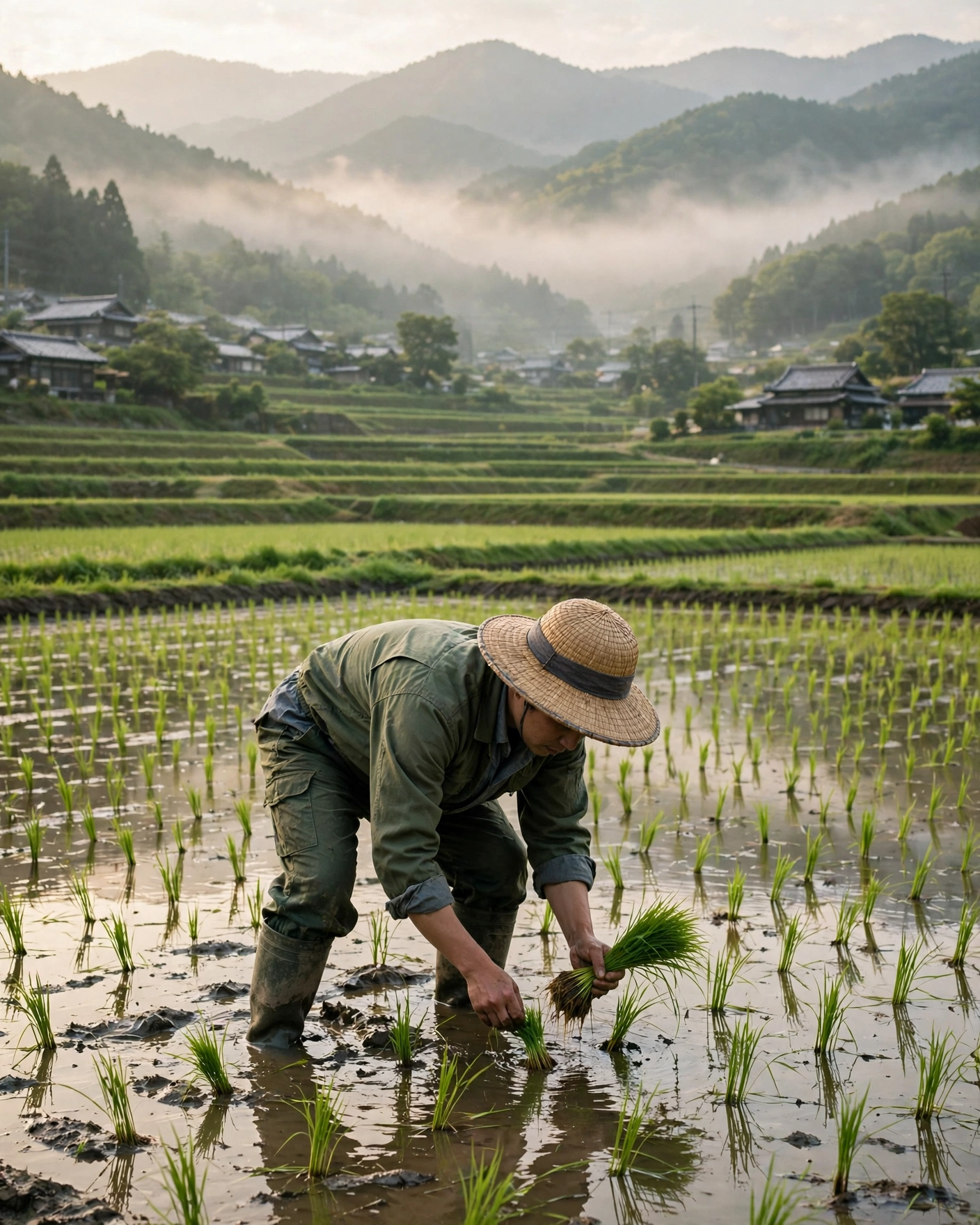
Rice sits at the centre of Japanese farming. Paddies shape the landscape in many rural areas. Workers learn to manage water levels, watch the growth of young plants and spot weeds and pests early. Transplanting machines do much of the planting on larger farms, while smaller farms still rely on hand work for edges and corners. Harvest combines cutting, threshing and drying, and each step needs care to protect grain quality.
Rural life in Japan moves at a different pace from Tokyo or Osaka. Villages are small, neighbours know each other, and shops may close early. Public transport can be limited, so a bicycle or a car helps in many areas. Some employers provide housing near the farm or help workers find a room nearby. Food shops, clinics and schools may be a bus ride away rather than a short walk. People who value quiet mornings, mountain views and close community life often enjoy this setting. People who need busy streets and late night services may need time to adjust.
Japanese language helps a lot in rural areas. Daily tasks can be learned by watching and copying, yet safety notes, work schedules and housing rules are often written in Japanese. Basic phrases for greetings, numbers, directions and food make daily life easier. Employers may offer simple language support, while others expect workers to study on their own. Learning a few hundred common words before arrival makes the first weeks smoother.
The Specified Skilled Worker route, known as SSW, covers agriculture as one of its fields. Applicants need to pass a skills test and a Japanese language test for the field. A job offer from an employer in Japan is also needed. The route is designed for people who can start work with some training and build skills on the job. Rules, test dates and eligible tasks can change, so the official immigration website is the place to check the current list. No agent can guarantee a place on this route or speed up a decision.
Where to find real listings
Hello Work is the public employment service in Japan. Its offices sit in cities and towns across the country, and its online listings cover farm jobs in many regions. Listings on Hello Work often give the employer name, the work location, the main tasks and the working hours. People already in Japan can visit an office for help in person. People outside Japan can search the online listings to learn what employers are asking for.
Indeed Japan lists farm jobs from employers and recruitment firms. Search terms such as farm, agriculture, rice, vegetable and greenhouse help narrow the results. Each listing shows the employer or the recruiter, the location and the basic terms. Readers should check whether the poster is the farm itself or a third party. Direct employer listings often give clearer detail about daily tasks and housing.
Local government and farm association sites also post seasonal work. Prefecture job boards, agricultural cooperatives and farm stay programmes list short term roles in planting and harvest. These sources suit people who want a short stay or a first taste of farm work. Job titles and terms vary, so reading the full listing matters more than the headline.
Social media groups and chat groups can share farm job posts, yet they need extra care. A post in a group is not proof that the job is real. Cross check the employer name, the location and the contact details against Hello Work, Indeed Japan or the employer official website. When a post has no employer name, no clear location and no written terms, treat it as unverified and move on.
What employers usually ask for
Physical fitness matters most on a farm. Employers look for people who can lift crates, bend and kneel, walk on uneven ground and work outdoors in heat, rain and cold. Past farm or outdoor work helps, though many farms train new workers on the job. A steady attitude, care with tools and respect for safety rules count for a lot in the first weeks.
Japanese language is often listed as useful rather than required for entry level farm work. Basic Japanese helps with safety and daily life, while higher levels open more roles and more responsibility. Some employers ask for a set language level for SSW roles. English alone is rarely enough in rural areas. Workers who study basic Japanese before arrival find the work and the community easier to join.
Documents matter at every stage. Employers may ask for a passport, a resume, proof of past work and any certificates for skills or language tests. Visa paperwork needs care and time. Keeping copies of every document, every email and every contract helps if questions come up later. Never hand original documents to a person who is not a known employer or a licensed service.
How pay is described
Pay for farm jobs in Japan is usually described by the hour or by the month. Hourly pay suits short term and seasonal work. Monthly pay suits longer roles with fixed hours. Listings often state the pay range, the working hours and whether overtime pay applies. Some roles add housing support, transport help or meals during work hours. Those extras vary by farm and should be written in the contract.
Pay changes with region, farm size, season and experience. Urban areas and large commercial farms may pay more than small rural farms. Harvest work may offer more hours and more pay in peak weeks. Night or early morning work may carry a different rate. None of these points guarantee a set figure. Readers should compare several live listings in the same region to see the normal range.
Deductions also matter. Housing, utilities, insurance and tax can reduce take home pay. A listing that shows a monthly figure without saying what is deducted leaves out half the picture. Asking the employer for a written breakdown before signing helps avoid surprises. Written terms beat spoken promises every time.
The visa question honestly
Japan has several visa routes that can cover farm work. The Specified Skilled Worker route covers agriculture for people who pass the skills and language tests and hold a job offer. The Technical Intern Training Program offers training placements through approved organisations, with a set plan and a set period. Other routes may apply for people with family ties, student status or other residence status in Japan. Each route has its own rules, tests and limits.
No agent can guarantee a visa. Immigration decisions sit with the Japanese government, not with a recruiter or a farm. Anyone who promises a visa for a fee is making a promise they cannot keep. Fees for genuine services should be clear, written and tied to a real service. Paying for a visa itself is a warning sign.
People already in Japan should check whether their current residence status allows farm work. Working outside the allowed activities can cause serious problems. People outside Japan should check the official immigration website for the latest rules for SSW and the Technical Intern Training Program. Rules change, and old blog posts or group messages may be out of date.
How to apply
Step 1: Pick a region and a crop
Choose a region that fits the climate and the work style you want. Hokkaido suits large scale farming and cooler summers. Central regions suit rice, vegetables and fruit. Southern regions suit warmer crops and longer growing seasons. Search listings in that region first.
Step 2: Shortlist real employers
Use Hello Work and Indeed Japan to find employers with a clear name, location and job description. Save listings that give tasks, hours, pay terms and housing detail. Skip listings that hide the employer name or give only a phone number and a promise.
Step 3: Prepare a simple resume
Write a short resume with work history, outdoor experience, language skills and contact details. Keep it honest and plain. Mention farm work, construction, kitchen work or any role that involved physical work. Add a short note about why farm work in Japan appeals to you.
Step 4: Contact the employer in writing
Send a short message or email with the resume attached. Ask about tasks, hours, housing, pay deductions and the visa route that applies. Keep copies of every reply. Written answers help compare offers and spot vague promises.
Step 5: Read the contract before signing
Read the full contract in a language you understand. Check tasks, hours, rest days, pay, deductions, housing, insurance and the end date. Ask questions about any unclear clause. Sign only when the terms match the listing and the written replies.
What to avoid
Never pay for a job offer. Real employers do not charge workers for a place on the farm. Fees for a visa, a guaranteed job or a fast track offer are warning signs. Walk away from any person who asks for money before you have a written contract and a clear employer name.
Fake listings often share the same marks. They promise high pay for light work, hide the employer name, use only a chat app for contact and push for a quick payment. They may copy photos from real farms and add a false location. Checking the employer on Hello Work, Indeed Japan or the employer official website exposes most fakes.
Agents who promise visas for a fee deserve the same caution. A licensed service can help with paperwork, yet it cannot decide a visa outcome. Ask for a written service list, a clear fee and a receipt. Check reviews and records before paying anything. When doubt remains, contact the employer directly or seek advice from an official source.
FAQ
Do I need experience to get a farm job in Japan?
Experience helps, though many farms train new workers. Physical fitness, a steady attitude and a willingness to learn matter more for entry level roles. Past outdoor work, gardening or manual work is useful to mention in a resume.
Do I need to speak Japanese for farm work?
Basic Japanese helps a lot with safety, schedules and daily life in rural areas. Some roles ask for a set level for visa reasons. Entry level work can be learned by watching, yet studying common phrases before arrival makes the first weeks easier.
Which regions have the most farm jobs in Japan?
Farm jobs appear across Japan. Hokkaido has large scale farms. Central prefectures have rice, vegetables and fruit. Southern prefectures have warmer crops. The best region depends on the crop, the season and the type of work you want.
How long do farm jobs in Japan last?
Lengths vary. Seasonal roles can last a few weeks or months around planting and harvest. Longer roles can last a year or more, with tasks changing by season. The listing and the contract should state the start date, the end date and the renewal terms.
Can a farm job in Japan lead to longer stay?
Some workers move from seasonal work to longer roles through the SSW route, if they meet the tests and hold a job offer. Longer stay depends on visa rules, employer need and personal circumstances. No employer or agent can guarantee a longer stay.
Related guides
Job804 shares job information and practical guides. Job804 is not an employer, not a recruitment agent, and does not guarantee a job, an interview, or a visa. Always check the live listing on Seek, Indeed, or the employer official website, and check visa conditions on the official immigration website before you apply or pay for anything. Never pay for a job offer.
Last checked: 28 November 2026. Check the live listing before you apply.
