
Introduction
Mechanic jobs Canada wide suit people who like fixing things. You enjoy working with engines and machines. A repair that holds gives you pride. Mechanics keep cars, trucks, buses, and farm and construction machines running across the country. They work in small garages in country towns and in large dealerships in the cities.
This guide explains what mechanic work in Canada actually involves. It covers Red Seal and provincial licensing, where to find real listings, and how to apply safely. The guide is written for job seekers. It does not promise a job, a visa, or sponsorship.
What mechanic work in Canada actually looks like
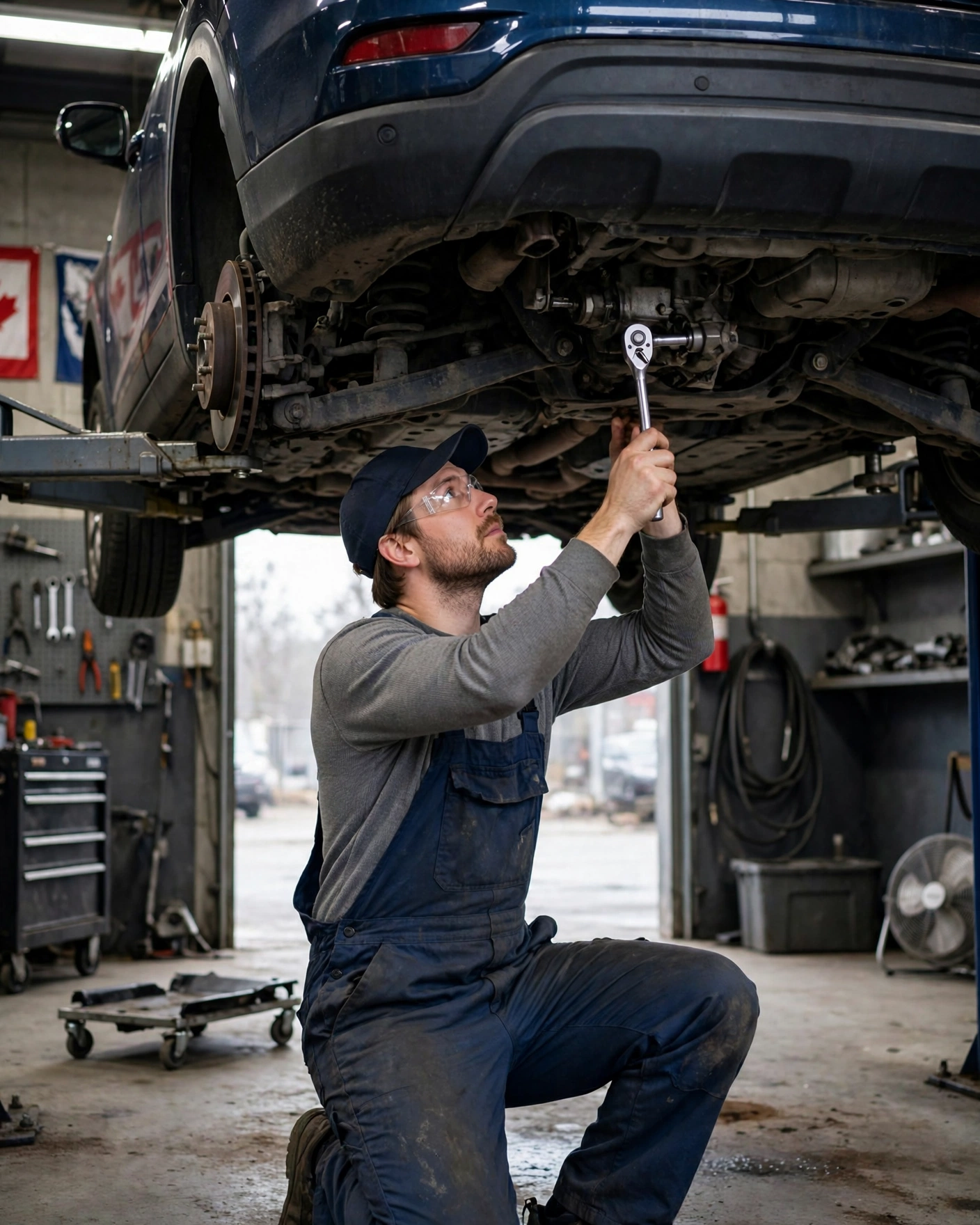
A mechanic in Canada inspects, repairs, and maintains vehicles and machines. The work changes with the kind of mechanic. An automotive service technician works on cars and light trucks. That work covers oil changes, brake work, tyre work, engine repairs, and electrical fault finding. A truck and transport mechanic works on heavy trucks, buses, and trailers. That work covers bigger engines, air brakes, and suspension systems. A heavy duty equipment mechanic works on farm tractors, construction machines, and mining equipment. That work often takes place on site and in all weathers.
A normal day starts with the jobs booked in for the day. The mechanic reads the work order first. Next, the mechanic talks to the customer or the service writer about the problem. Then the mechanic inspects the vehicle. Modern vehicles need a diagnostic computer as much as a spanner. So the mechanic plugs in the scanner, reads the fault codes, and traces the problem. Then the work is a mix of taking parts off, fitting new parts, and testing the repair. A brake job, a timing belt, and an engine rebuild are all part of the same trade. Each one needs care.
Tools, physical work, and problem solving
Mechanics use hand tools, power tools, hoists, and diagnostic equipment. They lift heavy parts, work under vehicles on a hoist, and spend a lot of time on their feet. The work is physical. The workshop floor is often cold in winter, because the doors open and close all day. A mechanic also needs to write down the work. The customer and the garage need a clear record of the repair and the parts used.
The job calls for problem solving. A car that will not start needs a mechanic who can work through the fault step by step. The same applies to a truck with a warning light and to a tractor that loses power.
Where to find real mechanic jobs in Canada
Job Bank is the best place to start. It is the official Government of Canada job board. The board carries mechanic jobs Canada wide across the country. Search for automotive service technician, truck mechanic, or heavy duty equipment mechanic. Add the province or city you want to work in. Read the listing in full before you apply. Indeed Canada is the second place to check. It often lists the same roles from garages, dealerships, and transport companies.
Dealership websites are also worth checking. Car and truck dealerships list mechanic roles on their own careers pages. They often have roles for apprentice technicians and for licensed mechanics. Transport companies, bus companies, and farm equipment dealers list mechanic roles on their own websites too. They often have a careers page with roles in the town where the depot is.
When you search, check where the garage is and how you will get there. This matters for early starts and for shift work. Check whether the listing says the role is full time or part time. Also check whether it is cars, trucks, or heavy equipment. A real listing names the employer, the area, and the kind of mechanic. It also says what the work involves.
Red Seal and provincial licensing for mechanics, explained simply
Mechanic work in Canada has a licensing system. It helps to know the names employers use. The main trade is automotive service technician. In many provinces it is a compulsory trade. That means you need a licence to work in it. The Red Seal is the national standard for the trade. A mechanic who passes the Red Seal exam earns the Red Seal endorsement. Employers across the country recognise that endorsement. It lets the mechanic work in any province without requalifying.
To earn a Red Seal, a mechanic usually completes an apprenticeship. An apprenticeship lasts around three to four years. It mixes paid work in a garage with training at a college. The apprentice learns the trade from licensed mechanics and earns a wage while learning. Apprenticeships are open to school leavers and to adults who want to change career. Many garages and dealerships take on apprentices each year.
Each province runs its own apprenticeship and licensing system. The names change from province to province. Ontario uses Skilled Trades Ontario to regulate the trade. Alberta runs the trade through Apprenticeship and Industry Training. British Columbia uses SkilledTradesBC. The steps are similar in each province. The Red Seal exam is the same across the country. A mechanic who holds a licence in one province can usually transfer it to another province. The Red Seal makes that move easier.
If you trained overseas, an employer or a province may compare your qualification with the Canadian system. You should be ready to show your certificates and explain the training you completed.
What employers usually ask for
Employers want a mechanic who can find the fault and fix it properly. Experience counts. An employer wants to see work you have done, in garages or dealerships. Share the names of past employers and the kinds of vehicles you worked on. If you have worked on diesel engines, brakes, or electrical systems, say so. That experience counts.
Employers look for people who can use diagnostic equipment and read a wiring diagram. A mechanic who can work from a service manual without step-by-step instructions is worth a lot to a garage. Tool skills matter too. An employer expects a mechanic to own a basic set of hand tools. The garage often supplies specialist tools. A driving licence helps. The mechanic may need to road test a vehicle or collect parts.
A licence or an apprenticeship matters. Many provinces will not let you work in the trade without one. Garages follow the bookings for the day, so expect Saturdays and late finishes when the job needs them. Be honest about your experience. A garage owner will find out quickly once you are on the tools. If you are new to mechanic work, say so. Say what you can bring from your last job or from your training.
How pay is described in a listing
Employers usually list pay for mechanic jobs in Canada per hour. Some list a yearly rate for a full time role instead. The rate changes by province, by the kind of mechanic, and by your experience and licence. A real listing states the hourly or yearly rate clearly. Or it says you will discuss the rate at interview.
Read the listing to see how the employer describes pay. Some roles pay a higher rate for weekend work. Some pay a higher rate for work that needs a specialist skill, such as diesel or electric vehicle work. So read the listing and ask about it at interview if it is not clear. Treat a listing as a warning sign if it promises very high pay for very little work. That warning grows if it gives no employer name and no area. Never pay for a job, a certificate from an unknown provider, or a visa before you have a written offer. A real employer pays you for your work. It never asks you to pay to start work.
The visa question, honestly
Most mechanic work in Canada goes to people who already have the right to work here. That group includes citizens, permanent residents, and people on work permits that allow this kind of work. The rules depend on your permit type and your situation.
Outside Canada? Be careful with anyone who promises a mechanic job and a visa for a fee. A real employer never asks you to pay for a job or a visa. Check the official Government of Canada website for the permit you would need. Check that the employer and the agency are real before you send documents or pay anything.
How to apply, step by step
Step 1: Get your documents ready
Gather a short resume that lists your mechanic experience, any apprenticeship or licence. Add your Red Seal endorsement if you hold one. Add two references from past employers or garage owners. Let them know an employer may call them. Have proof of your right to work in Canada ready. Keep copies of any training certificates.
Step 2: Search Job Bank and Indeed Canada for mechanic jobs Canada wide
Search Job Bank and Indeed Canada for automotive service technician, truck mechanic, or heavy duty equipment mechanic. Add the province or city you want to work in. Read each listing in full. Check the employer name, the area, and the kind of mechanic. Also check whether the role is cars, trucks, or heavy equipment. Apply only to listings that name the employer and the area.
Step 3: Write a short, specific application
Keep your resume to one or two pages. Put your mechanic experience at the top. Say clearly which province you can work in and when you can start. Mention the kinds of vehicles you know best, such as cars, trucks, or farm machines. Do not copy the job ad word for word.
Step 4: Prepare for an interview
Mechanic interviews are often practical. Be ready to answer questions about a time you found a fault that was hard to trace. Think about what you would do if a repair did not fix the problem. Prepare to explain a repair to a customer in plain words. Some employers ask for a short practical test. Answer with examples from your own experience. Be straight and honest from the first minute.
Step 5: Check the offer before you accept
Read the offer before you sign. Check the pay, the hours, the days, and whether the garage provides specialist tools. Ask whether it pays for your licence renewal and any extra training. Find out whether the garage pays for your Red Seal exam. If anything in the offer is different from what the listing promised, ask about it before you sign.
What to avoid
Avoid a listing that has no employer name, no area, and only a phone number or messaging app. Never pay for a job, a certificate, or a visa before you have a written offer. Never send your passport number or bank details to an employer or agency you have not verified. Turn down a role that asks you to work in a trade without the licence the province needs. Canada does not allow that kind of work. Refuse a role that asks you to work without the permit your situation needs. Wait for a written offer that states the pay and the hours before you start work.
Frequently asked questions about mechanic jobs in Canada
Do I need a licence to work as a mechanic in Canada?
In many provinces the automotive service technician trade is compulsory. That means you need a licence or an apprenticeship to work in it. Employers across the country recognise the Red Seal endorsement. Many employers ask for it or for an apprentice in training.
How much do mechanic jobs Canada wide pay?
Employers usually list pay per hour or per year. It changes by province, by the kind of mechanic, and by your experience and licence. Weekend work and specialist work, such as diesel or electric vehicle work, often pay more. Check the live listing for the rate, because it changes from employer to employer.
Can I apply for mechanic jobs Canada wide from overseas?
You can apply from overseas. Some employers hire mechanics from other countries. You still need the right to work in Canada, so check that before you apply.
Is mechanic work mostly on cars or on trucks?
Most mechanic work happens on cars and light trucks, because most garages service those vehicles. Truck and heavy duty equipment work also exists, in transport companies, bus depots, and farm and construction firms. The listing should say which kind of work the role involves.
Do garages provide tools?
Garages usually provide hoists, diagnostic equipment, and specialist tools. Mechanics often own a basic set of hand tools themselves. Check the listing or ask at interview what you need to bring.
Related guides
Job804 shares job information and practical guides. Job804 is not an employer, not a recruitment agent, and does not guarantee a job, an interview, or a visa. Always check the live listing on Job Bank or Indeed Canada. Also check visa conditions on the official Government of Canada website before you apply or pay for anything. Never pay for a job offer.
Last checked: 25 November 2026. Check the live listing before you apply.
