
Introduction
Plumber jobs New Zealand wide suit people who like practical work and solving problems on site. Each day ends with something fixed or installed. Plumbers fit and repair pipes, taps, toilets, and hot water systems. They also work on drainage in homes, offices, schools, and workplaces across the country.
This guide explains what plumbing work in New Zealand actually involves. It covers what employers look for, where to find real listings, and how to apply safely. It is written for job seekers, and it does not promise a job, a visa, or sponsorship.
What plumber work in New Zealand actually looks like
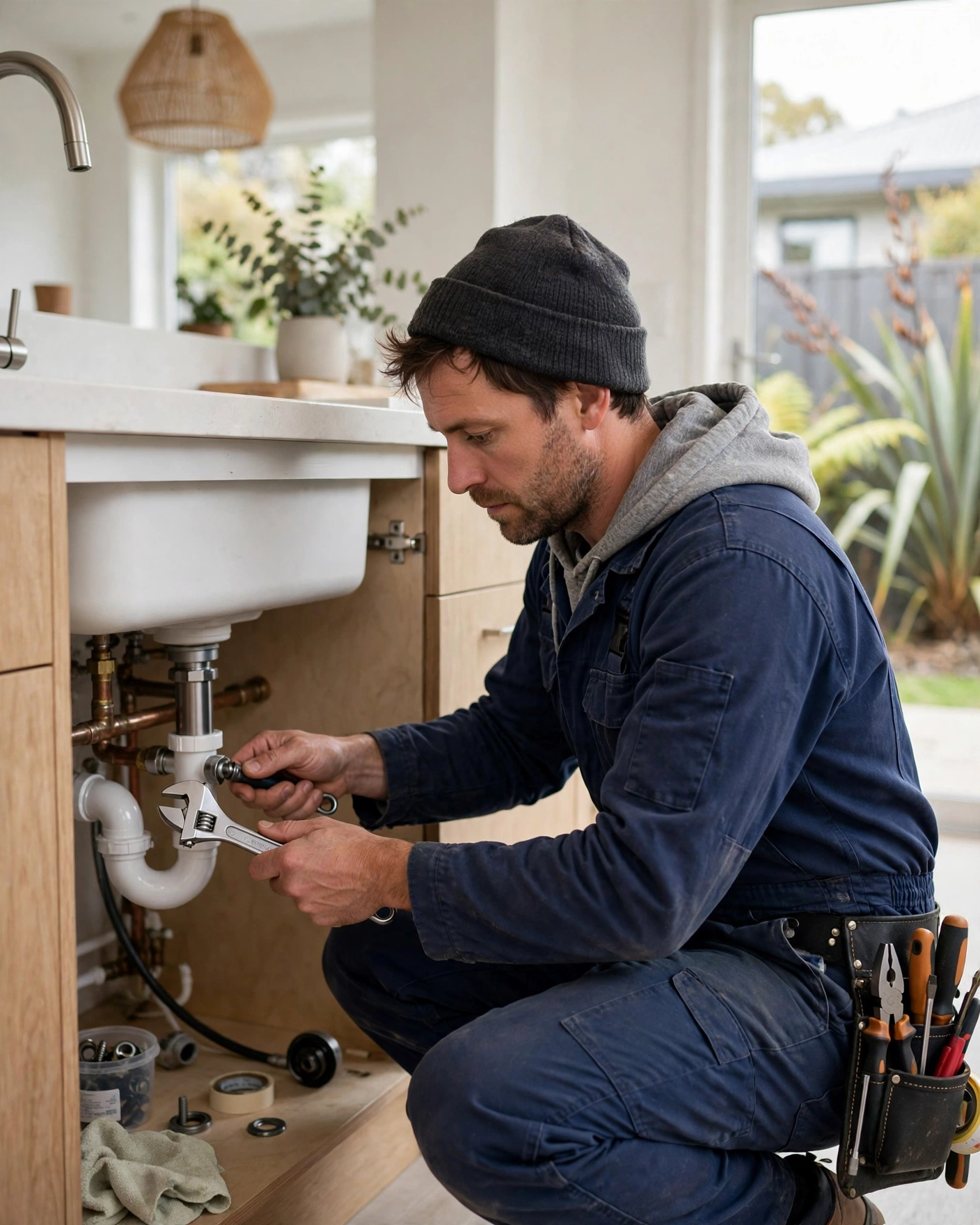
A plumber in New Zealand works in a different place almost every day. One morning might be a leaking tap in a family home in Auckland. The afternoon might be a bathroom refit in Wellington, or a blocked drain at a school in Christchurch. Some plumbers work mostly in houses. Others work on building sites. They fit pipework in new homes, apartments, and commercial buildings before the walls go up.
A normal day starts at the depot or at the first job, with the van loaded for the day. Plumbers carry pipes, fittings, tools, sealant, and spare parts. A job can change once the wall is opened or the old fitting comes off. The work means cutting and joining pipe and fitting taps and toilets. Plumbers also install hot water cylinders and heat pump water heaters, then test everything for leaks before leaving.
Repair work and new building work
Repair work calls for patience and clear thinking. A customer describes a leak or a drain that runs slowly. Theplumber has to find the cause. It might be a worn washer, a cracked joint, or a blockage further down the line. Plumbers explain the problem in plain language, agree on the fix, and leave the place clean.
New building work is different from repair work. On a building site, plumbers follow plans and measure and cut pipe to length. They fit the pipework in the right order so other trades can do their part. The work has to meet the building code, and inspectors check it at set stages.
Plumbers work in all weather when the job is outside. They also work in roof spaces and under floors where the pipes run. The work is physical, with lifting, kneeling, and working in tight spaces. Plumbers wear work boots, gloves, and eye protection. Hours are usually a full working week, with some early starts and on call work for urgent leaks.
Where to find real plumber jobs in New Zealand
The best place to start is Seek New Zealand, which carries the most trade and plumbing listings in the country. Search for plumber, plumbing apprentice, or gasfitter, and read the listing in full before you apply. Trade Me Jobs is the second place to check. It often lists the same roles from plumbing firms and building companies.
Plumbing firms hire in every main centre, including Auckland, Hamilton, Wellington, Christchurch, and Dunedin. Smaller towns have local firms that cover the whole district. Large plumbing companies list several roles at once, from apprentice to experienced plumber. They often have a careers page on their own website. Recruitment agencies that place trades workers are another way in. They can be useful if you are new to the trade.
When you search, check where the firm is based and how far the jobs spread. Some firms work only in one city, and some cover a whole region, so travel matters. Check whether the listing says the role is full time. Check too whether it mentions a work vehicle, tools, or on call work. A real listing names the firm, the region, and the kind of plumbing work involved.
What employers usually ask for
The main thing a plumbing firm looks for is a plumber who can work on their own. The plumber should solve problems and treat customers well. Experience counts. A firm wants to see work you have done in homes or on building sites, with references from a past employer. A clean driving record matters. Plumbers drive a work van between jobs, and the firm needs to trust you with the vehicle.
Trade training matters in plumbing more than in many other trades. Employers often ask for a trade qualification, or for proof that you are working towards one. Plumbing apprenticeships in New Zealand combine work on site with study. Firms take on apprentices who show the right attitude and a willingness to learn. A plumber who has finished training and holds the right registration can sign off work. That plumber can take on a wider range of jobs.
Employers look for people who are fit, reliable, and careful with detail. A small mistake in plumbing can cause a leak that damages a home. A plumber has to measure carefully, test the work, and check it again. Communication matters too. Plumbers talk to customers every day and agree on a price before the work starts. Be honest about your experience, because a firm will find out quickly once you are on site.
How pay is described in a listing
Pay for plumber jobs in New Zealand is usually listed per hour. Some roles list a yearly salary for a full time role. The rate changes by region, by the firm, and by your experience and registration. A real listing states the hourly rate clearly, or it says the rate is discussed at interview.
Read the listing for how pay is described. A listing that promises very high pay for very little work is a warning sign. Watch out when it has no firm name and no region. Never pay for a job, a certificate, a uniform, or a visa before you have a written offer. A real plumbing firm pays you for your work, and it never asks you to pay to start work.
The visa question, honestly
People who already have the right to work in New Zealand usually do plumbing there. That includes citizens, residents, and people on work visas that allow trade work. The rules depend on your visa type, your age, and your experience.
If you are outside New Zealand and want to work as a plumber, be careful. Watch out for anyone who promises you a plumbing job and a visa for a fee. A real employer never asks you to pay for a job or a visa. Check the official immigration website for the visa you would need. Check that the employer and the firm are real before you send documents or pay anything.
How to apply, step by step
Step 1: Get your documents ready
Gather a short resume that lists your plumbing experience and the kind of work you have done. Add any trade training you have completed. Add references from a past employer if you have them. Have your work visa or proof of the right to work in New Zealand ready. Keep copies of any trade certificates.
Step 2: Search Seek and Trade Me Jobs for plumber jobs New Zealand wide
Search Seek New Zealand and Trade Me Jobs for plumber and the region you want to work in. Read each listing in full. Check the firm name, the region, and the kind of plumbing work. Check too whether the role is full time or an apprenticeship. Apply only to listings that name the employer and the firm.
Step 3: Write a short, specific application
Keep your resume to one or two pages. Put your plumbing experience at the top. Say clearly which region you can work in and when you can start. Mention the kind of plumbing you know best, such as repairs in homes or work on building sites. Do not copy the job ad word for word.
Step 4: Prepare for a practical interview
Plumbing interviews are often practical. Expect questions about jobs you have done, how you found a leak, and how you handled a difficult customer. Some firms ask for a short trial on site. Answer with examples from your own experience.
Step 5: Check the offer before you accept
Read the offer before you sign. Check the pay, the hours, and the region. See whether a work vehicle is included and whether on call work is part of the role. Note what tools you need to bring and what the firm provides. If anything in the offer is different from what the listing promised, ask about it before you sign.
Licensing and registration for plumbers in New Zealand
Plumbing in New Zealand is a licensed trade. That matters for anyone who wants plumber jobs New Zealand wide. The Plumbers, Gasfitters and Drainlayers Board regulates plumbers, gasfitters, and drainlayers. It sets the rules for who can do plumbing work and sign it off. A person who does plumbing work without the right registration can face a fine. The work may not count for the building consent.
The usual path starts with an apprenticeship, where a trainee works under a licensed plumber and studies at the same time. After training and exams, a plumber can become registered, and with more experience and further exams, licensed. A licensed plumber can certify work, which means the plumber can sign off that the work meets the rules. An apprentice can do some plumbing work under supervision, and the supervising plumber takes responsibility for it.
If you trained overseas, your qualification may not match the New Zealand system straight away. The Board has a process for overseas trained plumbers. It usually involves an assessment, some study, and work under supervision before registration. Check the Board website for the current process. Be careful with any agent who promises a fast licence for a fee.
When you look at listings, note what the employer asks for. Some roles ask for a licensed plumber, and some are open to a registered plumber or an apprentice. Apply for roles that match the registration you hold, and say clearly where you are in the process.
What to avoid
Skip any listing that has no firm or employer name, no region, and only a phone number or messaging app. Never pay for a job, a certificate, a uniform, or a visa before you have a written offer. Keep your passport number and bank details to yourself until you have verified the employer. Turn down any role that asks you to work without the visa your situation needs, because that is not allowed in New Zealand. Refuse plumbing work that needs a licensed plumber if you are not licensed for it.
Frequently asked questions about plumber jobs in New Zealand
Do I need a licence to work as a plumber in New Zealand?
Plumbing is a licensed trade in New Zealand. You can work as an apprentice under a licensed plumber. You need registration and then a licence to certify work on your own. Check the Plumbers, Gasfitters and Drainlayers Board website for the current rules.
How much do plumber jobs New Zealand wide pay?
Pay is usually listed per hour. It changes by region, by the firm, and by your experience and registration. Check the live listing for the rate, because it changes from employer to employer.
Can I apply for plumber jobs New Zealand wide from overseas?
You can apply from overseas, and some firms hire plumbers from other countries. You still need the right to work in New Zealand and registration with the Board. Check both before you apply.
Is plumbing work mostly in houses or on building sites?
Both. Some plumbers work mostly in houses, fixing taps, toilets, and hot water systems. Others work on building sites, fitting pipework in new homes and commercial buildings.
Do plumbing firms provide a work vehicle?
Many plumbing firms provide a van for the working day, and the listing should say so. Check whether you can take the van home and whether fuel is covered.
Related guides
Job804 shares job information and practical guides. Job804 is not an employer, not a recruitment agent, and does not guarantee a job, an interview, or a visa. Always check the live listing on Seek New Zealand or Trade Me Jobs. Check visa conditions on the official immigration website before you apply or pay for anything. Never pay for a job offer.
Last checked: 22 November 2026. Check the live listing before you apply.
