
Introduction
Poultry farm jobs in Australia are steady, year round roles that suit people who want regular hours and do not mind physical work. Chicken and egg farms across the country hire workers for feeding, collecting eggs, cleaning sheds, and processing. The work is not glamorous, but it is honest, and it is one of the few farm roles in Australia that runs all year instead of following a short harvest season.
This guide explains what poultry farm work in Australia actually involves, what employers usually ask for, where to find real listings, and how to apply safely. This guide is for job seekers, and it does not promise a job, a visa, or sponsorship.
What poultry farm work in Australia actually looks like
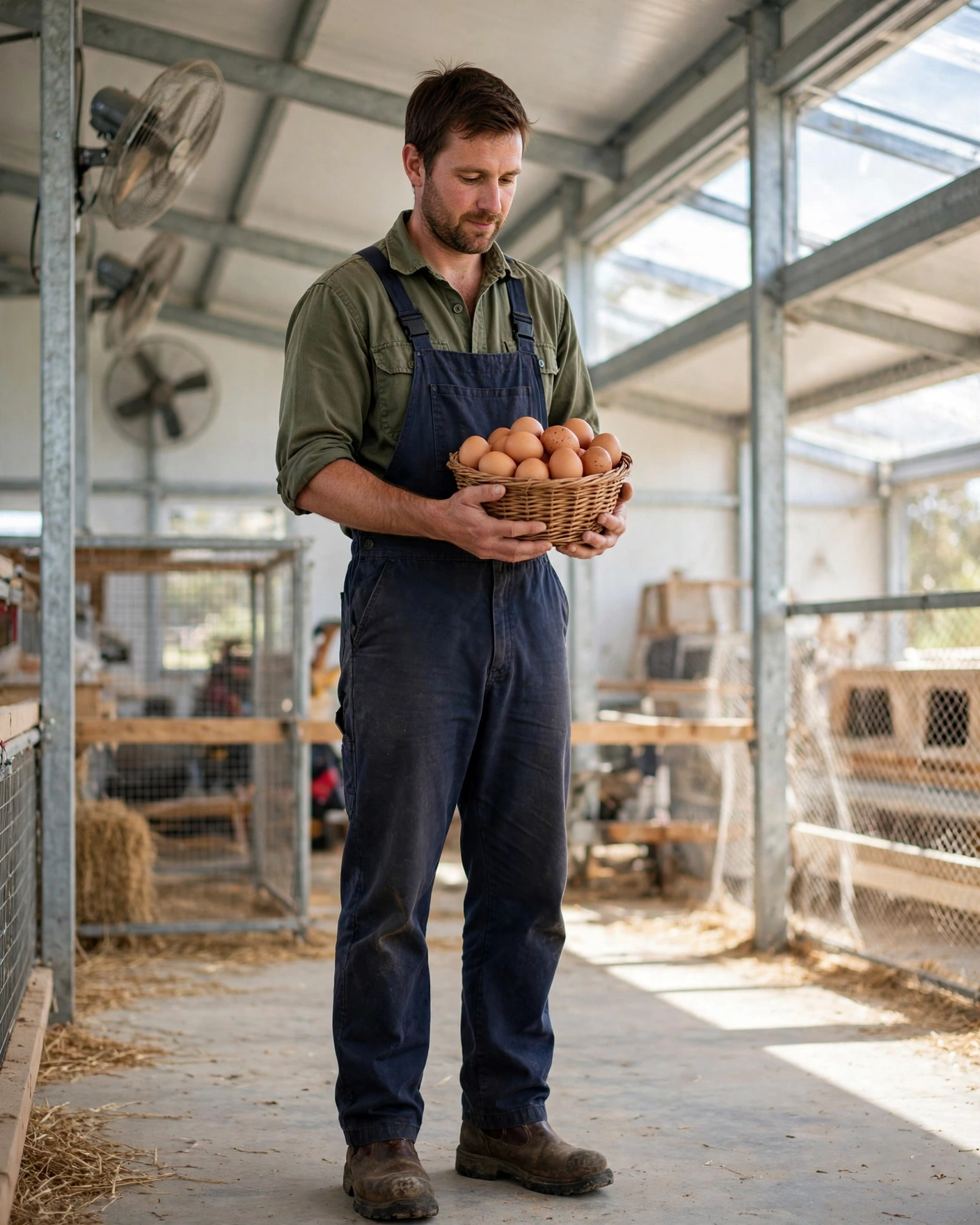
A poultry farm worker’s day depends on the type of farm. On a layer farm, where hens lay eggs, the day starts early. You collect eggs, check the hens, feed and water them, and clean the sheds. On a broiler farm, where chickens are raised for meat, the day is about feeding, checking the birds, and keeping the sheds clean and at the right temperature. On a processing plant, the work is on a line: packing, sorting, and quality checks.
Most poultry farm roles are shift work. A farm that runs 24 hours needs workers at night and on weekends. Early morning starts are common, because the birds are fed and checked first thing. The work is physical: lifting feed bags, carrying crates of eggs, and walking through large sheds. You need to be comfortable working around birds, dust, and strong smells, and comfortable following strict hygiene rules, because disease control is the most important part of poultry farming.
The hardest part is not the physical work. It is the routine. The same tasks, the same sheds, every day. A worker who is reliable, careful, and willing to follow the rules is a worker a farm wants to keep.
Where to find real poultry farm jobs in Australia
The best place to start is Seek. Seek lists poultry farm roles from farms and processing companies across Australia, and every listing shows the employer name, the location, and the requirements. Indeed Australia is the second place to check. Search for poultry farm or chicken farm and the state or region you want to work in, and read the listing in full before you apply.
Large poultry companies hire directly through their own careers pages. Companies like Inghams and Baiada hire workers across Australia, and their websites list open roles by site. If a listing is on a company careers page, it is real. If a listing is only on a social media post with no company name and only a phone number, treat it with caution.
When you search, use the region as well as the role. Poultry farms are often in regional areas, and some employers in those areas provide accommodation. A regional role may have fewer applicants, but it may also ask for a driving licence and a car.
What employers usually ask for
The first thing an employer asks for is the right to work in Australia. Most poultry farm roles are for people who already have work rights, such as citizens, permanent residents, and people on working holiday visas. A working holiday visa is one of the most common ways people start farm work in Australia.
Employers also look for physical fitness, because the work involves lifting, walking, and standing for a full shift. Previous farm experience helps, but many farms hire workers with no experience and train them on the job. What matters more is attitude: turning up on time, following hygiene rules, and working steadily through the shift.
Some roles ask for a valid driving licence, especially on large farms where workers move between sheds. Some ask for a forklift licence, and some provide the training after you are hired. A forklift licence is the single most useful thing a farm worker can hold, because it opens better paid roles on the farm.
How pay is described in a listing
Listings usually show pay for poultry farm jobs in Australia per hour. The rate changes by state, by region, and by the type of farm. A worker in a processing plant is usually paid more than a worker on a small layer farm. Night shifts and weekend shifts usually pay more than day shifts, but check the award and the listing for the exact arrangement, because it changes from employer to employer.
Read the listing for how pay is described. A real listing states the hourly rate, or it says employers discuss the rate at interview. A listing that promises very high pay for very little work, with no employer name and no location, is a warning sign. Never pay for a job, a training course from an unknown provider, or a uniform before you have a written offer.
The visa question, honestly
Poultry farm work is not usually a sponsored role in Australia. Most employers hire people who already have the right to work in Australia, such as citizens, permanent residents, and working holiday visa holders. Farm work can count towards a working holiday visa extension in some cases, but the rules are specific, and not all farm work counts. Check the official immigration website for the current rules before you make plans, because what was true last year may not be true now.
If you are outside Australia and want to work on a poultry farm, be careful with anyone who promises you a farm job and a visa for a fee. A real employer never asks you to pay for a job or a visa. Check the official immigration website for the visa you would need, and check that the employer is real before you send documents or pay anything.
How to apply, step by step
Step 1: Get your documents ready
Get a one page resume that lists your work history and any farm or physical work experience. If you hold a driving licence or a forklift licence, put that at the top. Have your work visa or permit details ready, because employers will ask.
Step 2: Search properly on Seek and Indeed
Search Seek and Indeed Australia for poultry farm or chicken farm and the region you want to work in. Read each listing in full. Check the employer name, the location, the hours, and whether accommodation is provided. Apply only to listings that name the employer and the farm.
Step 3: Write a short, specific application
Keep your resume to one page. Put your availability and your work rights at the top. Mention any experience in farm work, physical work, or shift work. Do not copy the job ad word for word. Write in your own words, and say clearly which region you can work in and which shifts you can do.
Step 4: Prepare for a short interview
Farm interviews are usually short and practical. Expect questions about how you would handle a long shift, whether you are comfortable working around birds, and whether you can follow hygiene rules. Answer with examples from your own experience, even if that experience is from a different job.
Step 5: Check the offer before you accept
Read the offer before you sign. Check the pay, the hours, the shift pattern, and whether accommodation is provided and what it costs. Check whether the role is casual, part time, or full time. If anything in the offer is different from what the listing promised, ask about it before you sign.
Hygiene is the job
On a poultry farm, hygiene is the job. A single disease outbreak can close a farm, so every worker follows strict rules: showering before entering sheds, wearing farm clothes and boots, and never bringing birds or eggs from outside onto the farm. The rules feel strict at first, but they are what keep the birds healthy and the farm open.
A worker who follows the hygiene rules without being reminded is a worker a farm manager trusts. A worker who cuts corners on hygiene is a worker a farm manager will not keep, no matter how fast they work. If you apply for a poultry farm role, say in your application that you understand hygiene matters and you are willing to follow the rules. It tells the employer more about you than any list of past jobs.
What to avoid
Do not apply to a listing that has no employer name, no location, and only a phone number or messaging app. Pay nothing for a job, a training course from an unknown provider, or a uniform before you have a written offer. Keep your passport number and bank details private until you have verified an employer. Turn down a role that asks you to work without the right visa, because that puts you at risk. If a listing promises very high pay for very little work, walk away.
Frequently asked questions about poultry farm jobs in Australia
Do I need experience to work on a poultry farm in Australia?
No. Many farms hire workers with no experience and train them on the job. Physical fitness, reliability, and a willingness to follow hygiene rules matter more than experience for entry level roles.
Is poultry farm work seasonal?
No. Unlike fruit picking, poultry farming runs all year. Hens lay eggs every day, and broiler chickens are raised in cycles through the year, so the work is steadier than most farm work.
How much do poultry farm workers earn in Australia?
Listings usually show pay per hour, and it changes by state, region, and the type of farm. Night shifts usually pay more. Check the live listing for the rate, because it changes from employer to employer.
Can poultry farm work count towards a working holiday visa extension?
In some cases, yes, but the rules are specific and not all farm work counts. Check the official immigration website for the current rules before you make plans.
What is the difference between a layer farm and a broiler farm?
A layer farm keeps hens for eggs. A broiler farm raises chickens for meat. The daily work is similar, but the routine and the pace are different.
Related guides
- Dairy Farm Jobs in Australia 2026
- Farm Jobs Australia and Fruit Picking NZ
- How to Find Real Jobs on Seek and Indeed and Avoid Fake Job Offers
Job804 shares job information and practical guides. Job804 is not an employer, not a recruitment agent, and does not guarantee a job, an interview, or a visa. Always check the live listing on Seek or Indeed Australia, and check visa conditions on the official immigration website before you apply or pay for anything. Never pay for a job offer.
Last checked: 17 November 2026. Check the live listing before you apply.
