
Introduction
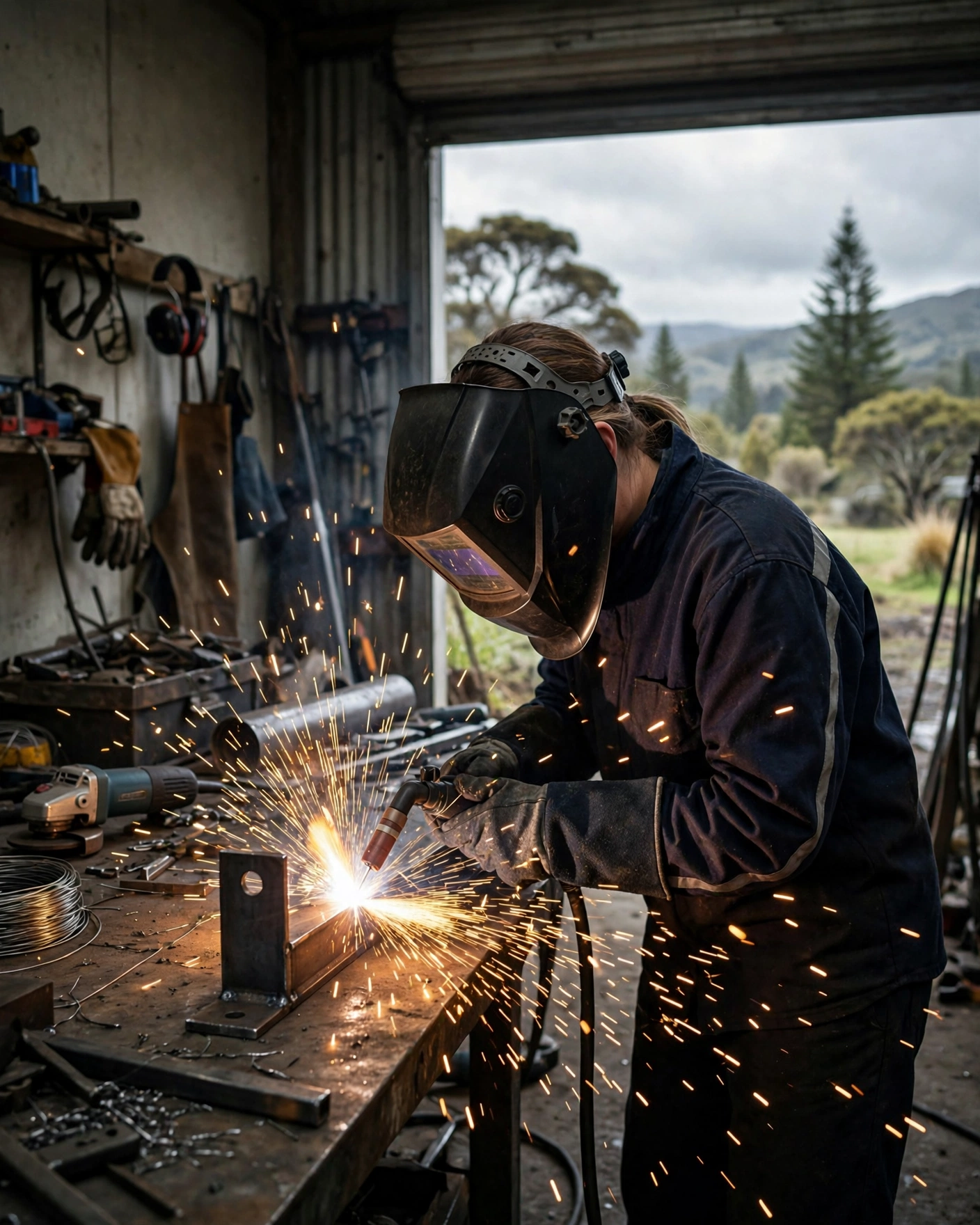
Welder jobs New Zealand wide suit people who like working with their hands and reading drawings. Welders build things that last. Welders join steel and other metals to make gates, trailers, tanks, and frames. Those parts go into buildings, farms, boats, and factories.
This guide explains what welding work in New Zealand actually involves. It covers what employers look for, where to find real listings, and how to apply safely. It is written for job seekers, and it does not promise a job, a visa, or sponsorship.
What welder work in New Zealand actually looks like
A welder in New Zealand works in a workshop, on a building site, or out on a farm. In a workshop, a welder reads a drawing and measures and cuts steel. The welder clamps the pieces in place and welds them together. The work might be a gate, a trailer, a staircase, or a frame for a building. Each job has to be square, strong, and tidy, because the weld holds the whole piece together.
Welders use different methods for different jobs. MIG welding is common for general fabrication. TIG welding is used where the finish has to be neat. Stick welding is used for heavier steel and for work outside. A welder picks the right method, sets the machine, and checks the weld as the work goes on. After welding, the welder grinds the weld smooth and checks the finished piece against the drawing.
Where welders work and staying safe
Some welders work on building sites, welding structural steel for new buildings. Others work in boat building, where aluminium welding is common. Some work in food factories, where stainless steel welding has to be clean and smooth. Farm work means repairing machinery, gates, and trailers, often out in the yard.
Welding is hot, bright work, and safety comes first. Welders wear a welding helmet, gloves, a leather apron or jacket, and safety boots. They keep the work area clear of anything that can catch fire. Sparks and heat are part of the job. A welder has to stay focused and follow the safety rules every time.
The work is physical. It means lifting steel, standing for long periods, and working in awkward positions to reach a joint. Hours are usually a full working week, with some overtime when a job has to be finished. Firms keep welders who can read drawings well. They also keep welders whose welds look good and hold strong.
Where to find real welder jobs in New Zealand
The best place to start is Seek New Zealand. It carries the most trade and fabrication listings in the country. Search for welder, welder fabricator, or fabrication welder, and read the listing in full before you apply. Trade Me Jobs is the second place to check. It often lists the same roles from engineering firms and fabrication workshops.
Welding firms hire in every main centre, including Auckland, Hamilton, Tauranga, Wellington, and Christchurch. Smaller towns have engineering workshops that serve farms and local industry. Large fabrication firms list several roles at once, from apprentice to experienced welder. They often have a careers page on their own website. Recruitment agencies that place trades workers are another way in. They can be useful if you are new to welding.
When you search, check what kind of welding the role needs. A listing might ask for MIG, TIG, or stick welding, or for work with stainless steel or aluminium. Check whether the listing says the role is workshop based or site based, and whether it is full time. A real listing names the firm, the region, and the kind of welding work involved.
What employers usually ask for
The main thing an engineering firm looks for is a welder who can produce a strong, clean weld. The welder needs to read a drawing without being shown every step. Experience counts, and a firm wants to see work you have done, with references from a past employer. A welding trade qualification helps a lot. Firms often ask for it, or for proof that you are working towards one.
Welding tickets matter in this trade. Some jobs need a welder who holds a current ticket for a certain welding method or a certain kind of steel. The listing will say so. A welder who holds tickets for more than one method can take on more kinds of work. Keep your tickets current, and keep copies of them ready to show.
Employers look for people who are careful, steady, and reliable. A weld that looks fine on the outside but is weak inside can fail. A welder has to take the work seriously and check it. Measuring matters too. A frame that is a few millimetres out will not fit when it goes to site. Be honest about the welding methods you know. A firm will find out quickly once you are at the bench.
How pay is described in a listing
Pay for welder jobs in New Zealand is usually listed per hour. Some roles list a yearly salary for a full time role. The rate changes by region, by the firm, and by your experience and tickets. A real listing states the hourly rate clearly, or it says the rate is discussed at interview.
Read the listing for how pay is described. A listing that promises very high pay for very little work is a warning sign. Watch out when it has no firm name and no region. Never pay for a job, a certificate, a uniform, or a visa before you have a written offer. A real engineering firm pays you for your work, and it never asks you to pay to start work.
The visa question, honestly
People who already have the right to work in New Zealand usually do welding there. That includes citizens, residents, and people on work visas that allow trade work. The rules depend on your visa type, your age, and your experience.
If you are outside New Zealand and want to work as a welder, be careful. Watch out for anyone who promises you a welding job and a visa for a fee. A real employer never asks you to pay for a job or a visa. Check the official immigration website for the visa you would need. Check that the employer and the firm are real before you send documents or pay anything.
How to apply, step by step
Step 1: Get your documents ready
Gather a short resume that lists your welding experience and the methods you know. Add any trade qualification or tickets you hold. Add references from a past employer if you have them. Have your work visa or proof of the right to work in New Zealand ready. Keep copies of any welding certificates.
Step 2: Search Seek and Trade Me Jobs for welder jobs New Zealand wide
Search Seek New Zealand and Trade Me Jobs for welder and the region you want to work in. Read each listing in full. Check the firm name, the region, and the welding methods asked for. Check too whether the role is full time or an apprenticeship. Apply only to listings that name the employer and the firm.
Step 3: Write a short, specific application
Keep your resume to one or two pages. Put your welding experience at the top. Say clearly which region you can work in and when you can start. Mention the welding methods you know best, such as MIG, TIG, or stick, and the materials you have worked with. Do not copy the job ad word for word.
Step 4: Prepare for a practical interview
Welding interviews are often practical. Expect questions about jobs you have done, how you set up for a weld, and how you check your work. Many firms ask for a weld test at the bench. Answer with examples from your own experience.
Step 5: Check the offer before you accept
Read the offer before you sign. Look at the pay, the hours, and the region. Check whether the work is in the workshop or on site, and whether overtime is part of the role. Note what tools and protective gear you need to bring and what the firm provides.
The weld test: what to expect and how to prepare
Most welding jobs in New Zealand involve a weld test. It is the part of the hiring process that worries new applicants the most. A weld test is simple in shape. The firm gives you a piece of steel, a drawing or a short brief, and a set time. You set up the machine, prepare the metal, and weld the joint. The firm then checks the weld for strength, penetration, and finish. It sometimes cuts the weld open to see inside it.
The test is not a trick. The firm wants to know whether your weld will hold up in real work. It wants to see whether you can follow a drawing and work to a tolerance. The best way to prepare is to practise the method the listing asks for. Use the same kind of metal, in the same position. A welder who practises the exact test will feel calmer on the day.
On the day of the test, take your time at the start. Clean the metal, check the fit up, and set the machine. Run a short test bead on a scrap piece before you start the real joint. Check your settings as you go, and watch the weld pool rather than rushing to finish. A slower weld that is clean and strong beats a fast weld that is full of holes and spatter.
After the test, the firm may ask you about the weld. The firm may ask what you would change if you did it again. Answer honestly. A welder who can see a fault in their own weld and say how to fix it shows real skill. That beats a welder who claims every weld is perfect.
What to avoid
Skip any listing that has no firm or employer name, no region, and only a phone number or messaging app. Never pay for a job, a certificate, a uniform, or a visa before you have a written offer. Keep your passport number and bank details to yourself until you have verified the employer. Turn down any role that asks you to work without the visa your situation needs, because that is not allowed in New Zealand. Refuse to claim tickets or experience you do not hold, because a weld test will show the truth.
Frequently asked questions about welder jobs in New Zealand
Do I need a qualification to work as a welder in New Zealand?
Most firms prefer a welding trade qualification, and some roles need one. You can also start as an apprentice and train on the job. Welding tickets for a certain method or material help a lot. The listing will say which ones the role needs.
How much do welder jobs New Zealand wide pay?
Pay is usually listed per hour. It changes by region, by the firm, and by your experience and tickets. Check the live listing for the rate, because it changes from employer to employer.
Can I apply for welder jobs New Zealand wide from overseas?
You can apply from overseas, and some firms hire welders from other countries. You still need the right to work in New Zealand, so check the official immigration website before you apply.
What is a weld test?
A weld test is a short practical test. You weld a joint at the bench and the firm checks it for strength and finish. Many firms use one before they hire.
Is welding work mostly in a workshop or on site?
Most welding work in New Zealand is in a workshop, where a welder builds gates, trailers, frames, and parts. Some welders work on building sites or out on farms, fixing steel and machinery where it stands.
Related guides
Job804 shares job information and practical guides. Job804 is not an employer, not a recruitment agent, and does not guarantee a job, an interview, or a visa. Always check the live listing on Seek New Zealand or Trade Me Jobs. Check visa conditions on the official immigration website before you apply or pay for anything. Never pay for a job offer.
Last checked: 22 November 2026. Check the live listing before you apply.
