
Introduction
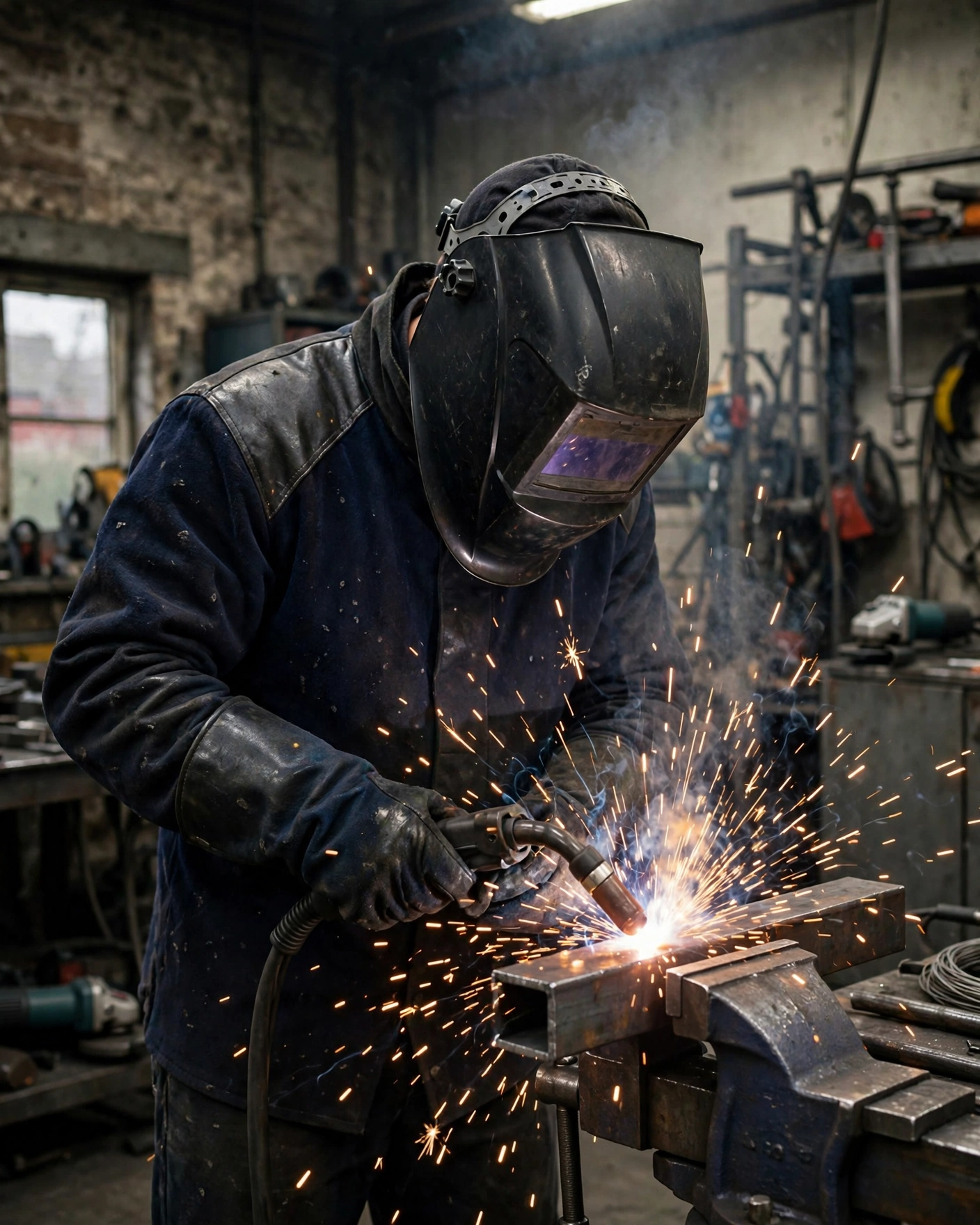
Welder jobs UK wide suit people who like working with metal. They enjoy a craft that needs a steady hand. They take pride in a joint that is strong and clean. Welders join steel and other metals. They work in workshops, factories, and on building sites across the country.
This guide explains real welding work in the UK. You will learn what employers look for. You will also see where to find real listings and how to apply safely. Job seekers can use it as a starting point. Still, it does not promise a job, a visa, or sponsorship.
What welder work in the UK actually looks like
In the UK, a welder works in a workshop or on a site. The job changes from one day to the next. One day might be welding steel frames for a building. Workers measure and cut the work to the drawing. The next day might be a repair on a machine in a factory. The welder fixes a crack and puts a part back into service.
Welding work falls into a few main kinds of roles. MIG welders work with mild steel, often in a workshop. They make frames, gates, and parts. TIG welders work with stainless steel and aluminium. They often do finer work that needs a clean finish. Arc welders, sometimes called stick welders, work on site. The work is outdoors there, and the conditions are harder. Coded welders hold a coding for a specific kind of weld. An assessor tests them on it regularly.
A normal day on site
A normal day starts with a look at the drawings and the jobs for the day. The welder checks the materials needed for each one. Then the work begins. Welders cut metal, fit the pieces together, and weld them. They follow the drawing and the specification. Next, they clean the weld when it is done and check it. A weld that looks good on the outside can still be weak inside.
The work is physical. It involves a lot of standing, bending, and lifting. Welders work in a workshop with heat, sparks, and fumes. They wear a welding helmet, gloves, overalls, and safety boots. Hours run to a full working week. Some jobs need early starts and overtime when a job needs to stay on schedule.
The best welders prepare before they weld. A welder who cleans the metal, sets the machine right, and checks the joint before welding produces a strong weld. Welding is a trade. A welder who learns it well can work anywhere in the country.
Where to find real welder jobs in the UK
Indeed UK is the best place to start. It carries the most welder listings in the country. Search for welder, MIG welder, or TIG welder, and the town or city you want to work in. Read the listing in full before you apply. Reed is the second place to check. It often lists the same roles from fabrication firms and from employers who hire their own welders.
Fabrication firms list roles on their own websites too. They often have a careers page with dozens of roles at once. Engineering firms hire welders in every part of the country. They often have a careers page with roles in workshops and on sites.
When you search, check where the work is and how far it is from your home. Some roles are in a workshop, and some are on a site, so travel matters. Look at whether the listing says the role is full time. Look at whether it mentions overtime, shift work, or weekend work. A real listing names the firm, the area, and the kind of welding work involved.
Welding codes and the weld test, explained simply
Welding in the UK has a system of codes. It helps to know what they mean. A welding code is a standard that says how a weld must be done, and how it is tested. The most common code in the UK is BS EN ISO 9606. That standard covers welder qualification. A welder who holds a coding has passed a test on a specific kind of weld, in a specific position, on a specific metal. The coding is recorded on a certificate.
The weld test is the way a welder proves they can do the job. The firm gives the welder a test piece, and the welder welds it in the position the coding covers. Then the firm checks the weld. Sometimes they look at it. Sometimes they cut it open or X ray it, to see whether it is strong all the way through. If the weld passes, the welder gets the coding. If it fails, the welder can try again after more practice.
A coding is not for life. It needs renewal, usually every two years. The welder needs to show that they have been welding regularly. A welder who holds a current coding for the kind of weld the job needs is much easier to place. The employer does not need to test them again.
If you trained overseas, check whether your qualification is recognised in the UK. Some overseas welders need to take a UK weld test before they can work as a coded welder. The employer will often arrange the test. A welder with overseas experience and a current coding is much easier to place on a site.
What employers usually ask for
The main thing a fabrication employer looks for is a welder who is skilled, reliable, and safe. Experience counts. A firm wants to see work you have done in a workshop or on a site, with references from a past employer. A welder with a current coding for MIG or TIG is the first choice for most firms. A welder who can read drawings is the first choice for work that needs it.
Employers look for people who can work from a drawing. A welder who can look at a drawing, measure the metal, and build the job without being told every step is worth a lot to a firm. A clean driving record matters if the role needs a car. Some work is on site, and the firm needs to trust you to get there on time.
Be honest about your experience. A firm will find out quickly once you are on the job. If you are new to welding, say so. Say what you can bring from your last job. Many welders start as fabricator’s mates. They help a qualified welder and learn the trade. Then they move on to an apprenticeship and a coded role after a few years.
How pay is described in a listing
Pay for welder jobs in the UK is usually listed per hour. A full time role may list a yearly salary instead. The rate changes by region, by the firm, and by your experience and codings. A coded welder earns more than a welder with no coding. A TIG welder often earns more than a MIG welder. A real listing states the pay clearly. Or it says employers discuss the rate at interview.
Read the listing for how pay is described. Some roles pay a higher rate for overtime and weekend work. Read the listing and ask about it at interview if it is not clear. A listing that promises very high pay for very little work, with no firm name and no area, is a warning sign. Never pay for a job, a certificate from an unknown provider, a uniform, or a visa before you have a written offer. A real firm pays you for your work. It never asks you to pay to start work.
The visa question, honestly
Welding work in the UK is usually done by people who already have the right to work in the UK. That includes citizens, residents, and people on work visas that allow this kind of work. The rules depend on your visa type and your situation.
If you are outside the UK and want to work as a welder, be careful with anyone who promises you a welding job and a visa for a fee. A real employer never asks you to pay for a job or a visa. Check the official government website for the visa you would need. Check that the employer and the firm are real before you send documents or pay anything.
How to apply, step by step
Step 1: Get your documents ready
Gather a short resume that lists your work experience, any welding training, and any codings you hold, such as a BS EN ISO 9606 coding for MIG or TIG. Add references from a past employer if you have them. Have proof of your right to work in the UK ready. Keep copies of any training certificates.
Step 2: Search Indeed and Reed for welder jobs UK wide
Search Indeed UK and Reed for welder, MIG welder, or TIG welder, and the town or city you want to work in. Read each listing in full. Check the firm name, the area, the kind of welding work, and whether the role is full time. Apply only to listings that name the employer and the firm.
Step 3: Write a short, specific application
Keep your resume to one or two pages. Put your welding experience and your codings at the top. Say clearly which area you can work in and when you can start. Mention the kind of welding you know best, such as MIG, TIG, or arc. Do not copy the job ad word for word.
Step 4: Prepare for a weld test
Welding interviews are often practical, and many firms ask for a weld test. Expect to weld a test piece in the position the job needs. The firm will check the weld when it is done. Answer questions about jobs you have done, and about how you stay safe in the workshop.
Step 5: Check the offer before you accept
Read the offer before you sign. Look at the pay, the hours, and the workshop or site. Find out whether overtime is part of the role, and whether the firm pays for your coding renewal. Also check what tools you need to bring and what the firm provides. If anything in the offer is different from what the listing promised, ask about it before you sign.
What to avoid
Skip listings with no firm or employer name, no area, and only a phone number or messaging app. Never pay for a job, a certificate, a uniform, or a visa before you have a written offer. Keep your passport number and bank details private until you have verified an employer. A role that asks you to work without the visa your situation needs breaks the rules in the UK, so turn it down. Never weld without the right safety gear. Never skip the check when the weld is done.
Frequently asked questions about welder jobs in the UK
Do I need a qualification to work as a welder in the UK?
Most firms ask for experience and a current coding, such as BS EN ISO 9606 for MIG or TIG. A mate role is the usual way in for someone with no qualification yet, with an apprenticeship to follow.
How much do welder jobs UK wide pay?
Pay is usually listed per hour. It changes by region, by the firm, and by your experience and codings. A coded welder earns more than a welder with no coding. Check the live listing for the rate, because it changes from employer to employer.
Can I apply for welder jobs UK wide from overseas?
You can apply from overseas. Some firms hire welders from other countries. You still need the right to work in the UK, and your overseas qualification may need to be tested, so check both before you apply.
What is a weld test?
A weld test is a practical test. You weld a test piece in the position the job needs, and the firm checks the weld to see whether it is strong all the way through. It is normal in this trade. A real firm will tell you in advance what it involves.
Do fabrication firms provide tools?
Most fabrication firms provide the welding machines and the workshop tools, and the listing should say so. Check whether you need to bring your own hand tools and safety gear, and whether the firm provides them.
Related guides
Job804 shares job information and practical guides. Job804 is not an employer, not a recruitment agent, and does not guarantee a job, an interview, or a visa. Always check the live listing on Indeed UK or Reed, and check visa conditions on the official government website before you apply or pay for anything. Never pay for a job offer.
Last checked: 24 November 2026. Check the live listing before you apply.
