
Introduction
Plumber jobs UK wide suit people who like practical work. They enjoy solving problems. They take pride in a job that is done properly and does not leak. Plumbers install, maintain, and repair water, heating, and drainage systems. They work in houses, offices, shops, and factories across the country.
This guide explains real plumbing work in the UK. You will learn what employers look for. You will also see where to find real listings and how to apply safely. Job seekers can use it as a starting point. Still, it does not promise a job, a visa, or sponsorship.
What plumber work in the UK actually looks like
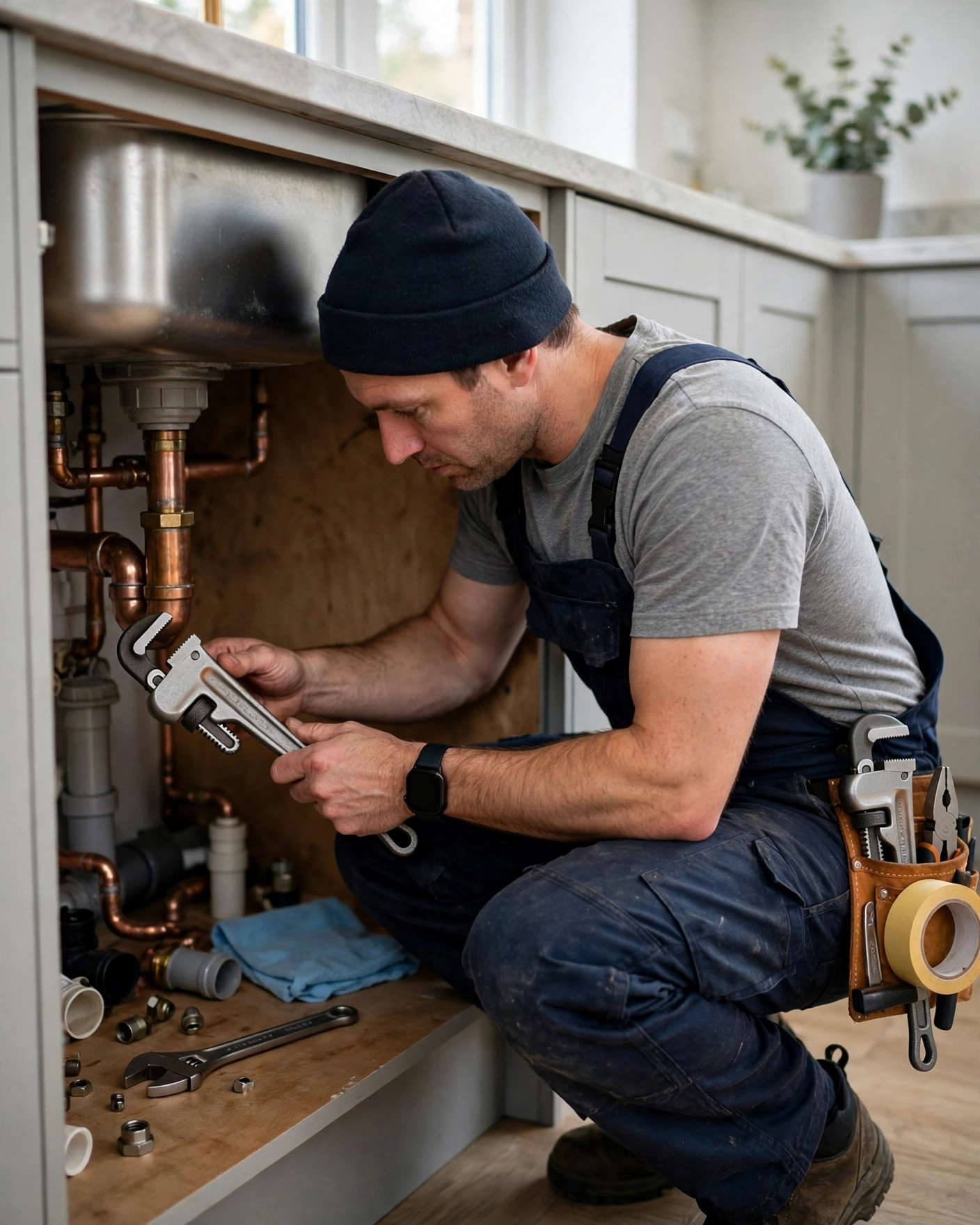
In the UK, a plumber works in homes and on sites. The job changes from one day to the next. One day might be fitting a new bathroom. Pipes, a bath, and a shower go in. The next day might be a call out to a house where a pipe has burst. The plumber stops the water and makes the repair before more damage is done.
Plumbing work falls into a few main kinds of roles. Domestic plumbers work in houses. They fit bathrooms and kitchens, fix leaks, and install boilers. Commercial plumbers work in offices, schools, and hospitals. They work with larger systems and more complex pipework. Heating engineers work on boilers and central heating. They install and service them. Maintenance plumbers look after the plumbing in one building or on one site. They deal with faults as they come up.
A normal day on site
A normal day starts with a look at the jobs for the day. The plumber checks the materials needed for each one. Then the work begins. Plumbers cut and join pipes, fit taps and radiators, and install boilers. Next, they test the system when the work is done. Plans guide the work. The building regulations come first, because a mistake with water or gas can be dangerous.
The work is physical. It involves a lot of standing, bending, and working in tight spaces, such as under floors and in lofts. Plumbers work in all kinds of buildings. They wear work boots, gloves, and safety glasses. Hours run to a full working week. Some jobs need early starts and call outs when a fault needs fixing urgently.
The best plumbers test before they leave. A plumber who checks every joint, runs the water, and makes sure nothing leaks before leaving the house is doing the job well. Plumbing is a trade. A plumber who learns it well can work anywhere in the country.
Where to find real plumber jobs in the UK
Indeed UK is the best place to start. It carries the most plumber listings in the country. Search for plumber, heating engineer, or plumbing engineer, and the town or city you want to work in. Read the listing in full before you apply. Reed is the second place to check. It often lists the same roles from plumbing firms and from employers who hire their own plumbers.
Plumbing firms list roles on their own websites too. They often have a careers page with dozens of roles at once. Facilities management companies hire plumbers in every part of the country. They often have a careers page with roles in hospitals, schools, and offices. Gas and heating companies also hire plumbers and heating engineers. They list roles on their own websites.
When you search, check where the work is and how far it is from your home. Some roles need a car or a van, because the work is spread across a town or a region, and the shift starts early. Look at whether the listing says the role is full time. Look at whether it mentions a work vehicle, tools, or call out work. A real listing names the firm, the area, and the kind of plumbing work involved.
UK plumbing qualifications and Gas Safe, explained simply
Plumbing in the UK has a clear path. It helps to know where you are on it. The first step is an apprenticeship, which takes about three to four years. An apprentice learns on site with a qualified plumber, and studies at a college. The apprentice finishes with an NVQ Level 2 or Level 3 in plumbing and heating. That is the ticket most employers ask for.
Gas work has its own rule, and it is strict. A plumber who works on gas boilers and gas pipes must be Gas Safe registered. Gas Safe is the official register for gas engineers in the UK. It is a legal requirement for anyone who works on gas. To join the register, a plumber needs the right gas qualification, such as the ACS gas assessment, and the firm must be registered too. A plumber who is not Gas Safe registered must not work on gas. A real employer will never ask them to.
Water regulations matter too. Plumbers need to know the Water Supply Regulations. Those rules cover how water systems are installed so the water stays clean and safe. Some employers ask for a water regulations certificate, and the course is short.
If you trained overseas, check whether your qualification is recognised in the UK. Some overseas plumbers need to complete a bridging course before they can work as a qualified plumber in the UK. Gas work always needs the UK gas qualification. A plumber with overseas experience and a recognised qualification is much easier to place on a site.
What employers usually ask for
The main thing a plumbing employer looks for is a person who is skilled, reliable, and safe. Experience counts. A firm wants to see work you have done in houses, offices, or factories, with references from a past employer. A qualified plumber with an NVQ Level 2 or 3 is the first choice for most firms. A plumber who is Gas Safe registered is the first choice for heating work.
Employers look for people who can work on their own and solve problems. A plumber who arrives at a house, finds the fault, and fixes it without being told every step is worth a lot to a firm. A clean driving record matters. Plumbers drive to jobs and sometimes drive a work van, and the firm needs to trust you with the vehicle. A willingness to do call out work helps, because leaks do not wait for office hours.
Be honest about your experience. A firm will find out quickly once you are on site. If you are new to plumbing, say so. Say what you can bring from your last job. Many plumbers start as mates. They help a qualified plumber and learn the trade. Then they move on to an apprenticeship and a qualified role after a few years.
How pay is described in a listing
Listings usually show pay for plumber jobs in the UK per hour. A full time role may list a yearly salary instead. The rate changes by region, by the firm, and by your experience and tickets. A qualified plumber earns more than a mate. A Gas Safe registered heating engineer earns more again. A real listing states the pay clearly. Or it says employers discuss the rate at interview.
Read the listing for how pay is described. Some roles pay a higher rate for call out work. Other roles pay a higher rate for weekend work. Read the listing and ask about it at interview if it is not clear. A listing that promises very high pay for very little work, with no firm name and no area, is a warning sign. Never pay for a job, a certificate from an unknown provider, a uniform, or a visa before you have a written offer. A real firm pays you for your work. It never asks you to pay to start work.
The visa question, honestly
People who already have the right to work in the UK usually do plumbing work there. That includes citizens, residents, and people on work visas that allow this kind of work. The rules depend on your visa type and your situation.
If you are outside the UK and want to work as a plumber, be careful with anyone who promises you a plumbing job and a visa for a fee. A real employer never asks you to pay for a job or a visa. Check the official government website for the visa you would need. Check that the employer and the firm are real before you send documents or pay anything.
How to apply, step by step
Step 1: Get your documents ready
Gather a short resume that lists your work experience, any plumbing training, and any tickets you hold, such as an NVQ Level 2 or 3 and Gas Safe registration. Add references from a past employer if you have them. Have proof of your right to work in the UK ready. Keep copies of any training certificates.
Step 2: Search Indeed and Reed for plumber jobs UK wide
Search Indeed UK and Reed for plumber, heating engineer, or plumbing engineer, and the town or city you want to work in. Read each listing in full. Check the firm name, the area, the kind of plumbing work, and whether the role is full time. Apply only to listings that name the employer and the firm.
Step 3: Write a short, specific application
Keep your resume to one or two pages. Put your plumbing experience and your tickets at the top. Say clearly which area you can work in and when you can start. Mention the kind of plumbing you know best, such as domestic, commercial, or heating. Do not copy the job ad word for word.
Step 4: Prepare for a practical interview
Plumbing interviews are often practical. Expect questions about jobs you have done, how you find a leak, and how you stay safe when working with water and gas. Some firms ask for a short practical test. Answer with examples from your own experience.
Step 5: Check the offer before you accept
Read the offer before you sign. Look at the pay, the hours, and the area. Find out whether a work vehicle is included, and whether call out work is part of the role. Also check what tools you need to bring and what the firm provides. If anything in the offer is different from what the listing promised, ask about it before you sign.
What to avoid
Skip listings with no firm or employer name, no area, and only a phone number or messaging app. Never pay for a job, a certificate, a uniform, or a visa before you have a written offer. Keep your passport number and bank details private until you have verified an employer. A role that asks you to work without the visa your situation needs breaks the rules in the UK, so turn it down. Never work on gas unless you are Gas Safe registered. Never leave a job without testing it.
Frequently asked questions about plumber jobs in the UK
Do I need a qualification to work as a plumber in the UK?
Most firms ask for an NVQ Level 2 or 3 in plumbing and heating. A mate role is the usual way in for someone with no qualification yet, with an apprenticeship to follow. Gas work always needs Gas Safe registration.
How much do plumber jobs UK wide pay?
Pay is usually listed per hour or as a yearly salary. It changes by region, by the firm, and by your experience and tickets. A Gas Safe registered heating engineer earns more than a mate. Check the live listing for the rate, because it changes from employer to employer.
Can I apply for plumber jobs UK wide from overseas?
You can apply from overseas. Some firms hire plumbers from other countries. You still need the right to work in the UK, and your overseas qualification may need to be assessed, so check both before you apply.
What is Gas Safe?
Gas Safe is the official register for gas engineers in the UK. It is a legal requirement for anyone who works on gas. A plumber who is not registered must not work on gas. Check the Gas Safe website for the current rules.
Do plumbing firms provide tools and a van?
Most plumbing firms provide a work van, and the listing should say so. Check whether you need to bring your own hand tools, and whether the firm provides them.
Related guides
Job804 shares job information and practical guides. Job804 is not an employer, not a recruitment agent, and does not guarantee a job, an interview, or a visa. Always check the live listing on Indeed UK or Reed, and check visa conditions on the official government website before you apply or pay for anything. Never pay for a job offer.
Last checked: 24 November 2026. Check the live listing before you apply.
