
Introduction
Construction worker jobs Germany listings draw workers from many countries, because Germany builds constantly. New housing, road works and rail upgrades keep sites busy. They span Berlin, Munich, Hamburg, Frankfurt and dozens of smaller cities. A worker with real site experience and a steady work record can find solid work. The right paperwork matters too, yet the path is not the same for everyone. The rules depend on where the worker comes from, what trade they know and whether the employer sponsors the visa. Workers who arrive with a clear trade, a tidy CV and patience for the paperwork usually settle in fastest.
This guide covers what construction work in Germany really involves. It shows where real listings appear, what employers usually ask for and how pay is described. It also explains what the visa question means in practice. The guide also covers site safety rules, the language question and the seasonal shape of construction work. Those three points decide whether a worker settles in well or struggles from the first week.
What Construction Work in Germany Actually Looks Like
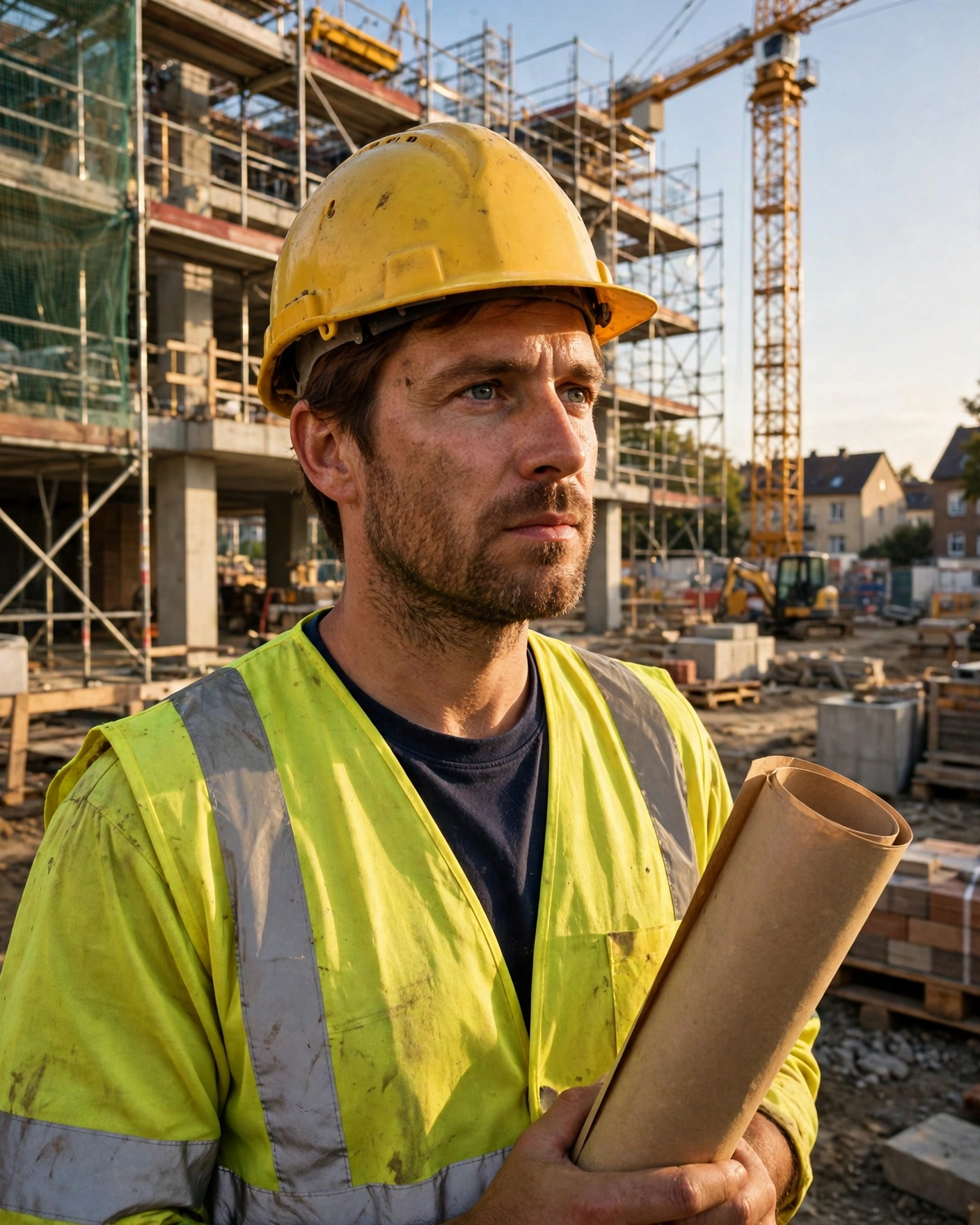
A construction worker in Germany starts early, often before seven in the morning. The worker then works a full day on site in all kinds of weather. The work is physical and varied. One week may involve concrete pouring and formwork. The next week may involve bricklaying, scaffolding, insulation or finishing work inside a building. Large sites divide workers into crews. Each crew answers to a foreman. The foreman sets the day’s tasks, checks the quality of the work and keeps the schedule on track.
German sites run on planning and paperwork. Every worker signs in, every task has a plan, and the foreman expects the crew to follow the drawings and the schedule. A worker who arrives on time, follows the plan and keeps the work area clean earns the foreman’s trust quickly.
The trades on a German site are clear. General labourers handle loading, cleaning, digging and moving materials. Skilled workers such as bricklayers, carpenters, steel fixers, plasterers and tilers work on their own trade. Each trade has its own tools and standards.
Site Safety Rules, the Language Question and Seasonal Construction Work
Safety rules on German construction sites are strict. Every worker must follow them from the first hour. A helmet, safety boots, high visibility clothing and gloves form the basic kit. A worker who turns up without the right gear may have to go home. Ignoring a safety rule may cost a worker the job on the spot.
The Safety Induction
Every new worker gets a safety induction before starting. The induction explains the site layout, the emergency exits and the first aid point. It also covers the rules for each work area. The induction is usually in German, sometimes with an English version. The worker should ask questions when something is unclear.
The Language Question
Language is the question every foreign worker asks, and the honest answer is that German helps a great deal. Site instructions, safety signs, drawings and the foreman’s orders are usually in German. A worker with basic German can understand a task, confirm a measurement and report a problem. That worker works far more safely and fits into the crew far faster. A few months of study before the move pays off from the first day. Focus that study on construction words and safety terms.
Seasonal Construction Work
Construction work in Germany is seasonal in shape. Building work slows in the coldest winter weeks. Frost and snow stop outdoor tasks then. Work picks up strongly from spring through autumn. Large projects run through the year, yet smaller firms hire most in spring and reduce the crew in deep winter. Seasonal contracts are common, and the contract should state the length, the hours and what happens when the season ends.
Where to Find Real Construction Worker Jobs in Germany
Real construction worker jobs Germany listings appear on the large job boards that German employers use every day. Indeed Germany carries site roles from building firms, staffing agencies and large contractors. The listing usually names the employer, the town and the trade. StepStone is a major German job board, and it lists construction roles from large firms that hire in volume.
The Federal Employment Agency runs the official job portal for Germany. It lists construction roles from employers who follow the rules closely.
Staffing agencies play a real role in German construction, and many workers find their first German job through an agency. A genuine agency names its clients and explains the contract in writing. It never charges the worker a fee to find a job. Social media groups also carry construction job posts for Germany, yet the quality varies widely. A post that names the firm, the town, the trade and a real contact is worth reading. Stick to listings that name the employer and give clear details.
What Employers Usually Ask For
German employers usually ask for proof of real site experience before they look at anything else. A worker who has spent two or three years on building sites stands out at once. That worker can name the trades they worked on. A CV should list each site or employer, the dates worked, the trade and the tasks handled. That tells a hiring manager far more than a CV that lists job titles alone.
A trade qualification helps, especially for skilled roles such as bricklaying, carpentry or steel fixing. Workers from outside the EU may need official recognition of their qualification in Germany. The official recognition portal explains the process for each trade.
Employers also look for practical signs of reliability. A worker who can start on the agreed date saves the employer time and trouble. The same worker answers messages promptly and arrives with the right documents ready. Construction crews in Germany are close teams. A new worker fits in far faster when they listen to the foreman, follow the plan and keep the work area tidy. Arguing about the method in the middle of a task slows that down.
How Pay Is Usually Described
Listings usually state pay for construction worker jobs Germany as an hourly rate. The figure changes with the trade, the region and the experience of the worker. Sites in Munich, Frankfurt and Hamburg often pay more than sites in smaller towns. Yet the cost of living in those cities is higher too. So a bigger hourly figure does not always mean more money left at the end of the month.
Germany has a minimum wage that applies across the country. Construction has its own sector minimum rates. In many cases, these rates sit above the general minimum. A contract should state the hourly rate, the weekly hours and how the employer pays overtime. A contract that states the rate, the hours and the overtime terms in plain writing protects both sides. Overtime is common on busy projects. The contract should say whether the employer pays extra hours at a higher rate or grants time off instead.
Some employers provide shared accommodation for workers who move from another country, especially on large projects. When an employer offers accommodation, the contract should describe it. The contract should name the address and state any cost clearly.
The Visa Question, Honestly
A worker from outside the European Union needs a work visa to take a construction job in Germany. That process takes time. The usual route starts with a job offer from a German employer. The employer then supports the visa application with a contract and the details of the role. Germany runs a skilled worker route for people with a recognised qualification or a recognised trade. Construction trades sit inside that system.
Citizens of European Union countries do not need a work visa for Germany. They can start work once they hold a valid contract and register locally. Workers from outside the EU should expect the paperwork to take weeks or months. They should not book flights or leave a current job until the embassy stamps the visa in the passport.
A real employer supports the visa through the official system, and the embassy charges only its own official fee. Some agents ask for a large payment to arrange a visa, a job and a flight in one package. They sell a promise that the official system does not offer. Check visa conditions on the official immigration website, keep every receipt, and never hand a passport to a stranger.
How to Apply for Construction Worker Jobs in Germany
Step 1: Shortlist Real Construction Worker Jobs in Germany
Search Indeed Germany, StepStone and the Federal Employment Agency portal for construction roles. Look for roles that name the employer, the town, the trade and the contract type. Save the listings that match your trade. Ignore any post that hides the employer or promises a visa for a fee.
Step 2: Prepare a Site CV That Shows Real Trade Experience
Write a CV of one or two pages. List each site or employer with the dates worked, the trade, the tasks handled and the size of the crew. Add any trade qualification, safety certificate, driving licence or machine licence you hold. Attach one or two references from previous foremen.
Step 3: Write a Short Cover Note for Each Employer
Write a short note of four or five lines for each employer. Name the trade, the town and one reason you want that project in particular. Mention your years of experience, your German level and the date you can start.
Step 4: Apply and Follow Up Once
Send the CV and the note through the channel the listing asks for. That channel may be an application form, an email address or a careers page. Wait a week, then send one polite follow up message.
Step 5: Handle the Contract and the Visa
When an employer offers a role, confirm the trade, the hours, the pay rate and the start date in writing. Read the contract line by line before you sign. Check the pay, the hours, the overtime terms and any accommodation. Keep a signed copy.
What to Avoid
Avoid any listing that asks for payment before an interview, because real employers in Germany do not charge workers to apply. Avoid agents who promise a guaranteed job, a guaranteed visa or a fixed salary before the employer has even seen a CV.
Do not send the same generic CV to every building firm in Germany. Hiring managers can tell at a glance when a worker copies and pastes the same application. Those applications go to the bottom of the pile. Avoid exaggerating trade experience. A foreman tests a new worker on the first day. A worker who cannot do the trade they claimed loses the job fast and earns a bad name on the site.
Avoid travelling to Germany on a tourist visa with a plan to start work and sort the paperwork later. Working without the right visa risks a fine, a ban from the Schengen area and a lost job. No employer is worth that risk. Avoid signing a contract you have not read. Avoid handing over original documents to anyone except the embassy and the employer.
Frequently Asked Questions
Can a worker from outside the EU work in construction in Germany?
Yes, with a job offer and a work visa under the official skilled worker route. The employer provides the contract. Workers apply for the visa at the German embassy with the documents the official embassy website lists. The process takes weeks or months,
Do I need to speak German to work on a construction site in Germany?
Basic German helps a great deal, because site instructions, safety signs and the foreman’s orders are usually in German. A worker who can understand a task, confirm a measurement and report a problem works more safely. That worker fits into the crew faster.
How much do construction workers earn in Germany?
Pay usually appears as an hourly rate. The figure changes with the trade, the region and the experience of the worker. Skilled trades usually pay more per hour than general labouring. Sites in large cities often pay more than sites in small towns. Germany has a minimum wage and sector minimum rates for construction.
Is construction work in Germany seasonal?
Building work slows in the coldest winter weeks. Frost and snow stop outdoor tasks then. Work picks up strongly from spring through autumn. Large projects run through the year, yet smaller firms hire most in spring.
What safety gear do I need on a German construction site?
A helmet, safety boots, high visibility clothing and gloves form the basic kit. The employer or site manager tells the worker what else each task needs. Work at height needs a harness, dusty work needs a mask, and noisy work needs ear protection.
Related guides
Job804 shares job information and practical guides. Job804 is not an employer, not a recruitment agent, and does not guarantee a job, an interview, or a visa. Always check the live listing on Seek, Indeed, or the employer official website, and check visa conditions on the official immigration website before you apply or pay for anything. Never pay for a job offer.
Last checked: 29 November 2026. Check the live listing before you apply.
