
Introduction
Dairy farm jobs Germany attract workers from many countries because the work is steady, the farms are organised, and the skills are practical. A dairy farm in Germany is a working business, not a holiday on a farm. Cows need milking every day, twice a day, in every season, and the team that looks after them works to a fixed routine. This guide explains what that routine looks like, where real listings appear, what employers ask for, how pay is described, and how the visa question works. You will not find promises of a guaranteed job here. What you will find is a clear picture of the job and the steps that give an application the best chance.
What Dairy Farm Jobs Germany Involve Day to Day
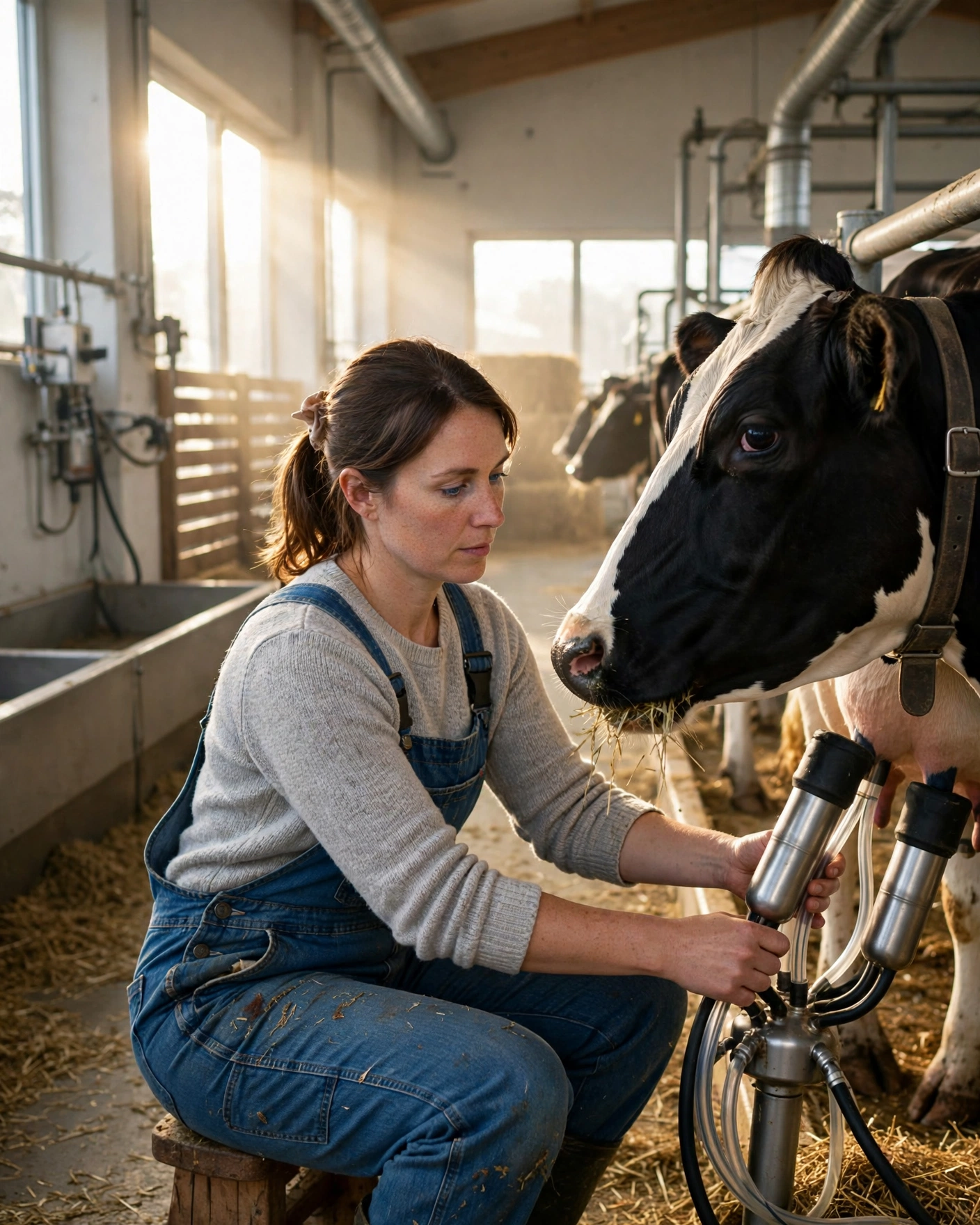
A dairy farm worker spends most of the day with the herd. Milking takes up the biggest part of the morning and the afternoon, and feeding comes next, along with cleaning the milking parlour, the stalls and the yards. Workers check the animals for signs of illness, move cows between fields and barns, and help with calving. Bedding needs changing, water troughs need checking, and fences need repair. Some farms also grow feed crops, so the work can include tractor driving and making silage in summer. The exact mix depends on the size of the farm and the time of year.
Physical fitness matters more than anything else on a dairy farm. Workers are on their feet for long hours, lifting feed sacks and handling animals that weigh hundreds of kilos, in wet and cold conditions. Early starts are normal, and the first milking often begins before sunrise. Weekend work is part of the job, because cows do not take days off, and farms run a rota so that everyone gets time off in turn.
Farm Size, Milking Routines and Winter Work
How Big German Dairy Farms Are
German dairy farms come in many sizes. Family farms with a few dozen cows still exist in many regions, and larger farms with several hundred cows are common in the north and east. A small farm might have one or two workers besides the family, while a large farm runs a team of milkers, feeders, and a herdsman. The size shapes the job. On a small farm, a worker does a bit of everything. On a large farm, the work is more specialised.
Milking Routines and Modern Parlours
Most German dairy farms milk twice a day, morning and evening, with around twelve hours between sessions. Modern farms use milking parlours where cows walk in and are milked by machine. Rotary parlours turn slowly while workers attach the milking units, and herringbone parlours line the cows up at an angle. A few farms use milking robots, and on those farms the work shifts toward checking the robots and keeping the system clean. Learning the routine takes a week or two.
Winter Work and the Qualification Question
Winter changes the rhythm of a dairy farm. Cows stay indoors, feeding takes longer, and the work moves inside the barn. Snow and ice make yard work slower, and cold mornings mean starting in the dark. Think about whether you are ready for cold weather work before you apply. Most dairy farm jobs in Germany do not ask for a university degree. Practical experience with cattle, a driving licence, and a willingness to learn count for more. Some employers ask for a recognised agricultural qualification, so check the live listing.
Where to Find Real Dairy Farm Jobs Germany Listings
Real listings for dairy farm jobs Germany appear on the big job boards first. Seek and Indeed carry farm roles from German employers and from recruitment agencies that work with farms, and both sites let you filter by region and by the date a listing was posted. The official websites of large farms and agricultural companies list their own vacancies, and those pages are often the most reliable source, because the employer writes the description itself. A listing that names the farm and describes the daily tasks is a good sign.
Set up alerts on the job boards so that new listings reach you on the day they appear, because farm roles can fill quickly. Read each listing in full before you apply, and keep a note of the closing date and the contact person. When a listing is written in German, use a translation tool to read it carefully, and note the language level it asks for. Some farms work in English with overseas staff, and some expect basic German from the start.
What Employers Usually Ask For
Employers on German dairy farms look for people who are reliable, physically fit, and comfortable around large animals. Experience with cattle helps a lot, and it does not have to come from Germany. Work on a family farm, a dairy in your own country, or a season of farm work all count, and a short description of what you actually did carries more weight than a list of claims. A driving licence is useful on most farms, and a tractor licence is a clear advantage. Some farms ask for a basic level of German, because safety instructions and daily planning happen in German. Others run a mixed team and manage in English, and they will say so in the listing. References from a previous farm employer help as well. Employers also want people who turn up on time and speak up when an animal looks unwell.
How Pay Is Described for Dairy Farm Jobs Germany
Pay for dairy farm jobs Germany is described in different ways, and the listing is the only place to find the real figure for a real role. Some listings give an hourly rate, some give a monthly figure, and some describe pay as a package that includes housing near the farm. Hours vary with the season and the farm, and overtime rules follow German labour law. A monthly figure on its own tells you little until you know how many hours it covers and whether housing is included.
Germany has a statutory minimum wage that applies to farm work, and employers must follow it. Pay above that level depends on experience, on the region, and on the responsibilities of the role. A herdsman with several years of experience earns more than a new milker. Ask the employer to put the pay, the hours, and any housing arrangement in writing before you accept anything.
The Visa Question, Answered Honestly
The visa question is the part of dairy farm jobs Germany that causes the most confusion, and it deserves a straight answer. A job offer on its own is not a visa. Germany has rules for workers from outside the European Union, and those rules set out which roles qualify and what documents are needed. The exact route depends on your nationality, your qualifications, and the type of contract the employer offers. The only safe source for visa conditions is the official immigration website and the German embassy or consulate in your country.
Be careful with anyone who promises a visa in exchange for a fee. No agent can guarantee a visa, and no employer should ask you to pay for a job offer. A genuine employer will tell you which visa route applies to the role and give you the documents you need from their side. Check the visa conditions yourself, on the official website, before you pay for anything or book travel.
How to Apply for Dairy Farm Jobs Germany
Step 1: Shortlist Real Listings and Check the Employer
Start with the job boards and the official farm websites, and build a shortlist of roles that match your experience and language level. Check the employer behind each listing. A farm with a real website and a real address is a good sign. Keep the shortlist small, because five careful applications beat twenty rushed ones.
Step 2: Prepare a Short CV and a Cover Note
Write a CV of one or two pages that lists your farm experience first. Give the name of each farm, the size of the herd, the tasks you handled, and the dates you worked there. Add your driving licences, your language level, and two references. Write a short cover note for each farm, saying why you want that role and what you can do from the first week. Keep the language plain and honest.
Step 3: Apply the Way the Listing Asks
Send the application exactly as the listing asks, whether that is an email, an online form, or a message through the job board. Attach the CV as a simple document, and include the cover note in the body of the email. Use your own email address and a phone number you actually answer. After you apply, keep a record of the farm name, the date, and the role.
Step 4: Prepare for the Interview and the Practical Questions
Farm interviews are practical. Expect questions about your experience with cattle, your driving, your language level, and your readiness for early starts and winter work. Some employers arrange a video call, and some ask for a trial day if you are already in Germany. Answer in plain words and give real examples, such as the size of the herd you worked with. Ask your own questions too, about the hours, the rota, the housing, and the pay.
Step 5: Check the Contract and the Visa Steps Before You Accept
When an offer arrives, read the contract in full before you accept it. Check the pay, the hours, the start date, the housing arrangement, and the length of the contract. Ask for a translation if you cannot read German. Confirm the visa steps with the German embassy or consulate, and do not book travel until the visa side is clear.
What to Avoid When Applying
The biggest risk in this kind of job search is paying for something that should be free. No genuine employer charges a fee for a job offer, a contract, or an interview. Agents who ask for a large fee up front, who promise a guaranteed visa, or who refuse to name the farm are best avoided. Walk away from anyone who pressures you to pay quickly. A second risk is a listing that sounds too good to be true. Very high pay for very little work, no experience needed, and instant visas are all warning signs.
Watch out for copied listings as well. Some scams copy a real farm listing, change the contact details, and collect fees from applicants. Check that the contact details match the farm official website. Do not send copies of your passport or identity documents to a stranger. When a listing makes you uneasy, trust that feeling and move on to the next one.
Frequently Asked Questions
Do I need experience to get dairy farm jobs Germany?
Experience helps, and it is often the first thing an employer asks about. Work with cattle on any farm counts, and a short description of the herd size and the tasks you handled is enough to show what you know. Some farms take on workers with little experience if they are fit and reliable. Your chances improve a lot when you can show any hands-on farm work and a driving licence.
Do I need to speak German to work on a dairy farm in Germany?
It depends on the farm. Some farms run a mixed team and manage in English, and they say so in the listing. Others expect basic German, because safety instructions and daily planning happen in German. Learning a few farm words before you start helps. Check the language level in each listing and apply for roles that match what you can actually do.
How many hours do dairy farm workers in Germany work?
Hours vary by farm and by season. Milking twice a day sets the shape of the working day, with a break in the middle, and the rota covers weekends because the cows need care every day. Some farms offer split shifts, and some offer longer blocks with days off. The contract should state the weekly hours and the overtime rules. Ask the employer to confirm the hours in writing before you accept a role.
Is housing included with dairy farm jobs Germany?
Some farms offer housing on or near the farm, and some do not. When housing is offered, the listing usually says so, and it should also say what the housing costs. Housing on the farm saves travel time and can make the first weeks much easier. Never pay a large housing deposit to an agent before you have seen a written contract and confirmed the farm is real.
Can dairy farm work in Germany lead to longer-term work?
It can, and many workers stay on after a first season when the farm is happy with their work. A good first contract and a willingness to learn new tasks all help. Longer-term work depends on the visa rules that apply to you and on the type of contract offered, so check the official immigration website for the route that fits your situation.
Related guides
Job804 shares job information and practical guides. Job804 is not an employer, not a recruitment agent, and does not guarantee a job, an interview, or a visa. Always check the live listing on Seek, Indeed, or the employer official website, and check visa conditions on the official immigration website before you apply or pay for anything. Never pay for a job offer.
Last checked: 29 November 2026. Check the live listing before you apply.
