
Introduction
Farm jobs in Germany are seasonal, physical roles that suit people who like working outdoors and do not mind early starts. Farms across the country hire workers for fruit picking, vegetable harvesting, dairy work, and general farm labour. The work follows the seasons, and the busiest months run from spring to autumn.
This guide explains what farm work in Germany actually involves, what employers usually ask for, where to find real listings, and how to apply safely. It is written for job seekers, and it does not promise a job, a visa, or sponsorship.
What farm work in Germany actually looks like
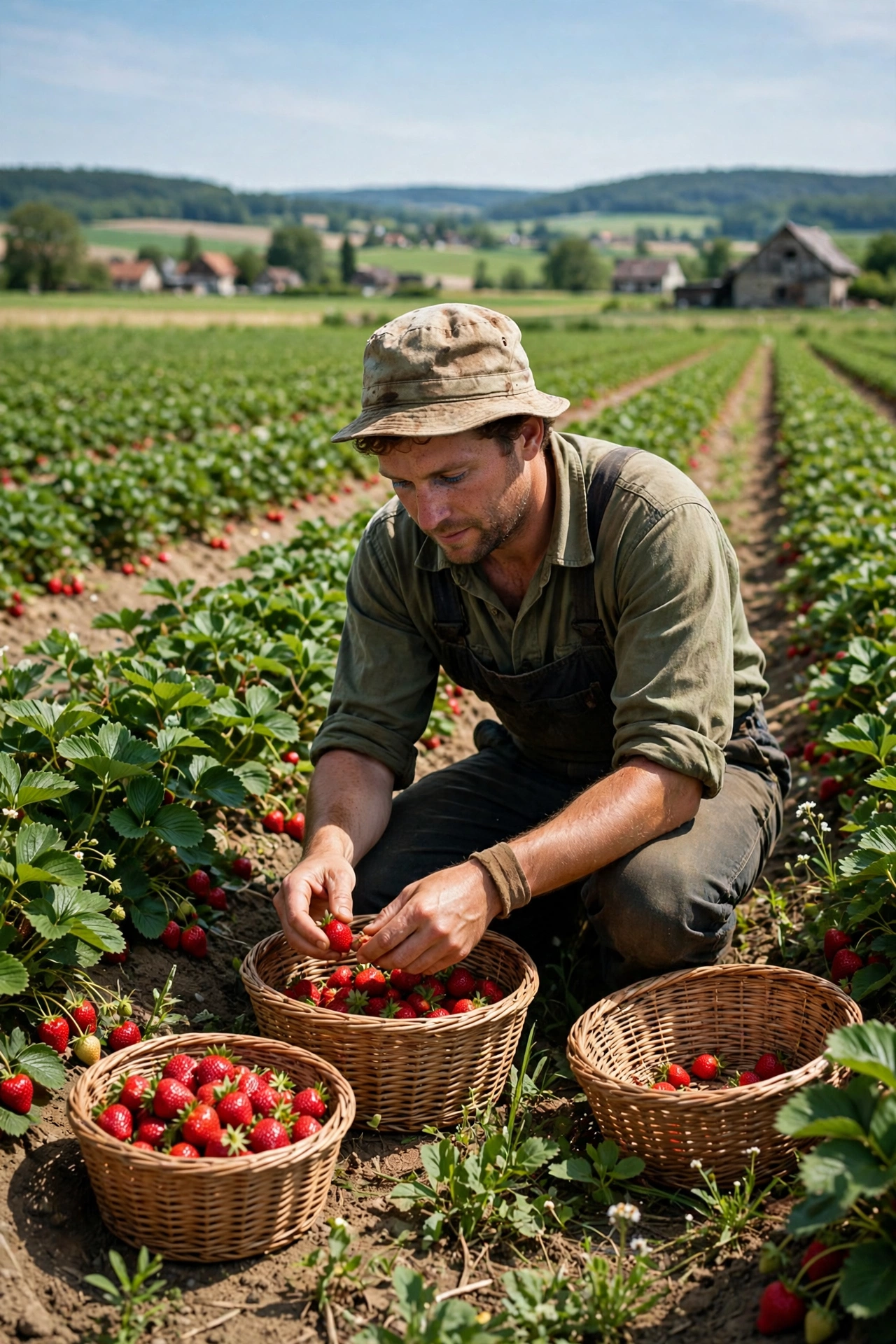
A farm worker’s day depends on the crop and the season. In spring, the work is planting and preparing fields. In summer, the work is picking fruit and vegetables: strawberries, asparagus, apples, and salads. In autumn, the work is harvesting and packing. On a dairy farm, the day starts early with milking, and the routine runs all year.
Most farm roles are seasonal, which means the job lasts for a few weeks or a few months, not all year. A strawberry season can last six weeks. An asparagus season can last two months. Ask the employer how long the season runs, what the hours look like in the busy weeks, and what happens when the season ends, before you accept a role.
The work is physical and outdoors in all weather. You need to be comfortable standing, bending, and lifting for a full shift, and comfortable working in rain, wind, and heat. The hardest part is not the physical work. It is the routine and the weather. A worker who turns up on time, every day, in all weather, is a worker a farm wants to keep.
Where to find real farm jobs in Germany
The best place to start is the Federal Employment Agency’s job portal, the official German job site. It lists farm roles from employers across the country, and every listing shows the employer name, the location, and the requirements. Indeed Germany is the second place to check. Search for farm worker or Erntehelfer and the region you want to work in, and read the listing in full before you apply.
Large farms and farm labour providers hire directly through their own websites. If a listing is on a farm or provider website, check that the farm is real before you apply. A real farm has a website, a street address, and reviews from workers. A fake listing is only on a social media post with no farm name and only a phone number.
When you search, use the region as well as the role. Farm jobs in Bavaria, Lower Saxony, and Baden-Wurttemberg are the most common, because those regions grow the most fruit and vegetables. A role in those regions may have more applicants, but it may also offer more work across the season.
What employers usually ask for
The first thing an employer asks for is the right to work in Germany. Most farm roles are for people who already have work rights, such as EU citizens and people with a valid German work permit or visa. Citizens of EU countries can work in Germany without a visa. Citizens of other countries need a visa, and farm work is not usually a sponsored role.
Employers also look for physical fitness, because the work involves standing, bending, and lifting for a full shift. Previous farm experience helps, but many farms hire workers with no experience and train them on the job. What matters more is attitude: turning up on time, working steadily, and following the farm’s rules.
Some roles ask for a valid driving licence, especially on large farms where workers move between fields. Some ask for experience with farm machinery, and some provide the training after you are hired. A driving licence is the single most useful thing a farm worker can hold, because it opens roles that other workers cannot do.
How pay is described in a listing
Pay for farm jobs in Germany is usually listed per hour. Germany has a statutory minimum wage, and farm work is usually paid at or above that rate. Some roles are paid by piece rate, which means you are paid per box, bucket, or kilogram you pick. A fast picker on a good crop can earn well on piece rate. A slow picker, or a picker on a thin crop, can earn very little.
Read the listing for how pay is described. A real listing states the hourly rate or the piece rate, and it says how pay is calculated. A listing that promises very high pay for very little work, with no employer name and no location, is a warning sign. Never pay for a job, a training course from an unknown provider, or a visa before you have a written offer.
The visa question, honestly
Farm work is not usually a sponsored role in Germany. Most employers hire people who already have the right to work in Germany, such as EU citizens and people with a valid work permit. If you are an EU citizen, you can work in Germany without a visa. If you are not, you need a visa, and a farm job alone is rarely enough to get one.
If you are outside Germany and want farm work, be careful with anyone who promises you a farm job and a visa for a fee. A real employer never asks you to pay for a job or a visa. Check the official immigration website for the visa you would need, and check that the employer is real before you send documents or pay anything.
How to apply, step by step
Step 1: Get your documents ready
Get a one page resume that lists your work history and any farm or physical work experience. If you hold a driving licence, put that at the top. Have your passport and visa details ready, because employers will ask.
Step 2: Search properly on the Federal Employment Agency portal and Indeed
Search the Federal Employment Agency job portal and Indeed Germany for farm worker or Erntehelfer and the region you want to work in. Read each listing in full. Check the employer name, the location, the season length, and whether accommodation is provided. Apply only to listings that name the employer and the farm.
Step 3: Write a short, specific application
Keep your resume to one page. Put your availability and your work rights at the top. Mention any experience in farm work, physical work, or outdoor work. Do not copy the job ad word for word. Write in your own words, and say clearly which region you can work in and when you can start.
Step 4: Prepare for a short interview
Farm interviews are usually short and practical. Expect questions about how you would handle a long shift in the rain, whether you are comfortable working outdoors all day, and whether you can follow safety rules. Answer with examples from your own experience, even if that experience is from a different job.
Step 5: Check the offer before you accept
Read the offer before you sign. Check the pay, the hours, the season length, and whether accommodation is provided and what it costs. Check how pay is calculated, hourly or piece rate. If anything in the offer is different from what the listing promised, ask about it before you sign.
Seasonal work and the language question
Farm work in Germany is seasonal, and the language question matters more here than in most farm jobs. In Australia or Canada, you can start farm work with basic English. In Germany, you need basic German, because the instructions, the safety labels, and the team talk are all in German. A worker who cannot understand an instruction is a risk to themselves and to others.
The good news is that basic German is enough to start. You need to understand instructions, read a short checklist, and ask a question when something is unclear. You do not need to hold a conversation about politics. If you are learning German, say so in your application, and ask the employer whether language help is provided. A farm that gives you time to learn the language is a farm worth working for.
What to avoid
Do not apply to a listing that has no employer name, no location, and only a phone number or messaging app. Do not pay for a job, a training course from an unknown provider, or a visa before you have a written offer. Do not send your passport number or bank details to an employer you have not verified. Do not accept a role that asks you to work without the right visa, because that puts you at risk. If a listing promises very high pay for very little work, walk away.
Frequently asked questions about farm jobs in Germany
Do I need experience to work on a farm in Germany?
No. Many farms hire workers with no experience and train them on the job. Physical fitness, reliability, and a willingness to work outdoors matter more than experience for entry level roles.
Is farm work in Germany seasonal?
Yes. Most farm work in Germany follows the seasons, from spring planting to autumn harvest. A strawberry season can last six weeks. An asparagus season can last two months. Ask the employer how long the season runs before you accept a role.
How much do farm workers earn in Germany?
Pay is usually listed per hour, at or above the statutory minimum wage. Some roles are paid by piece rate. Check the live listing for the rate, because it changes from farm to farm.
Do I need to speak German to work on a farm in Germany?
You need basic German to understand instructions and safety labels. You do not need fluent German. Some employers provide language help.
What is the difference between a farm worker and an Erntehelfer?
An Erntehelfer is a harvest helper, a seasonal worker who picks and packs crops. A farm worker does a wider range of tasks, including planting, harvesting, and general farm labour. Many farm roles include harvest work as part of the job.
Related guides
- Cleaner Jobs in Germany 2026
- Farm Jobs in UK 2026
- How to Find Real Jobs on Seek and Indeed and Avoid Fake Job Offers
Job804 shares job information and practical guides. Job804 is not an employer, not a recruitment agent, and does not guarantee a job, an interview, or a visa. Always check the live listing on the Federal Employment Agency portal or Indeed Germany, and check visa conditions on the official immigration website before you apply or pay for anything. Never pay for a job offer.
Last checked: 17 November 2026. Check the live listing before you apply.
