
Introduction
Mechanic jobs UK listings appear all year round, in every part of the country. They suit people who enjoy practical, hands on work and like solving problems. They also do not mind getting their hands dirty. Mechanics work in independent garages, main dealerships, fast fit centres, fleet workshops, and mobile repair vans. They service cars and vans, find faults, and keep vehicles safe on the road.
This guide explains what mechanic work in the UK involves. It covers what employers look for, where to find real listings, and how to apply safely. It does not promise a job, a visa, or sponsorship. Pay, hours, and duties change from one employer to the next. So the live listing is always the final word. Read it in full before you send anything.
A good mechanic is part detective and part craftsperson. Modern cars carry computers and sensors. A mechanic who can read a fault code and test a part is worth a great deal to a garage. Explaining the repair clearly matters too.
What mechanic work in the UK actually looks like
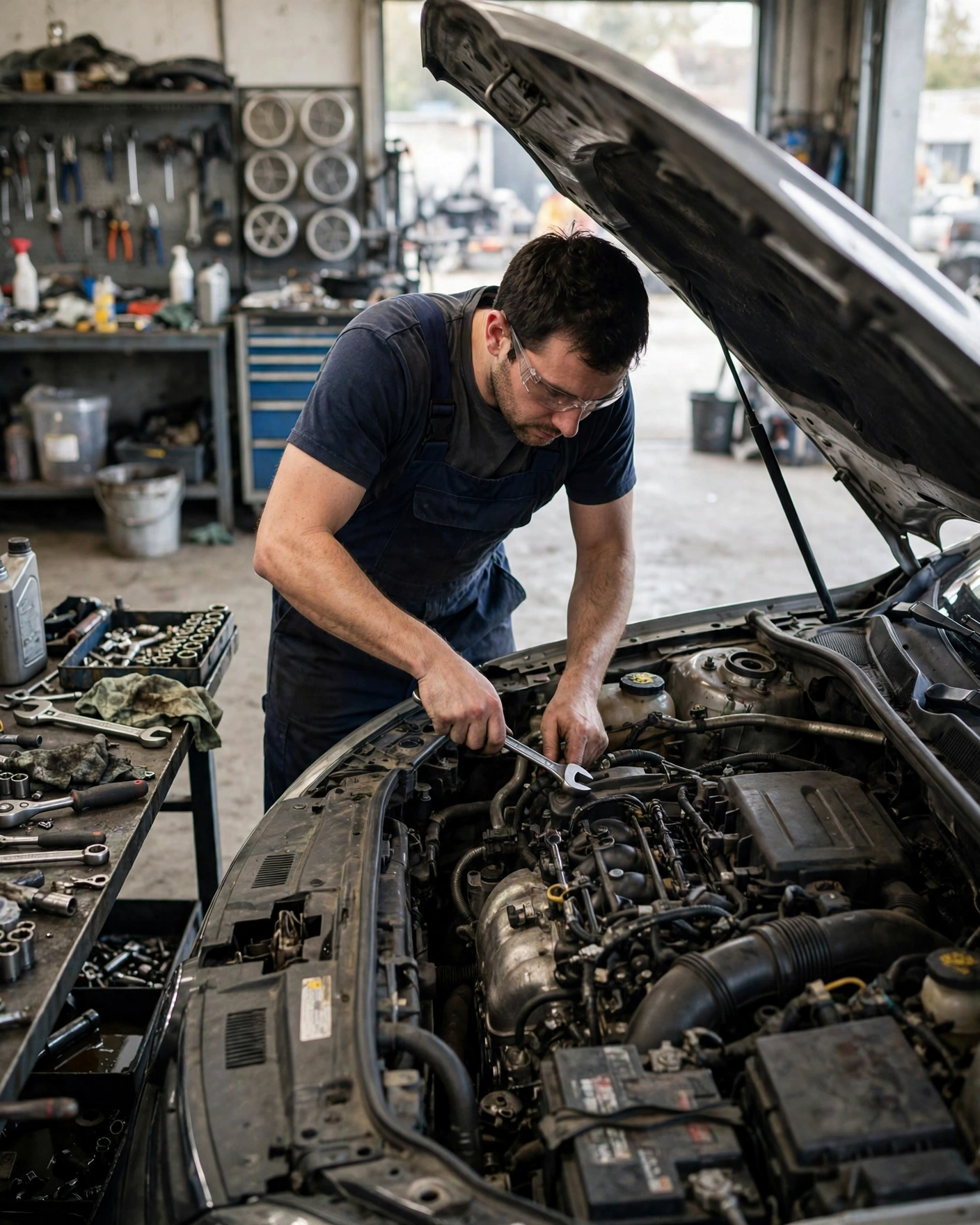
A mechanic’s day starts with the job cards. Each card lists a vehicle and the work booked. It also lists anything the customer has reported, such as a noise or a warning light. The mechanic reads the notes and plans the jobs in order. A service, a brake change, and a diagnostic fault need very different amounts of time.
Servicing is the bread and butter of most garages. An interim or full service means changing the oil and filters. It also means checking brakes, tyres, suspension, lights, and fluid levels. The mechanic records anything that needs attention. A service follows a set checklist. A mechanic who works through it carefully protects the driver and the garage.
Repair work is more varied. Brakes, clutches, exhausts, suspension, and batteries are common jobs. Each one needs the right tools, the right parts, and a methodical approach. Diagnostic work is different again. A warning light or an intermittent fault can take hours to trace. Patience matters here, and so does keeping notes. A fault that comes back needs a clear record of what was already tried.
The working day is physical. Mechanics spend hours on their feet, under cars on ramps, and in inspection pits. Lifting wheels, tyres, and exhaust parts is part of the job. Working in a cold workshop in winter is part of it too. Hours are usually daytime, Monday to Saturday, and many garages open on Saturday mornings.
Where to find real mechanic jobs in the UK
Indeed UK is the best place to start, because it carries the most mechanic listings in the country. Search for mechanic and the town or city you want to work in. Then use the filters for full time, part time, and permanent roles. Check whether the listing names the employer, the location, the hours, and the pay structure.
Reed is the second place to check. It often lists mechanic roles from dealership groups and fleet operators that do not advertise on Indeed. Specialist sites are worth checking too. Autotech Recruit, Perfect Placement, and Motor Trade Jobs list mechanic and technician roles from garages and dealerships across the UK. They often carry roles that never reach the general job boards.
Main dealership groups hire mechanics directly through their own careers pages. Groups such as Arnold Clark, Lookers, Vertu Motors, and Evans Halshaw run workshops all over the country. Their websites list open roles by location. Fast fit chains such as Kwik Fit, Halfords Autocentres, and ATS Euromaster also hire through their own careers pages.
Diagnostics and tools
Diagnostics is the part of mechanic work that has changed most in recent years. It is where a good mechanic now earns their value. A modern car can carry dozens of sensors and control units. A warning light on the dashboard may point to a fault in the engine, the brakes, the exhaust, or the wiring. A diagnostic scan tool reads the fault codes. The mechanic then tests the parts the codes point to. A code alone rarely names the real fault.
A diagnostic job usually starts with a road test or a careful listen, then a scan, then testing. A mechanic may check live data while the engine runs. They may test a sensor with a multimeter, or check wiring for damage. Guessing and swapping parts is expensive for the customer and bad for the garage. So a methodical mechanic who tests before replacing parts is the one employers want to keep.
Tools matter, and most UK mechanics own their own hand tools, kept in a roll cab or tool chest. A basic set covers spanners, sockets, screwdrivers, and torque wrenches, and a mechanic builds it up over years. Specialist tools, diagnostic scanners, and heavy equipment usually belong to the garage. The listing or the interview should say what the garage provides. It should also say what you are expected to bring.
What employers usually ask for
The first thing an employer asks for is proof you can do the work. Previous garage experience is worth more than a long resume, and references from a workshop manager carry real weight. A mechanic who can name the vehicles they have worked on will get further. The same goes for the jobs they handle with confidence and the diagnostic tools they know. They will get further than a mechanic who only lists job titles.
Qualifications help. Many UK garages look for a Level 2 or Level 3 Diploma in Light Vehicle Maintenance and Repair, or an NVQ at the same level. A Level 3 qualification is the common standard for a qualified mechanic. It shows an employer you can work without constant supervision. An MOT tester qualification is a strong extra. A garage that can test and repair in one place needs testers.
Most mechanic roles need a full UK driving licence, because mechanics road test vehicles. Employers also look for reliability and care, because a garage runs on trust. A mechanic who takes shortcuts with safety will not last long. Employers check your right to work in the UK before any job starts, so have your documents ready.
How pay is described in a listing
Listings usually show pay for mechanic jobs in the UK per hour, or as an annual salary for a full time role. Some listings show a salary range, and some say the rate depends on experience. Check the live listing for the rate. It changes by town, by the type of garage, and by your experience. Main dealerships pay more than independent garages. A master technician earns more than a mechanic starting out.
Pay is often described alongside the hours, the contract type, and the benefits. A listing may mention a bonus scheme, overtime, a pension, holiday entitlement, a tool allowance, and a staff discount on parts and servicing. Some garages pay a bonus for hitting workshop targets, and the terms of a bonus should be clear in the listing or at the interview. Read the whole package, not just the headline rate.
The visa question, honestly
Mechanic work in the UK is open first to people who already have the right to work in the UK, such as British citizens, Irish citizens, people with settled or pre-settled status, and people holding a visa that allows work. Most mechanic roles are advertised for people who already hold work rights, and employers will check your documents before you start.
Sponsorship for mechanic roles is limited and not automatic. Some larger employers hold a sponsor licence and can sponsor a skilled worker visa for certain roles, and the rules depend on the job, the salary, the skill level, and the English language requirement. A mechanic role must meet the skill and salary thresholds set by the UK government, and not every mechanic job qualifies.
Be careful with anyone who promises a mechanic job and a visa together for a fee, especially through social media or a messaging app. A genuine employer does not ask you to pay for a job offer, and a genuine sponsor does not collect fees through an agent on WhatsApp. Check the official UK government website for the current visa rules before you make any plans, because the rules change.
How to apply, step by step
Step 1: Pick one type of garage and one area
Decide whether you want an independent garage, a main dealership, a fast fit centre, or a fleet workshop, and pick one town or city you can actually travel to each day. A focused search finds better roles than a search for any mechanic job anywhere. Write down the vehicles you like working on and the hours you can work, then use those notes to filter the listings.
Step 2: Search Indeed UK and Reed properly
Search Indeed UK and Reed for mechanic and the town or city you want to work in, and filter by date posted. Read ten listings properly rather than skimming fifty, and shortlist three to five that fit your experience and your hours. Check the employer name, the location, the pay structure, and whether the listing mentions diagnostic work or MOT testing.
Step 3: Prepare a short, honest CV
Write a one page CV that lists your garage experience, the vehicles you have worked on, the jobs you handle with confidence, and your qualifications, including your driving licence. Add two references, ideally a workshop manager or master technician who can confirm your work, and make sure your phone number and email are correct.
Step 4: Apply through the listing and follow up
Apply through the listing on Indeed UK, Reed, or the employer careers page. Keep a note of every role, the date, and the employer name, so you can follow up and avoid applying twice for the same job. If you hear nothing in a week, a polite message or call is reasonable.
Step 5: Prepare for the interview and the practical test
Read about the garage before you go, think about the vehicles they work on, and prepare short answers about your experience, your diagnostic approach, and how you handle a difficult fault. Some garages ask for a practical test, such as a service or a brake change, so arrive ready to work, in clean overalls, with your own hand tools if the garage expects it.
What to avoid
Avoid any listing that asks you to pay for a job offer, a visa, a certificate, or tools before you start work. A genuine employer pays for the recruitment process, and any training cost should be discussed openly and in writing, not demanded up front through a messaging app. Avoid listings with no employer name, no location, and no duties, because a real garage can describe its workshop, its hours, and its team in plain words.
Avoid exaggerating your experience, because a garage finds out fast. A mechanic who claims to diagnose complex faults and cannot trace a simple wiring problem will be found out on the first week, and the reference that follows will be worse than an honest application for a junior role. Avoid sharing scans of your passport, bank details, or national insurance number with anyone before you have met the employer or checked the company is real.
Frequently asked questions
Do I need a qualification to work as a mechanic in the UK?
A Level 2 or Level 3 Diploma in Light Vehicle Maintenance and Repair is the common standard, and it helps a great deal, but experience can take its place in many independent garages. A Level 3 qualification shows an employer you can work without constant supervision. An MOT tester qualification is a strong extra, and training in electric and hybrid vehicles is becoming more valuable every year.
How much do mechanics earn in the UK?
Pay is usually listed per hour, or as an annual salary for a full time role, and it changes by town, by the type of garage, and by your experience. Check the live listing for the rate, because the same role can pay very differently in a main dealership, in a fast fit centre, and in a small independent garage. Bonuses, overtime, and a tool allowance can add real value.
Can a mechanic get a sponsored visa for the UK?
Sponsorship is limited and not automatic, and it depends on the role, the salary, the skill level, and the English language requirement. Some larger employers hold a sponsor licence, and a mechanic role must meet the thresholds set by the UK government. Check the official UK government website for the current rules before you apply.
Do I need my own tools to work as a mechanic?
Most UK mechanics own their own hand tools, kept in a roll cab or tool chest, and build the set up over years. Specialist tools, diagnostic scanners, and heavy equipment usually belong to the garage. The listing or the interview should say what the garage provides and what you are expected to bring, so ask about this before you start.
Which websites list real mechanic jobs in the UK?
Indeed UK and Reed carry the most mechanic listings, and Autotech Recruit, Perfect Placement, and Motor Trade Jobs are motor trade specialists worth checking. Main dealership groups and fast fit chains list roles on their own careers pages. Cross check the employer name in more than one place before you apply.
Related guides
Job804 shares job information and practical guides. Job804 is not an employer, not a recruitment agent, and does not guarantee a job, an interview, or a visa. Always check the live listing on Indeed UK or Reed, and check visa conditions on the official government website before you apply or pay for anything. Never pay for a job offer.
Last checked: 26 November 2026. Check the live listing before you apply.
