
Introduction
Warehouse jobs Italy have grown fast as online shopping and exports keep rising. For example, goods move through Italy every day, from fashion and food to machine parts and furniture. Someone has to receive them, store them, pick them, pack them, and load them onto trucks. That someone could be you.
This guide covers warehouse jobs Italy in plain language: the daily work, where the big logistics hubs sit, what employers ask for, how pay works, and what the visa question means for people outside the European Union. However, nothing here promises you a job. The aim is to help you search with confidence and avoid the traps that catch new applicants.
What warehouse work in Italy actually looks like
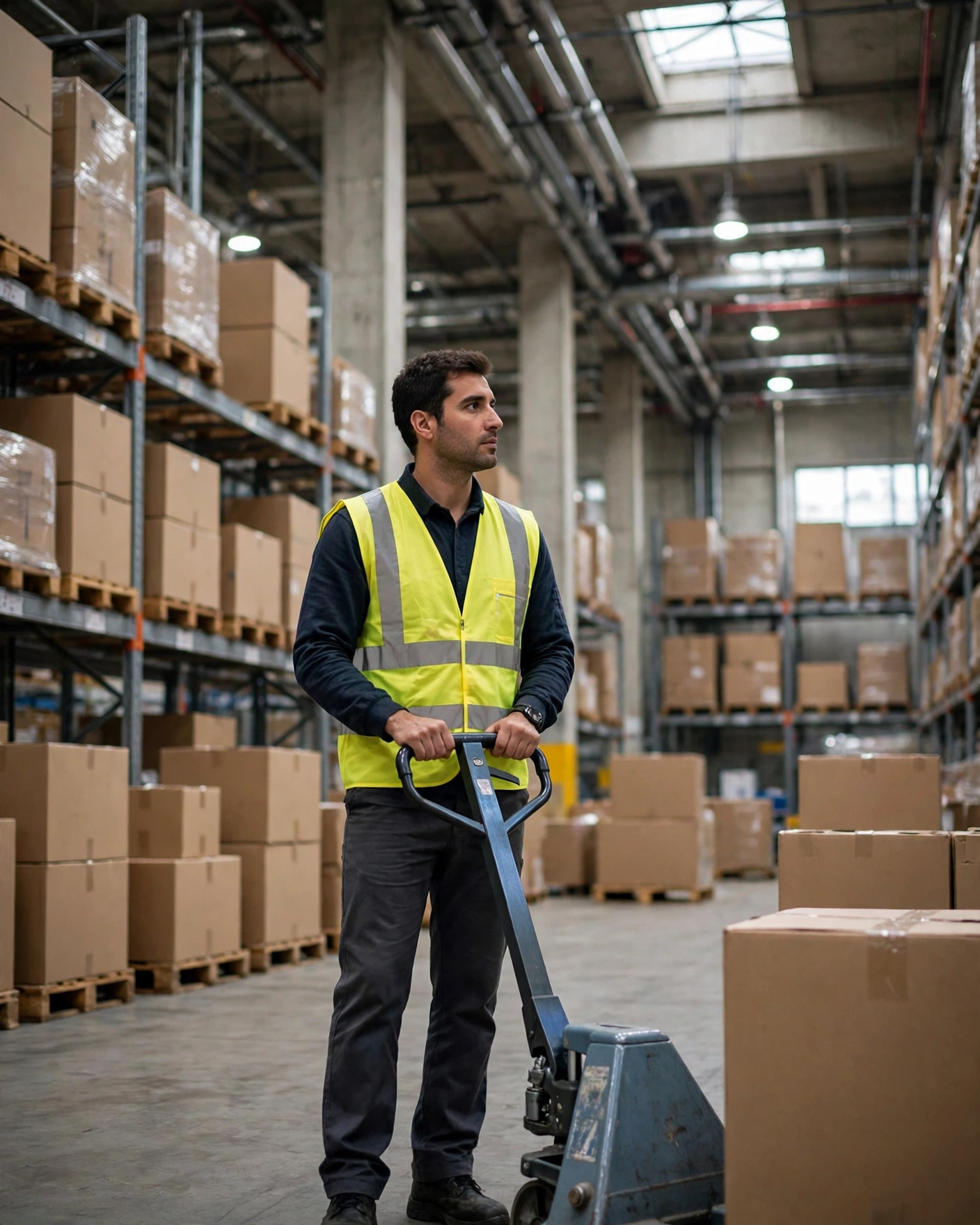
A warehouse job in Italy is physical, practical work with a clear daily flow. First, trucks arrive in the morning and goods come in on pallets. Then, workers unload, check the delivery against the paperwork, and move stock to the right shelf or rack. Orders come in through the day, and pickers walk the aisles with a scanner, collect the items, and bring them to the packing area. Packers wrap, label, and box the goods. Loaders stack the boxes onto trucks for the next leg of the journey.
Some warehouses are small, with a team of ten people who do a bit of everything. Others are huge, with hundreds of workers, conveyor belts, and tall racking that needs a forklift to reach. Big sites split the work into teams, so you may spend your whole shift picking, or packing, or loading. Small sites ask you to switch tasks as the day changes.
Scanners and handheld devices are part of the job now. You scan a barcode, the screen tells you what to pick and where it sits, and you confirm each item as you go. Accuracy matters as much as speed. A wrong item in a box costs time and money to fix, and supervisors track error rates. Workers who stay accurate and steady get trusted with better shifts and more responsibility.
Logistics hubs in northern Italy, forklift work, and seasonal peaks
Where the work concentrates
Northern Italy holds most of the country’s big warehouses. Lombardy, around Milan, is the largest hub, with logistics parks stretching along the motorways. Veneto, around Verona and Padua, holds major distribution centres for fashion, food, and e-commerce. Emilia-Romagna, around Bologna and Piacenza, is famous for food logistics and large retail warehouses. Piedmont, around Turin, serves car parts and manufacturing supply chains.
These regions work well for warehouse jobs because the roads, rail links, and airports connect Italy with France, Germany, Austria, and Switzerland. Goods pass through, and warehouses sit close to the routes. Living near one of these hubs gives you more choice, more shifts, and more employers to compare. Rents near Milan run higher than in smaller towns, so weigh the pay against the cost of living before you move.
Forklift work and why it pays better
Forklift drivers earn more than general pickers in most warehouses, and the reason is skill. Driving a forklift means moving heavy pallets in tight aisles, stacking racks several metres high, and loading trucks without damage. Employers ask for a forklift licence, and in Italy that usually means a certificate from a recognised training course. The course covers theory, practical driving, and a safety test.
If you already hold a forklift licence from another country, check whether the employer recognises it or asks you to take the Italian course. Some employers pay for the training once you join, especially if they are short of drivers. Others only hire drivers who already hold the certificate. Either way, a forklift licence is one of the best investments you can make for warehouse work in Italy.
Seasonal peaks and what they mean for you
Warehouse work in Italy follows the calendar. The Christmas period, from late November through December, is the busiest time of the year. E-commerce orders surge, and warehouses hire extra staff for picking, packing, and night shifts. Summer sales and the back to school period bring smaller peaks. Food warehouses peak before major holidays, when supermarkets stock up.
Peak season brings more hours and more overtime, and it is often the easiest time to get hired. Short contracts are common during peaks, sometimes lasting a few weeks or a couple of months. Some workers use a peak contract to get their foot in the door, prove themselves, and stay on when the season ends. Others take peak work as a way to earn quickly and then move on. Both paths are valid, as long as the contract states the dates and the pay in writing.
Where to find real warehouse listings in Italy
Indeed Italy is the best starting point for most job seekers. It gathers listings from employers and staffing agencies across the country. Search by city or region, filter by contract type and shift, and read each listing in full. A real listing names the employer or the agency, describes the tasks, and states the pay in plain terms.
Staffing agencies place a large share of warehouse workers in Italy. Agencies such as Randstad, Adecco, Manpower, and Gi Group run warehouse hiring in the northern hubs, and smaller local agencies serve single towns or industrial parks. A genuine agency never charges you a fee for finding work. It earns its money from the employer, not from you. Ask for the warehouse name and address before you agree to anything.
Company career pages are worth checking too. Big logistics firms, supermarket chains, and e-commerce companies post openings on their own sites. Local job boards and the public employment centres, called Centri per l’Impiego, list warehouse work in their area and can help if you already live in Italy.
What employers usually ask for
Most warehouse jobs Italy listings ask for simple, practical things. You should be at least 18 years old and fit enough to stand, walk, and lift through a full shift. You should be able to work as part of a team and follow safety rules without being reminded. Experience helps, but many warehouses train beginners.
A forklift licence is a strong advantage and a requirement for driving roles. Basic Italian helps a lot, because supervisors give instructions in Italian and safety signs are written in Italian. Some international warehouses use English on the floor, but Italian still opens more doors. A driving licence helps if the site is outside the city and hard to reach by bus.
How pay is described for warehouse jobs in Italy
Pay for warehouse jobs Italy is usually quoted per hour, under a national collective agreement for logistics workers. The listing shows an hourly rate, and your monthly pay depends on how many hours you work. Night shifts, Sundays, and public holidays usually add a higher rate on top. In addition, overtime is paid extra, and the listing or contract should say how it is calculated.
Deductions come out of your pay for tax and social security. Therefore, your employer should explain these in writing before you start. Some warehouses offer a meal allowance or a canteen, and some cover part of the transport cost. None of this is guaranteed, so treat anything not written in the contract as a hope, not a promise.
Compare listings on the hourly rate, the shift pattern, and the total hours, not on a headline monthly figure alone. For example, a high monthly figure built on constant overtime is not the same as a solid base rate with reasonable hours. Ask for the pay slip pattern in the interview if you are unsure, and check that the contract matches what the listing promised.
The visa question, honestly
Citizens of the European Union can work in Italy without a visa. Citizens of countries outside the EU need a work visa or residence permit that allows warehouse work, and the rules are strict. Italy sets yearly quotas for non-EU workers in some sectors through a system called the Decreto Flussi. Warehouse work is sometimes included, sometimes not, and the quota changes each year.
No agent can guarantee you a visa or a place in the quota. Only the Italian government decides, and the process runs through official channels in your home country and in Italy. Check the visa conditions on the official immigration website before you apply or pay for anything. A genuine employer explains the route in plain terms and gives you time to check it yourself.
Anyone who promises a visa for a fee is selling you a story, not a job. Be careful with offers that ask you to travel to Italy on a tourist visa and then find work. Tourist visas do not allow you to work, and switching to a work permit from inside Italy is difficult and often not possible. Plan the visa first, then the travel.
How to apply
Step 1: Choose your region and your role
Pick a logistics hub that fits your budget and your life. Milan and Bologna offer the most jobs, and smaller towns nearby offer lower rents. Decide whether you want picking, packing, loading, or forklift driving, and focus your search on that role.
Step 2: Search Indeed Italy and agency sites every week
Set up searches on Indeed Italy and on the big agency sites, and check them on a fixed day each week. Save the listings that fit your location, your Italian level, and your shift preference. Read each listing in full, including the small print about shifts and contract length.
Step 3: Prepare a short, honest CV
Write a one or two page CV in Italian if you can, or in English with an Italian summary. List your work history, any forklift licence, and your language level. Keep it clear and factual. A photo is not required, so follow the listing if it asks for one.
Step 4: Apply through the listing, not through a stranger
Use the apply button on Indeed Italy, the agency site, or the company career page. Keep a note of every place you applied, the date, and the contact name. This simple record saves you from confusion later and shows employers you are organised.
Step 5: Prepare for the interview and the site visit
Interviews for warehouse jobs Italy are often short and practical. Expect questions about your fitness, your shift availability, your forklift licence, and your Italian level. Some employers add a simple test or a walk around the warehouse. Dress neatly, wear sensible shoes, arrive early, and bring your documents. Ask about the shift pattern, the contract length, and the pay in writing.
What to avoid
Never pay for a job offer. No genuine warehouse, agency, or employer in Italy charges you to hire you. Fees for a visa, a medical check, or training should be explained in writing, and you should be able to check them against official sources. A demand for cash upfront is a red flag, and you should stop there.
Avoid listings that hide the employer name, the warehouse location, or the pay. A real job has a real address. Avoid promises of very high pay for very light work. Warehouse work is honest, physical work, and the pay reflects that. A listing that sounds too good to be true usually is.
Avoid signing a contract you cannot read. Ask for a translation or take time to get help reading it. Check the pay, the hours, the shift pattern, the deductions, and the contract end date. Never sign under pressure. A genuine employer gives you time.
Avoid agents who promise to change your visa type or find you a quota place for a fee. Visa rules are set by the government, not by agents. If something feels rushed or secret, step back and check the official immigration website.
FAQ
Do I need to speak Italian for warehouse jobs Italy?
Basic Italian helps a lot, because supervisors give instructions in Italian and safety signs are written in Italian. Some international warehouses use English on the floor, but Italian opens more doors and more shifts. Learning the key words for safety, locations, and numbers before you start is a smart move.
Can non-EU citizens work in Italian warehouses?
Yes, but you need a work visa or residence permit that allows warehouse work. Italy sets yearly quotas for some non-EU workers through the Decreto Flussi system. Check the official immigration website to see the current rules and whether warehouse work is included this year.
Do I need a forklift licence to work in a warehouse?
You need a forklift licence for driving roles, and it is a strong advantage for general roles too. In Italy the certificate comes from a recognised training course with a practical test. Some employers pay for the training once you join, and others only hire drivers who already hold it.
How many hours do warehouse workers in Italy work?
A standard full time week is around 40 hours, often spread over five days. Night shifts and weekend work are common, especially in e-commerce warehouses. Peak season brings more hours and overtime, and your contract should state the pattern in writing.
Is warehouse work in Italy seasonal?
Part of it is seasonal. Christmas, summer sales, and holiday food peaks bring short contracts and extra hiring. Supermarket, food, and medical warehouses offer steadier year round work. Peak contracts can lead to longer work if you prove yourself reliable.
Related guides
Job804 shares job information and practical guides. Job804 is not an employer, not a recruitment agent, and does not guarantee a job, an interview, or a visa. Always check the live listing on Seek, Indeed, or the employer official website, and check visa conditions on the official immigration website before you apply or pay for anything. Never pay for a job offer.
Last checked: 27 November 2026. Check the live listing before you apply.
