
Introduction
Carpenter jobs in Canada are practical, hands on roles. They suit people who like building things and seeing a finished result at the end of the day. Carpenters work on houses, apartments, offices, shops, and renovation projects across the country. Their work runs from busy city suburbs in Toronto and Vancouver to smaller towns where new housing is going up fast.
This guide explains what carpentry work in Canada actually involves. It covers what skills and tickets employers look for, where to find real listings, and how to apply safely. It is written for job seekers, and it does not promise a job, a visa, or sponsorship.
What carpentry work in Canada actually looks like
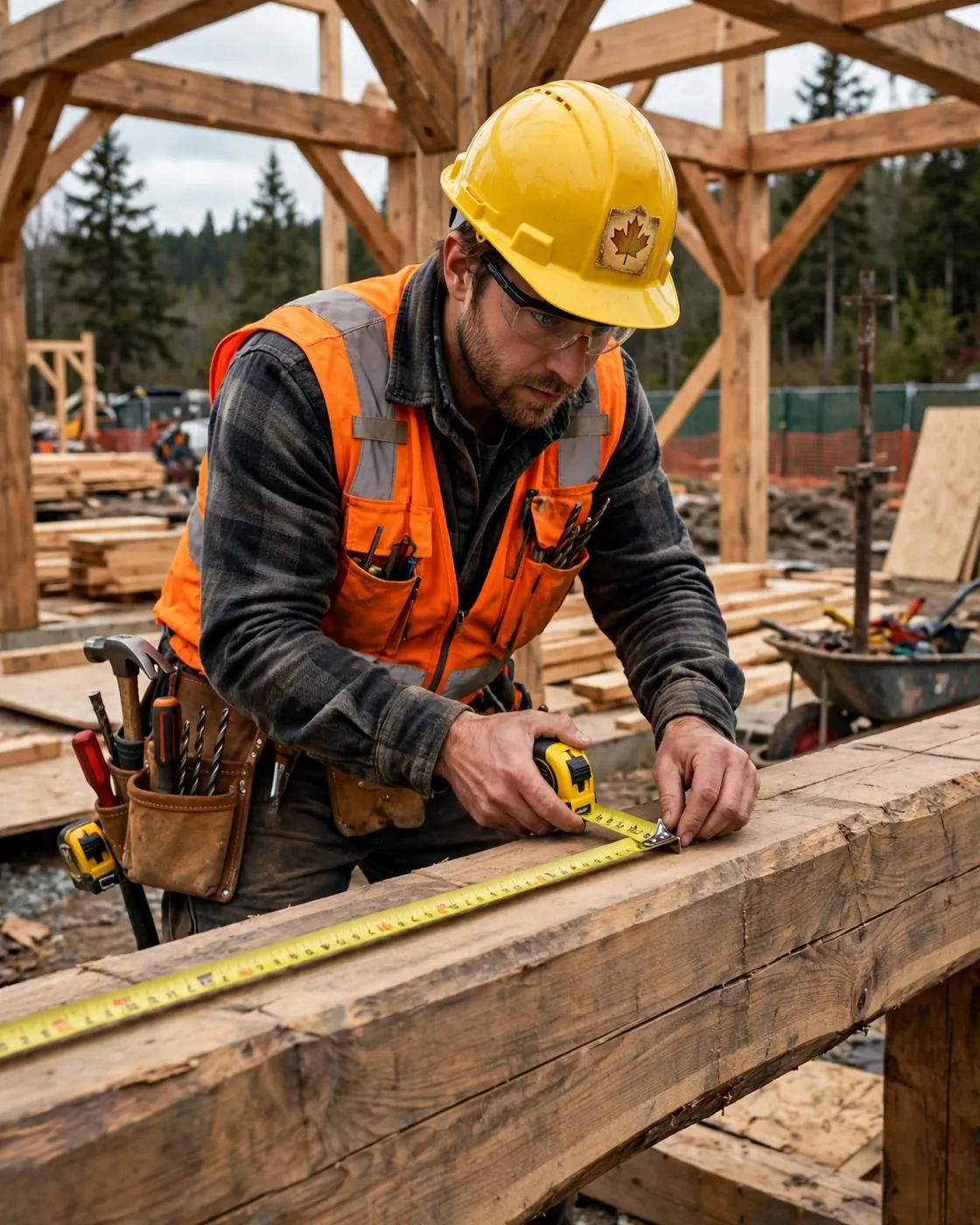
A carpenter day starts early, usually on site. Summer days begin before the heat builds up, and winter days begin before the cold sets in. A new house build might have you framing walls, putting up roof trusses, or fitting windows and doors. A renovation could have you pulling out an old kitchen, fixing floorboards, or building new stairs. Commercial jobs are bigger and faster, with crews of carpenters, apprentices, and other trades working side by side.
The work changes with the stage of the build. Framing is heavy and physical, with timber, power tools, and working at height. Fixing and finishing is slower and more precise, with architraves, skirting boards, doors, and cabinets that need to sit straight and look clean. A good carpenter can do both, but many settle into the part of the trade they enjoy most.
Most carpenters work outdoors or in half finished buildings, so weather is part of the job. Summer is hot and dusty, winter can be very cold, and a site does not stop for a light shower or a snowfall. You need to be comfortable on your feet all day, carrying timber, climbing ladders, and using saws, drills, and nail guns safely.
Where to find real carpenter jobs in Canada
The best place to start is Job Bank, the Canadian government job board, which lists carpentry roles from employers across the country. Search for carpenter and the city or province you want to work in, and read the listing in full before you apply. Indeed Canada is the second place to check, and it often lists the same roles from large builders and construction companies.
Large residential builders hire carpenters directly through their own careers pages. Companies building new suburbs around Toronto, Vancouver, Calgary, and Montreal list open roles by region, and their websites show what stage the project is at. Construction staffing firms also place carpenters on short and long term jobs, which can be a good way to start if you are new to a city.
When you search, use the city as well as the role. Carpenter jobs in Toronto are different from carpenter jobs in a smaller Alberta town. City work has more competition and more high rise work. Smaller town work may offer more hours and a steadier pipeline, but it may also ask for a car and a driving licence. Check whether the listing mentions indoor or outdoor work, because the winter changes both.
What employers usually ask for
The first thing an employer asks for is proof you can do the work. In Canada, that usually means a trade certificate or an apprenticeship, or overseas trade experience you can show with references and photos of finished work. Employers want to see that you can read plans, measure accurately, cut straight, and work safely with power tools.
The second thing is safety training. Most building sites need a basic construction safety course, and some provinces have their own safety card or ticket. Some sites also ask for a working at heights ticket or a first aid certificate. If you do not have the safety training yet, it is a short course and it is worth doing before you apply, because without it you cannot step onto most sites.
Employers also look for your own basic hand tools, a reliable way to get to site early, and the ability to work as part of a crew. Some roles ask for a driving licence, especially for jobs that move between sites. Previous experience helps, but builders do hire apprentices and junior carpenters and train them on the job.
How pay is described in a listing
Pay for carpenter jobs in Canada is usually listed per hour, or as a weekly rate for a full time role. The rate changes by province, by the type of build, and by your experience. A qualified carpenter on a city commercial job is usually paid more than a junior carpenter on a small residential renovation. Weekend and overtime work usually pays more than a standard weekday.
Read the listing for how pay is described. A real listing states the hourly rate, or it says the rate is discussed at interview. A listing that promises very high pay for very little work, with no employer name and no location, is a warning sign. Never pay for a job, a ticket, a uniform, or a visa before you have a written offer.
The visa question, honestly
Carpentry is a skilled trade, and it does appear on Canadian skilled occupation lists from time to time, but the list changes and the rules depend on your age, your qualifications, your English score, and your work history. Most builders hire people who already have the right to work in Canada, such as citizens, permanent residents, and people on work permits that allow full time work.
If you are outside Canada and want to work as a carpenter, be careful with anyone who promises you a carpentry job and a visa for a fee. A real employer never asks you to pay for a job or a visa. Check the official immigration website for the visa you would need, and check that the employer and the job are real before you send documents or pay anything. A skills assessment is often part of the process for trades, so expect that step to take time.
How to apply, step by step
Step 1: Get your documents ready
Gather a resume that lists your carpentry experience, the types of builds you have worked on, and any tickets you hold. Add photos of finished work if you have them, and references from a previous builder or site supervisor. Have your trade certificate or proof of apprenticeship ready.
Step 2: Search properly on Job Bank and Indeed
Search Job Bank and Indeed Canada for carpenter and the city you want to work in. Read each listing in full. Check the employer name, the location, the type of build, and the tickets needed. Apply only to listings that name the employer and the site.
Step 3: Write a short, specific application
Keep your resume to two pages. Put your trade, your tickets, and your availability at the top. Mention the tools you own and the types of work you do best, such as framing, fixing, or formwork. Do not copy the job ad word for word. Write in your own words, and say clearly which city you can work in and when you can start.
Step 4: Prepare for a practical interview
Carpentry interviews are often practical. Expect questions about how you would frame a wall, fix a door that does not close properly, or work safely at height. Some employers ask for a short trial day on site. Answer with examples from your own experience, and be honest about what you can and cannot do yet.
Step 5: Check the offer before you accept
Read the offer letter before you sign. Check the pay, the hours, the site location, and whether tools and safety gear are provided. Check whether the role is full time, casual, or through a staffing firm, and what that means for your hours. If anything in the offer is different from what the listing promised, ask about it before you sign.
Your tools and your reputation
In carpentry, your tools and your reputation travel with you. A carpenter who turns up on time, measures twice, cuts once, and leaves a site tidy gets called back. A carpenter who rushes, wastes timber, or leaves a mess does not. Builders talk to each other, and site supervisors remember the good ones.
Look after your tools, keep them sharp and clean, and replace what is broken instead of working with a blunt saw. Keep your tickets current, and take the safety rules seriously. A clean safety record is worth as much as a clean finish, and it is what keeps you working on the bigger sites.
What to avoid
Do not apply to a listing that has no employer name, no location, and only a phone number or messaging app. Never pay for a job, a ticket, a uniform, or a visa before you have a written offer. Keep your passport number and bank details private until you have verified the employer. Turn down any role that asks you to work without the safety training the site needs, because that is not allowed on Canadian building sites. If a listing promises very high pay for very little work, walk away.
Frequently asked questions about carpenter jobs in Canada
Do I need a qualification to work as a carpenter in Canada?
Most employers look for a trade certificate or an apprenticeship, or overseas trade experience you can prove with references and examples of your work. Apprenticeships are the usual path into the trade in Canada.
What safety training do I need for a building site in Canada?
Most sites need a basic construction safety course, and some provinces have their own safety card. A working at heights ticket and a first aid certificate help too, and they are worth doing before you apply.
How much do carpenters earn in Canada?
Pay is usually listed per hour, and it changes by province, by the type of build, and by your experience. Check the live listing for the rate, because it changes from employer to employer.
Can I work as a carpenter in Canada without experience?
You can start as an apprentice or a labourer on a building site, and learn carpentry on the job. Many builders take on juniors, but you will need the safety training and a willingness to start with the basic tasks.
Is carpentry a sponsored trade in Canada?
Carpentry has appeared on skilled lists, but the rules change and depend on your qualifications, English score, and work history. Be careful with anyone who promises a job and a visa for a fee, and check the official immigration website.
Related guides
- Carpenter Jobs in Australia 2026
- Plumber Jobs in Australia 2026
- How to Find Real Jobs on Seek and Indeed and Avoid Fake Job Offers
Job804 shares job information and practical guides. Job804 is not an employer, not a recruitment agent, and does not guarantee a job, an interview, or a visa. Always check the live listing on Job Bank or Indeed Canada, and check visa conditions on the official immigration website before you apply or pay for anything. Never pay for a job offer.
Last checked: 19 November 2026. Check the live listing before you apply.
