
Introduction
Mushroom picker jobs UK listings appear all year round. Mushrooms grow indoors, so the harvest never depends on the weather. They suit people who like steady, hands on work. They also suit people who do not mind working indoors. Pickers enjoy finishing each day with something visible done well. Mushroom pickers harvest mushrooms by hand in growing rooms. They work on mushroom farms, mostly in England.
This guide explains what mushroom picking work in the UK involves. It covers what growers look for, where to find real listings, and how to apply safely. It does not promise a job, a visa, or sponsorship. Pay, hours, and duties change from one employer to the next. So the live listing is always the final word.
Mushroom picking is skilled work, even though it looks simple from outside. A picker who can judge size, cut cleanly, and fill trays without bruising the crop is worth a great deal to a grower. The best pickers earn more because speed and quality both count.
What mushroom picker work in the UK actually looks like
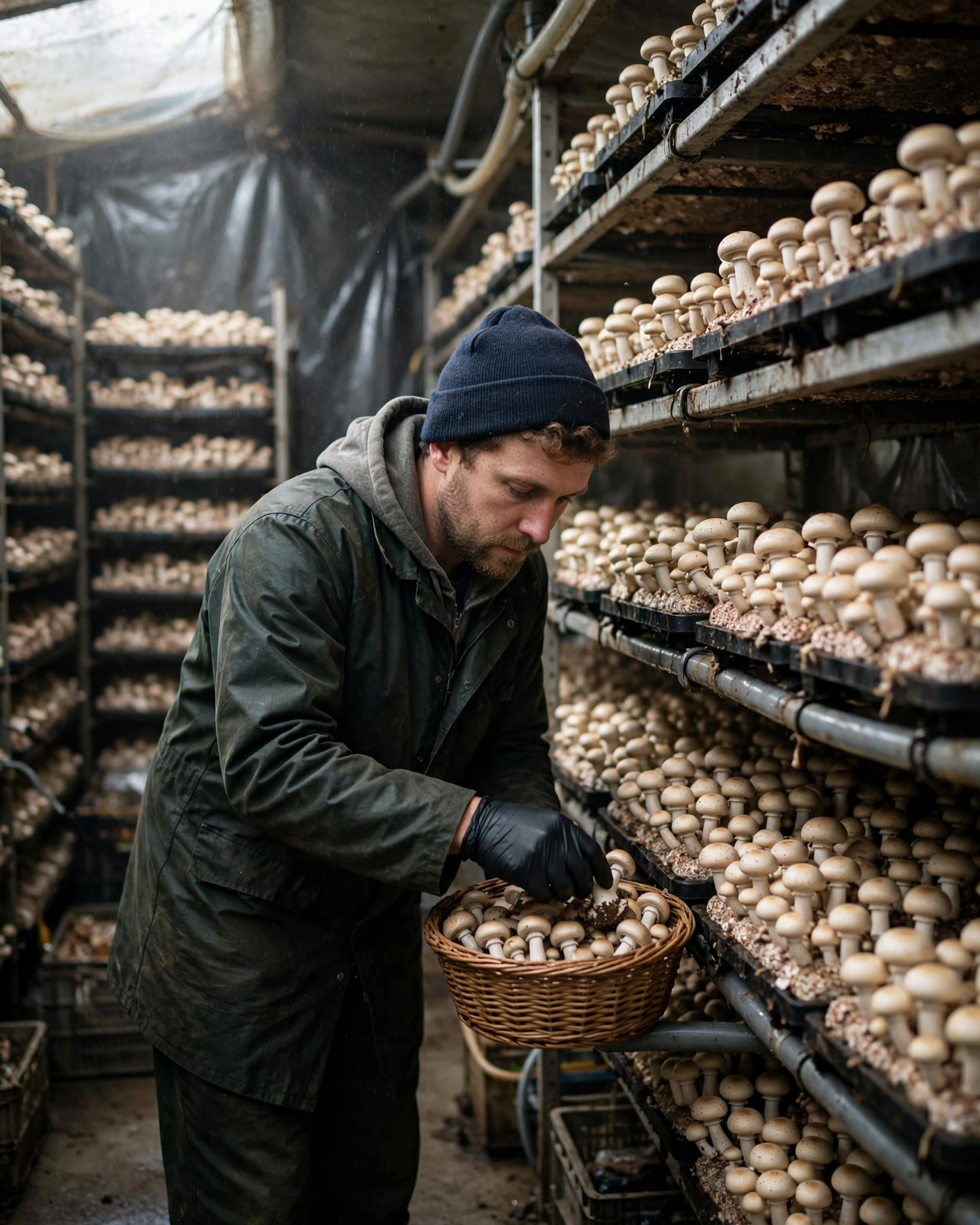
A mushroom picker’s day starts early, often before sunrise. Growers pick the crop fresh each morning and send it to shops and kitchens the same day. The picker walks into a growing room. Mushrooms grow in beds stacked on shelves there, and the picker works along the rows with a picking knife and a tray. The room is cool and humid, and the air smells of compost and damp earth.
Pickers pick by hand, mushroom by mushroom. The picker checks the size of each cap. They twist or cut it free without damaging the bed, trim the stem, and place it in the tray with the caps facing the same way. Speed matters, and so does care. Shops will not sell a bruised mushroom as a top grade product.
The work is physical in a quiet way. Pickers spend hours on their feet, reaching up to high beds and bending to low ones. They carry full trays to the end of the row. Hairnets and clean overalls are standard, because mushrooms go straight to shops and kitchens.
A shift usually lasts a full working day, and the crop decides when it ends. Mushrooms grow fast, and a flush of new mushrooms can mean a longer day. So hours can vary from week to week. Some farms offer weekend work, and some run a six day week during peak flushes. Check the hours and the pay structure in the listing before you apply.
Where to find real mushroom picker jobs in the UK
Indeed UK is the best place to start, because it carries the most mushroom picker listings in the country. Search for mushroom picker, mushroom farm, or farm worker and the county or town you want to work in. Then use the filters for full time and permanent roles. Check whether the listing names the employer, the location, the hours, and the pay structure. A listing that names a real farm or grower is far more trustworthy. It beats one with no employer name at all.
Reed is the second place to check. It often lists farm roles from growers and labour providers that do not advertise on Indeed. Agricultural recruitment agencies are worth checking too. Firms such as HOPS Labour Solutions, Pro-Force, and AG Recruitment and Management place pickers on farms across the UK. Their websites list open roles by region.
Large growers hire pickers directly through their own careers pages. Farm gates and local job boards still carry openings in rural areas. A grower with a farm shop or a packing site nearby will often advertise locally first. So check notice boards and local job boards in the county you want to work in.
The growing rooms and picking technique
The growing room is the heart of a mushroom farm. Mushrooms grow in compost beds stacked on shelves, usually three or four high. They grow in a dark, cool room, where growers control temperature and humidity. After a few weeks, tiny pinheads appear, and the crop grows fast from there.
Picking technique is what separates a good picker from a slow one. The picker holds the mushroom cap gently. They twist it free with a small turn, and trim the stem with a sharp knife in one clean cut. The mushroom goes into the tray cap up, in neat rows. Fill the tray without pressing the mushrooms down. A clean cut matters, because a torn stem damages the bed and slows the next flush. A bruised cap loses value.
Speed comes with practice. Most farms pay by the hour with a target, or by piece rate for the amount picked. A new picker should focus on quality first. A tray of clean, well graded mushrooms is worth more than a tray of bruised ones. Speed follows once the hands learn the movement. Watch the experienced pickers, copy their rhythm, and ask the supervisor to check your first trays.
What employers usually ask for
The first thing a grower asks for is the ability to do steady, physical work. You also need to keep up with the pace of the crop. Previous picking or farm work helps, and references from a farm supervisor carry real weight. A picker who can show they turned up on time, worked a full shift, and kept quality high will get further. They will get further than a picker who only lists job titles.
Most mushroom picker roles need no formal qualification. Many farms train new pickers on the job in the first week. Food hygiene matters, because mushrooms go straight to shops and kitchens. Some farms ask for a basic food hygiene certificate, or provide the training themselves. A picker who understands clean hands, clean tools, and clean trays is a safer hire, and a farm will notice it.
Employers also look for reliability above all else. Mushrooms grow every day, and a farm needs pickers who turn up, even in cold weather and on weekends during a flush. Punctuality and a steady manner matter more than speed on the first day. Employers check your right to work in the UK before any job starts, so have your documents ready.
How pay is described in a listing
Listings usually show pay for mushroom picker jobs in the UK per hour, or as a piece rate for the amount picked. Some listings show both, with an hourly rate and a target. Some say the rate depends on experience. Check the live listing for the rate, because it changes by farm, by region, and by your experience. A fast picker on piece rate can earn more than the hourly rate. A slow picker can earn less, so understand which system the farm uses before you apply.
Listings often describe pay alongside the hours, the contract type, and the benefits. A listing may mention overtime, a pension, holiday entitlement, and accommodation. These extras can make a real difference to the value of a role. Farms often charge for accommodation weekly, and the listing should say the cost in plain words. Read the whole package, not just the headline rate.
The visa question, honestly
Mushroom picker work in the UK is open first to people who already have the right to work in the UK. This includes British citizens, Irish citizens, people with settled or pre-settled status, and people holding a visa that allows work. Most picker roles suit people who already hold work rights. Employers will check your documents before you start.
Sponsorship for mushroom picker roles is limited and not automatic. Some larger growers hold a sponsor licence. The rules depend on the job, the salary, the skill level, and the English language requirement. A picker role must meet the skill and salary thresholds set by the UK government. Most picking roles do not meet them. An employer that offers sponsorship will say so in the listing, and will explain the process.
Be careful with anyone who promises a mushroom picking job and a visa together for a fee, especially through social media or a messaging app. A genuine employer does not ask you to pay for a job offer, and a genuine sponsor does not collect fees through an agent on WhatsApp. Check the official UK government website for the current visa rules before you make any plans, because the rules change.
How to apply, step by step
Step 1: Pick one region and one type of farm
Decide which part of the country you can actually live and travel in, and whether you want a large grower or a small family farm. A focused search finds better roles than a search for any picking job anywhere. Write down the hours you can work and whether you need accommodation, then use those notes to filter the listings.
Step 2: Search Indeed UK and Reed properly
Search Indeed UK and Reed for mushroom picker and the county or town you want to work in, and filter by date posted. Read ten listings properly rather than skimming fifty, and shortlist three to five that fit your experience and your hours. Check the employer name, the location, the pay structure, and whether the listing mentions accommodation.
Step 3: Prepare a short, honest CV
Write a one page CV that lists your farm or manual work experience, the crops you have picked, and any food hygiene certificate you hold. Add two references, ideally a farm supervisor who can confirm your work, and make sure your phone number and email are correct.
Step 4: Apply through the listing and follow up
Apply through the listing on Indeed UK, Reed, or the grower careers page, and attach your CV as requested. Keep a note of every role you applied for, the date, and the employer name, so you can follow up and avoid applying twice for the same job. If you hear nothing in a week, a polite message or call is reasonable.
Step 5: Prepare for the interview and the first day
Read about the farm before you go, and prepare short answers about your experience, your reliability, and how you handle a long day on your feet. Arrive early, with your documents ready. On your first day, watch the experienced pickers, ask the supervisor to check your first trays, and focus on clean mushrooms before you chase speed.
What to avoid
Avoid any listing that asks you to pay for a job offer, a visa, a certificate, or accommodation before you start work. A genuine employer pays for the recruitment process, and any accommodation cost should be discussed openly and in writing, with the weekly charge stated in plain words, not demanded up front through a messaging app. Avoid listings with no employer name, no location, and no duties, because a real grower can describe its farm, its hours, and its crop in plain words.
Avoid exaggerating your experience, because a farm finds out fast. A picker who claims to be fast and fills trays with bruised mushrooms will be found out on the first day, and the reference that follows will be worse than an honest application from a beginner who is willing to learn. Avoid sharing scans of your passport, bank details, or national insurance number with anyone before you have met the employer or checked the company is real.
Frequently asked questions
Do I need experience to work as a mushroom picker in the UK?
No, not for most picker roles. Many farms train new pickers on the job in the first week, and what matters is steady work, reliability, and care with the crop. Previous picking or farm work helps, and references from a farm supervisor carry real weight. A picker who turns up on time, works a full shift, and keeps quality high will be asked back, even without experience.
How much do mushroom pickers earn in the UK?
Pay is usually listed per hour, or as a piece rate for the amount picked, and it changes by farm, by region, and by your experience. Check the live listing for the rate, because the same role can pay very differently on an hourly rate and on piece rate.
Can a mushroom picker get a sponsored visa for the UK?
Sponsorship is limited and not automatic, and it depends on the role, the salary, the skill level, and the English language requirement. Most picking roles do not meet the thresholds set by the UK government. Check the official UK government website for the current rules before you apply.
Is mushroom picking hard work?
Yes, it is physical work. Pickers spend hours on their feet, reaching up to high beds and bending to low ones, and they carry full trays to the end of the row. The rooms are cool and humid, and the days start early. A picker who is fit, steady, and happy working indoors will cope well.
Which websites list real mushroom picker jobs in the UK?
Indeed UK and Reed carry the most mushroom picker listings, and agricultural recruitment agencies such as HOPS Labour Solutions, Pro-Force, and AG Recruitment and Management place pickers on farms across the UK. Large growers list roles on their own careers pages, and local job boards carry openings in rural areas.
Related guides
Job804 shares job information and practical guides. Job804 is not an employer, not a recruitment agent, and does not guarantee a job, an interview, or a visa. Always check the live listing on Indeed UK or Reed, and check visa conditions on the official government website before you apply or pay for anything. Never pay for a job offer.
Last checked: 26 November 2026. Check the live listing before you apply.
