
Introduction
Poultry farm jobs Canada wide suit people who like steady, hands on work, do not mind working with animals, and enjoy finishing each day with a clear result. Poultry farm workers look after chickens, collect eggs, and keep the barns clean and safe in Ontario, Alberta, British Columbia, and other provinces across the country.
This guide explains what poultry farm work in Canada actually involves, what employers look for, where to find real listings, and how to apply safely. It is written for job seekers, and it does not promise a job, a visa, or sponsorship.
What poultry farm work in Canada actually looks like
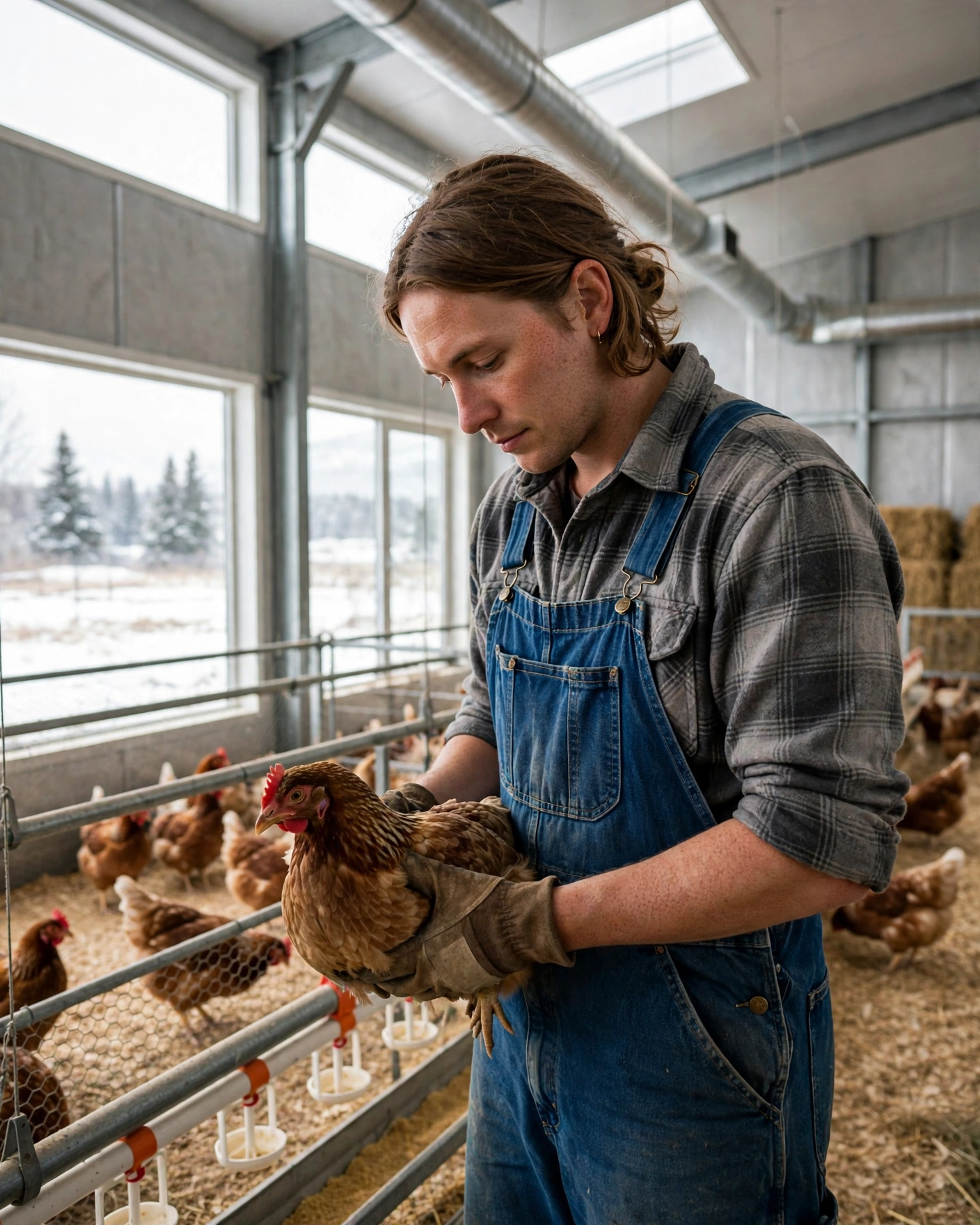
A poultry farm worker in Canada works in a barn, where the birds are kept in a controlled environment. The work changes with the kind of farm. Layer farms keep birds for eggs, and the worker collects the eggs, grades them, and packs them into trays. Broiler farms raise birds for meat, and the worker feeds them, checks their health, and keeps the barn clean. Hatcheries handle eggs and chicks, and the worker checks the incubators.
Most poultry farm work falls into a few kinds of tasks. The main task is feeding and watering the birds, which means checking the feeders and drinkers, filling them when they are empty, and making sure every bird has access to food and water. A worker also collects eggs, which means walking the rows, picking up the eggs, and placing them in trays without cracking them. A worker also cleans the barn, which means removing litter, washing the floors, and keeping the barn dry and clean.
A typical day in the barn
A normal day starts early, often in the morning, with a walk through the barn to check the birds. The worker looks for birds that are sick or injured, and reports them to the supervisor. Then the feeding, watering, and egg collection begins, and the work is steady and repetitive. Workers also check the temperature and the ventilation in the barn, because the birds need fresh air and a steady temperature to stay healthy.
The work is physical, with a lot of standing, walking, bending, and lifting. Workers lift bags of feed, carry trays of eggs, and move equipment around the barn. The barns are warm and dusty, and workers wear work boots, gloves, and a dust mask, and they wash their hands often. Hours are usually a full working week, with some weekend work, because the birds need care every day, including weekends and holidays.
The best poultry farm workers are the ones who notice small changes. A worker who notices that the birds are eating less, or that the barn is too hot, and tells the supervisor early, can save the farm a lot of trouble. A calm manner around the birds matters too, because birds that are stressed lay fewer eggs and grow more slowly. A worker who moves slowly and quietly in the barn is doing the job well.
Where to find real poultry farm jobs in Canada
The best place to start is Job Bank, the Canadian government job site, which carries farm and poultry listings across the country. Search for poultry farm worker, farm worker, or egg collector, and read the listing in full before you apply. Indeed Canada is the second place to check, and it often lists the same roles from poultry farms and from recruitment agencies.
Poultry farms hire in every main farming area, including Ontario, Alberta, British Columbia, and the Prairies, and in smaller towns where a farm covers a whole district. Large poultry farms list several roles at once, from farm worker to egg collector, and they often have a careers page on their own website. Recruitment agencies that place farm workers are another way in, and they can be useful if you are new to the work and want short term work first.
When you search, check where the farm is and how far it is from your home. Some farms are outside the town centre, and some provide transport or housing for workers, so travel matters. Check whether the listing says the role is full time, and whether it mentions housing or transport. A real listing names the farm, the province, and the kind of poultry work involved.
Biosecurity on a poultry farm, explained simply
Biosecurity is a word you will hear a lot on a poultry farm, and it means keeping disease out of the barn. Birds can get sick from germs carried on boots, clothing, hands, and vehicles, and a disease outbreak can kill a whole flock. Good farms take biosecurity seriously, and good workers do too.
Before you enter a barn, you will usually change into clean clothing and boots, and wash your hands. Some farms have a shower in and shower out rule, which means you shower before you enter the barn area, and shower again when you leave. Other farms ask you to wear disposable coveralls and boot covers. Follow the farm rules, even if they seem strict, because they protect the birds.
Workers do not bring food into the barn, and they do not visit another poultry farm on the same day without telling the supervisor. If you keep birds at home, tell the farm, because that can be a risk to the flock. If you see a bird that looks sick, report it straight away, and do not move it to another barn without being told to.
The rules also cover vehicles and equipment. Trucks and tractors are cleaned before they enter the farm, and equipment is not shared between barns without being cleaned first. A worker who follows the biosecurity rules protects the flock, and the farm, and it is one of the most important parts of the job.
What employers usually ask for
The main thing a poultry farm employer looks for is a person who is fit, reliable, and willing to learn. Experience counts, and a farm wants to see work you have done on a farm, in a warehouse, or in another physical job. A clean driving record matters if the role needs a car, because farms are often outside the town centre, and the firm needs to trust you to get to work on time.
Employers look for people who can work at a steady pace without losing care. A worker who collects eggs without cracking them, and who notices a sick bird early, is worth a lot to a farm. A good attitude matters too, because the work is repetitive, and a worker who stays cheerful and keeps going is the one who gets kept on when the season ends.
Physical fitness helps, because the job means standing and lifting all day, and sometimes working in a warm, dusty barn. A willingness to work weekends is needed, because the birds need care every day. Be honest about your experience, because a farm will find out quickly once you are in the barn. If you are new to poultry work, say so, and say what you can bring from your last job.
How pay is described in a listing
Pay for poultry farm jobs in Canada is usually listed per hour, or as a yearly salary for a full time role. The rate changes by province, by the farm, and by your experience. A real listing states the hourly rate clearly, or it says the rate is discussed at interview.
Read the listing for how pay is described. A listing that promises very high pay for very little work, with no farm name and no province, is a warning sign. Never pay for a job, a certificate from an unknown provider, a uniform, or a visa before you have a written offer. A real farm pays you for your work, and it never asks you to pay to start work.
The visa question, honestly
Poultry farm work in Canada is usually done by people who already have the right to work in Canada, such as citizens, permanent residents, and people on work permits that allow farm work. The rules depend on your permit type and your situation.
If you are outside Canada and want to work on a poultry farm, be careful with anyone who promises you a farm job and a visa for a fee. A real employer never asks you to pay for a job or a visa. Check the official government website for the work permit you would need, and check that the employer and the farm are real before you send documents or pay anything.
How to apply, step by step
Step 1: Get your documents ready
Gather a short resume that lists your work experience, any farm work, and any training you have completed. Add references from a past employer if you have them. Have your work permit or proof of the right to work in Canada ready, and keep copies of any training certificates.
Step 2: Search Job Bank and Indeed Canada for poultry farm jobs Canada wide
Search Job Bank and Indeed Canada for poultry farm worker, farm worker, or egg collector, and the province you want to work in. Read each listing in full. Check the farm name, the province, the kind of poultry work, and whether the role is full time. Apply only to listings that name the employer and the farm.
Step 3: Write a short, specific application
Keep your resume to one or two pages. Put your farm experience at the top, and say clearly which province you can work in and when you can start. Mention the kind of farm work you know best, such as egg collection, feeding, or general farm work. Do not copy the job ad word for word.
Step 4: Prepare for a practical interview
Farm interviews are often practical. Expect questions about jobs you have done, how you handle repetitive work, and how you stay safe in a barn. Some farms ask for a short trial in the barn. Answer with examples from your own experience.
Step 5: Check the offer before you accept
Read the offer before you sign. Check the pay, the hours, the farm, whether transport or housing is provided, and whether weekend work is part of the role. Check what clothing you need to bring and what the farm provides. If anything in the offer is different from what the listing promised, ask about it before you sign.
What to avoid
Do not apply to a listing that has no farm or employer name, no province, and only a phone number or messaging app. Never pay for a job, a certificate, a uniform, or a visa before you have a written offer. Keep your passport number and bank details to yourself until you have verified the employer. Walk away from a role that asks you to work without the work permit your situation needs, because that is not allowed in Canada. Follow every biosecurity rule, and never move a sick bird without telling the supervisor.
Frequently asked questions about poultry farm jobs in Canada
Do I need experience to work on a poultry farm in Canada?
Many poultry farms take on workers with no experience and train them on the job. Experience in farm work, warehouse work, or another physical job helps. A good attitude and a willingness to learn matter most for a first role.
How much do poultry farm jobs Canada wide pay?
Pay is usually listed per hour, and it changes by province, by the farm, and by your experience. Check the live listing for the rate, because it changes from employer to employer.
Can I apply for poultry farm jobs Canada wide from overseas?
You can apply from overseas, and some farms hire workers from other countries. You still need the right to work in Canada, so check that before you apply.
Is poultry farm work indoors or outdoors?
Poultry farm work is mostly indoors, in a barn. Workers wear work boots, gloves, and a dust mask, and they follow the biosecurity rules for the farm.
Do poultry farms provide housing or transport?
Some poultry farms provide housing or transport for workers, and the listing should say so. Check whether housing is provided, what it costs, and how far the farm is from the nearest town.
Related guides
Job804 shares job information and practical guides. Job804 is not an employer, not a recruitment agent, and does not guarantee a job, an interview, or a visa. Always check the live listing on Job Bank or Indeed Canada, and check visa conditions on the official government website before you apply or pay for anything. Never pay for a job offer.
Last checked: 23 November 2026. Check the live listing before you apply.
