
Introduction
Construction worker jobs New Zealand wide suit people who like physical work. They suit people who like working outside and finishing each day with something built or fixed. Construction workers help build houses, apartments, offices, roads, and bridges in towns and cities across the country.
This guide explains what construction work in New Zealand actually involves. It covers what employers look for, where to find real listings, and how to apply safely.
What construction worker work in New Zealand actually looks like
A construction worker in New Zealand works on a building site where the job changes as the building grows. One week the site is a hole in the ground with concrete being poured. A few weeks later the frame is up, the roof is on, and the inside work begins. A worker who stays on one site for months sees the whole building take shape.
Most construction work falls into a few kinds of roles. A general labourer carries materials and keeps the site clean and tidy. The labourer digs trenches and helps the trades workers with whatever they need. A hammer hand works with carpenters, carrying timber, cutting boards, and helping to build frames and walls. Concrete workers pour, level, and finish concrete for floors, paths, and foundations. Scaffolders build the scaffolding that lets other workers reach the higher parts of a building safely.
A typical day on site
A normal day starts early, often at seven in the morning. It begins with a short meeting about the work for the day and the safety points to watch. Then the work begins. Labourers move materials around the site, load and unload trucks, and keep the walkways clear. They use wheelbarrows, trolleys, and sometimes a forklift or a crane, under supervision. They help carpenters, plumbers, and electricians by holding, measuring, and fetching what is needed.
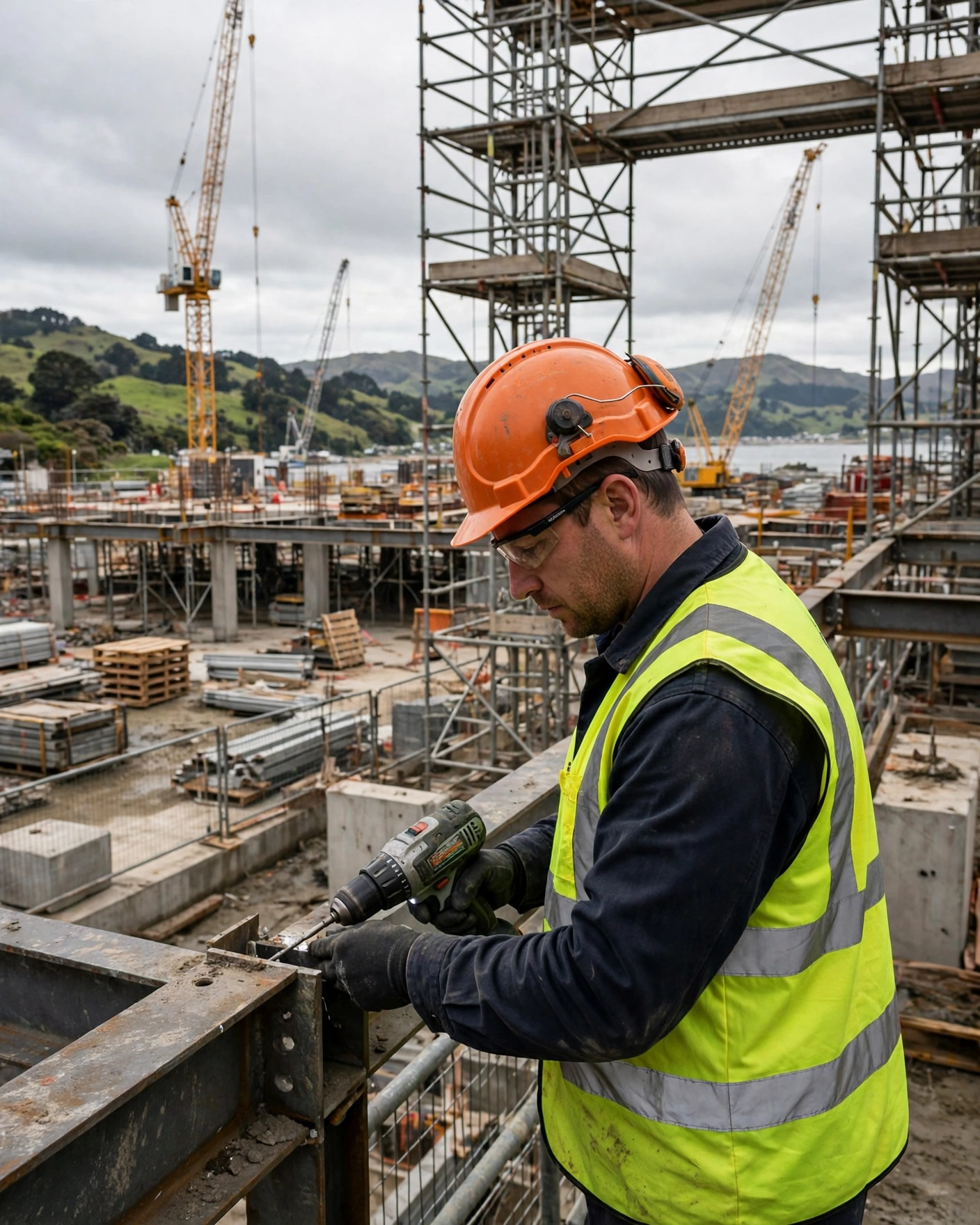
The work is physical, with a lot of lifting, bending, and walking. Construction workers work outside in rain, wind, and sun. They wear work boots, a hard hat, gloves, and a high visibility vest. Hours are usually a full working week. There are some early starts and Saturday work when a job needs to stay on schedule. The work can be noisy and dusty. Workers wear ear protection and a dust mask when the job needs it.
The best construction workers are the ones who turn up on time every day. They follow instructions and keep the site tidy without being asked. A tidy site is a safe site. A worker who notices a trip hazard and clears it is doing the job well. Construction work is team work. A worker who helps the next person is the one the foreman remembers when the next job starts.
Where to find real construction worker jobs in New Zealand
The best place to start is Seek New Zealand, which carries the most construction listings in the country. Search for construction worker, labourer, or hammer hand, and read the listing in full before you apply. Trade Me Jobs is the second place to check. It often lists the same roles from building companies and recruitment agencies.
Building companies hire in every main centre, including Auckland, Hamilton, Wellington, Christchurch, and Dunedin. They also hire in smaller towns where houses and roads are being built. Large building companies list several roles at once, from labourer to experienced carpenter. They often have a careers page on their own website. Recruitment agencies that place construction workers are another way in. They can be useful if you are new to the trade and want short term work first.
When you search, check where the site is and how far it is from your home. Some sites are outside the town centre. Others move from one place to another as the job changes, so travel matters. Check whether the listing says the role is full time, and whether it mentions a work vehicle, tools, or weekend work. A real listing names the firm, the region, and the kind of construction work involved.
Health and safety on a New Zealand building site
Health and safety is a big part of construction work in New Zealand. Every worker needs to know the basics before the first day. A building site has moving vehicles, heavy materials, work at height, and power tools, so the risks are real. Good sites take safety seriously, and good workers do too.
Site induction and protective gear
Before you start on a site, you will get a site induction. The induction explains where the toilets and the lunch room are. It also shows where the first aid kit is, who the first aider is, and what to do if the fire alarm sounds. The induction also explains the hazards on that site, such as open edges, deep holes, or overhead work. It covers the rules for that site, such as where to walk and where not to walk.
Personal protective equipment, known as PPE, is part of the job. A hard hat, work boots with a steel toe, and gloves are standard on most sites. So are eye protection and a high visibility vest. Some sites ask for ear protection and a dust mask as well. Wear the gear you are given, and say something if it is damaged or does not fit.
Site Safe is the main training body for health and safety in the New Zealand construction industry. Many employers ask new workers to hold a Site Safe passport. Others ask them to complete a basic health and safety course. The course covers the law, the common hazards on a site, and how to work safely around them. If a listing asks for a Site Safe card, check the Site Safe website for the current course. Never pay a large fee to a person who promises a card with no training.
If you see something unsafe on a site, say something. Tell the foreman or the site manager, and stop work if you feel unsafe. A real employer will listen, and the law protects workers who raise safety concerns.
What employers usually ask for
The main thing a construction employer looks for is a worker who is fit, reliable, and willing to learn. Experience counts, and a firm wants to see work you have done on a building site, in a warehouse, or in another physical job. A clean driving record matters, because workers drive to sites and sometimes drive a work vehicle between sites, and the firm needs to trust you with the vehicle.
Employers look for people who can work in a team and take instructions. A construction site has a foreman who plans the day, and workers who do the tasks in the right order. A worker who listens, asks when the instruction is not clear, and gets on with the job is the one who gets kept on when the job ends.
Trade training helps, but a labourer role does not always need it. Employers often ask for a Site Safe card, or for proof that you are working towards one. A worker with a building course or a trade qualification can move into a carpentry, plumbing, or electrical role. The pay and the work change with it.
Be honest about your experience, because a firm will find out quickly once you are on site. If you are new to construction, say so, and say what you can bring from your last job. Many construction workers start as labourers, learn the trade on site, and move on to a skilled role after a year or two.
How pay is described in a listing
Employers usually list pay for construction worker jobs in New Zealand per hour. Some list it as a yearly salary for a full time role. The rate changes by region, by the firm, and by your experience and tickets. A real listing states the hourly rate clearly. If it does not state a rate, the employer will discuss it at interview.
Read the listing for how pay is described. A listing that promises very high pay for very little work, with no firm name and no region, is a warning sign. Never pay for a job, a certificate from an unknown provider, a uniform, or a visa before you have a written offer. A real building firm pays you for your work, and it never asks you to pay to start work.
The visa question, honestly
Construction work in New Zealand usually goes to people who already have the right to work there. Citizens, residents, and people on work visas that allow trade work can take these roles. The rules depend on your visa type, your age, and your experience.
If you are outside New Zealand and want to work in construction, be careful with anyone who promises you a construction job and a visa for a fee. A real employer never asks you to pay for a job or a visa. Check the official immigration website for the visa you would need, and check that the employer and the firm are real before you send documents or pay anything.
How to apply, step by step
Step 1: Get your documents ready
Gather a short resume that lists your work experience, any construction training, and any tickets you hold, such as a Site Safe card or a forklift licence. Add references from a past employer if you have them. Have your work visa or proof of the right to work in New Zealand ready, and keep copies of any training certificates.
Step 2: Search Seek and Trade Me Jobs for construction worker jobs New Zealand wide
Search Seek New Zealand and Trade Me Jobs for construction worker, labourer, or hammer hand, and the region you want to work in. Read each listing in full. Check the firm name, the region, the kind of construction work, and whether the role is full time. Apply only to listings that name the employer and the firm.
Step 3: Write a short, specific application
Keep your resume to one or two pages. Put your construction experience at the top, and say clearly which region you can work in and when you can start. Mention the kind of work you know best, such as labouring, concrete work, or carpentry support. Do not copy the job ad word for word.
Step 4: Prepare for a practical interview
Construction interviews are often practical. Expect questions about jobs you have done, how you handle heavy lifting, and how you stay safe on a site. Some firms ask for a short trial on site. Answer with examples from your own experience.
Step 5: Check the offer before you accept
Read the offer before you sign. Check the pay, the hours, the site, whether a work vehicle is included, and whether weekend work is part of the role. Check what tools you need to bring and what the firm provides. If anything in the offer is different from what the listing promised, ask about it before you sign.
What to avoid
Do not apply to a listing that has no firm or employer name, no region, and only a phone number or messaging app. Never pay for a job, a certificate, a uniform, or a visa before you have a written offer. Keep your passport number and bank details to yourself until you have verified the employer. Turn down a role that asks you to work without the visa your situation needs, because that is not allowed in New Zealand. Skip a site that has no safety gear for the job, and never ignore a hazard you have spotted.
Frequently asked questions about construction worker jobs in New Zealand
Do I need a Site Safe card to work in construction in New Zealand?
Many employers ask for a Site Safe card or a basic health and safety course, and some arrange the training after you start. Check the listing, and check the Site Safe website for the current course if the role asks for it.
How much do construction worker jobs New Zealand wide pay?
Employers usually list pay per hour. The rate changes by region, by the firm, and by your experience and tickets. Check the live listing for the rate, because it changes from employer to employer.
Can I apply for construction worker jobs New Zealand wide from overseas?
You can apply from overseas, and some firms hire construction workers from other countries. You still need the right to work in New Zealand, so check that before you apply.
Is construction work mostly in houses or on big sites?
Both. Some workers build houses, and others work on apartments, offices, roads, and bridges. The listing should say what kind of site the role is on.
Do building firms provide tools and safety gear?
Most building firms provide safety gear, and the listing should say so. Check whether you need to bring your own hand tools, and whether the firm provides a work vehicle.
Related guides
Job804 shares job information and practical guides. Job804 is not an employer, not a recruitment agent, and does not guarantee a job, an interview, or a visa. Always check the live listing on Seek New Zealand or Trade Me Jobs, and check visa conditions on the official immigration website before you apply or pay for anything. Never pay for a job offer.
Last checked: 23 November 2026. Check the live listing before you apply.
