
Introduction
Poultry farm jobs UK listings appear all year round. Chicken and egg farms run every day of the year. They suit people who want steady, regular work. They also suit people who do not mind early starts and physical labour. Workers should feel comfortable working around birds. Poultry farm workers feed and water flocks. They collect eggs, clean sheds, check bird health, and help with catching and loading.
This guide explains what poultry farm work in the UK involves. It covers what employers look for, where to find real listings, and how to apply safely. It does not promise a job, a visa, or sponsorship. Pay, hours, and duties change from one employer to the next. So the live listing is always the final word.
Poultry work is steady rather than seasonal. A farm that keeps laying hens or broiler chickens needs workers every day, including weekends. A worker who turns up reliably and follows the routine will earn trust. The right role depends on whether you want a layer farm, a broiler farm, a hatchery, or a processing plant. The daily work is different in each one.
What poultry farm work in the UK actually looks like
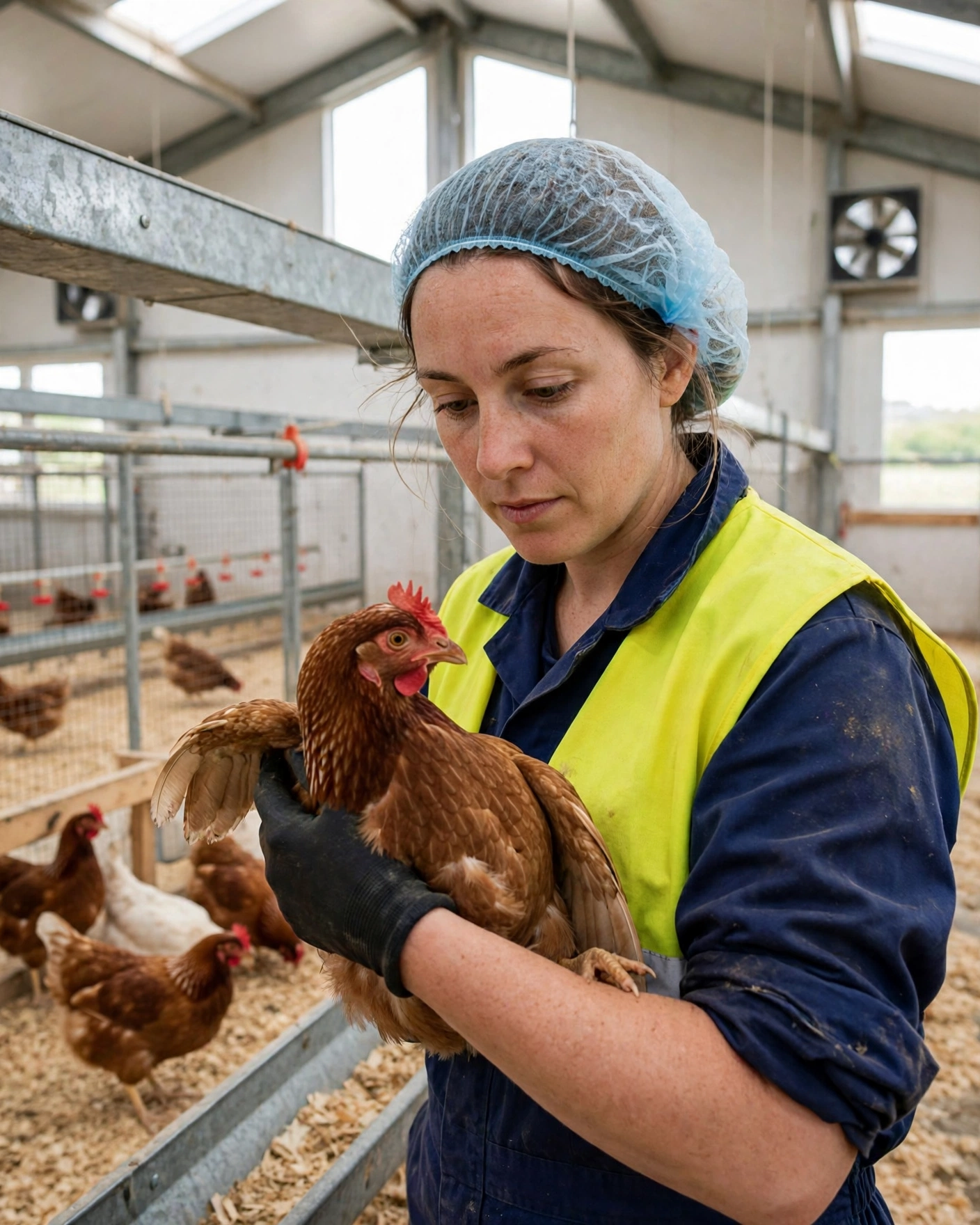
A poultry farm worker’s day starts early. The birds need feeding and checking first thing. On a layer farm, where hens lay eggs, the day starts with collecting eggs. Workers check the hens, feed and water them, and clean the sheds. On a broiler farm, where chickens are raised for meat, the day is about feeding and checking the birds. Workers also keep the sheds clean and at the right temperature.
In a processing plant, the work is on a line: packing, sorting, and quality checks. The pace is faster, the work is indoors, and the shift follows the plant’s schedule rather than the birds. A hatchery is different again. The work is about incubating eggs, checking chicks, and moving them to the rearing sheds.
The work is physical. Workers spend hours on their feet, walking the sheds. They carry feed sacks and egg trays, and clean with hoses and brushes. Sheds are warm, dusty, and noisy, and the smell takes getting used to. Protective clothing is standard, including overalls, boots, gloves, and sometimes masks and ear protection. A worker who looks after their kit and follows the safety rules will cope well.
Most poultry farm roles are shift work. A farm that runs all day needs workers at night and on weekends. A rota may cover early mornings, late evenings, and weekend days. The listing should say which shifts the role covers. Some farms offer accommodation. The listing should say what it costs and what it includes. Check the hours, the rota, and the pay structure before you apply.
Where to find real poultry farm jobs in the UK
Indeed UK is the best place to start, because it carries the most poultry farm listings in the country. Search for poultry farm, chicken farm, or farm worker and the county or town you want to work in. Then use the filters for full time and permanent roles. Check whether the listing names the employer, the location, the hours, and the pay structure. A listing that names a real farm or company is far more trustworthy. It beats one with no employer name at all.
Reed is the second place to check. It often lists farm roles from growers and labour providers that do not advertise on Indeed. Agricultural recruitment agencies are worth checking too. Firms such as HOPS Labour Solutions, Pro-Force, and AG Recruitment and Management place workers on farms across the UK. Their websites list open roles by region.
Large poultry companies hire workers directly through their own careers pages. Companies such as Moy Park, Avara Foods, and 2 Sisters Food Group run farms and processing plants across the UK. Their websites list open roles by site. Local job boards and farm gates also carry openings in rural areas.
Sheds, biosecurity and the flock routine
The shed is where a poultry worker spends most of the day. Understanding it helps a new worker far more than any amount of reading. A broiler shed holds thousands of birds on a litter floor. Feeders and drinkers run along its length, and fans and heaters keep the temperature right. A layer shed holds hens in colony systems or free range units. Hens lay eggs in nest boxes, and workers collect them there.
Biosecurity is the most important rule on a poultry farm, and every worker must follow it. Keep birds separate from the outside world, because disease can spread fast through a flock and wipe it out. Workers change into farm overalls and boots at the site, wash their hands, and use foot dips at the shed doors. Farms keep visitors out, and anyone who keeps birds at home must tell the farm manager before they start.
The flock routine is the same every day, and it is what keeps the birds healthy. The worker walks the shed, checks the feeders and drinkers, looks for birds that are sick or lame, and records anything unusual. Workers remove dead birds and record them. They check litter and top it up, and adjust the temperature and ventilation. Workers collect eggs, grade them, and pack them. They clean the shed between flocks.
What employers usually ask for
The first thing an employer asks for is the ability to do steady, physical work. You also need to keep up with the pace of the farm. Previous farm or poultry work helps, and references from a farm manager carry real weight. A worker who can show they turned up on time, worked a full shift, and followed the routine will get further. They will get further than a worker who only lists job titles.
Most poultry farm roles need no formal qualification. Many farms train new workers on the job in the first week. A driving licence helps, because farms are rural and public transport is thin. Some roles ask for a licence so workers can drive between sheds or sites. A tractor or forklift certificate is a useful extra on larger farms.
Employers also look for reliability above all else. Birds need feeding and checking every day, and a farm needs workers who turn up. Punctuality and a steady manner matter more than speed on the first day. Employers check your right to work in the UK before any job starts, so have your documents ready. Some farms offer accommodation, and the listing should say what it costs.
How pay is described in a listing
Listings usually show pay for poultry farm jobs in the UK per hour, or as an annual salary for a full time role. Some listings show a salary range, and some say the rate depends on experience. Check the live listing for the rate. It changes by farm, by region, and by your experience. Night shifts and weekend work may carry a higher rate, and the listing should say so.
Listings often describe pay alongside the hours, the contract type, and the benefits. A listing may mention overtime, a pension, holiday entitlement, and accommodation. These extras can make a real difference to the value of a role. Farms often charge for accommodation weekly, and the listing should say the cost in plain words.
The visa question, honestly
Poultry farm work in the UK is open first to people who already have the right to work in the UK. This includes British citizens, Irish citizens, people with settled or pre-settled status, and people holding a visa that allows work. Most poultry roles suit people who already hold work rights. Employers will check your documents before you start.
Sponsorship for poultry farm roles is limited and not automatic. Some larger employers hold a sponsor licence. The rules depend on the job, the salary, the skill level, and the English language requirement. A farm worker role must meet the skill and salary thresholds set by the UK government. Most farm worker roles do not meet them. An employer that offers sponsorship will say so in the listing.
Be careful with anyone who promises a poultry farm job and a visa together for a fee, especially through social media or a messaging app. A genuine employer does not ask you to pay for a job offer, and a genuine sponsor does not collect fees through an agent on WhatsApp. Check the official UK government website for the current visa rules before you make any plans, because the rules change.
How to apply, step by step
Step 1: Pick one region and one type of farm
Decide which part of the country you can actually live and travel in, and whether you want a layer farm, a broiler farm, a hatchery, or a processing plant. A focused search finds better roles than a search for any farm job anywhere. Write down the hours you can work and whether you need accommodation, then use those notes to filter the listings.
Step 2: Search Indeed UK and Reed properly
Search Indeed UK and Reed for poultry farm and the county or town you want to work in, and filter by date posted. Read ten listings properly rather than skimming fifty, and shortlist three to five that fit your experience and your hours. Check the employer name, the location, the pay structure, and whether the listing mentions accommodation.
Step 3: Prepare a short, honest CV
Write a one page CV that lists your farm or manual work experience, the animals you have worked with, and any driving licence or certificates you hold. Add two references, ideally a farm manager who can confirm your work, and make sure your phone number and email are correct.
Step 4: Apply through the listing and follow up
Apply through the listing on Indeed UK, Reed, or the company careers page, and attach your CV as requested. Keep a note of every role, the date, and the employer name, so you can follow up and avoid applying twice for the same job. If you hear nothing in a week, a polite message or call is reasonable.
Step 5: Prepare for the interview and the first day
Read about the farm before you go, and prepare short answers about your experience, your reliability, and how you handle early starts and physical work. Arrive early, with your documents ready. On your first day, follow the biosecurity rules, watch the experienced workers, and ask the supervisor to check your work.
What to avoid
Avoid any listing that asks you to pay for a job offer, a visa, a certificate, or accommodation before you start work. A genuine employer pays for the recruitment process, and any accommodation cost should be discussed openly and in writing, with the weekly charge stated in plain words. Avoid listings with no employer name, no location, and no duties, because a real farm can describe its sheds, its hours, and its flock in plain words.
Avoid exaggerating your experience, because a farm finds out fast. A worker who claims to know poultry and cannot spot a sick bird will be found out on the first day, and the reference that follows will be worse than an honest application from a beginner who is willing to learn. Avoid sharing scans of your passport, bank details, or national insurance number with anyone before you have met the employer or checked the company is real.
Frequently asked questions
Do I need experience to work on a poultry farm in the UK?
No, not for most poultry farm roles. Many farms train new workers on the job in the first week, and what matters is steady work, reliability, and care with the birds. Previous farm work helps, and references from a farm manager carry real weight. A worker who turns up on time, works a full shift, and follows the routine will be asked back, even without experience.
How much do poultry farm workers earn in the UK?
Pay is usually listed per hour, or as an annual salary for a full time role, and it changes by farm, by region, and by your experience. Check the live listing for the rate, because night shifts and weekend work may carry a higher rate.
Can a poultry farm worker get a sponsored visa for the UK?
Sponsorship is limited and not automatic, and it depends on the role, the salary, the skill level, and the English language requirement. Most farm worker roles do not meet the thresholds set by the UK government. Check the official UK government website for the current rules before you apply.
Is poultry farm work hard?
Yes, it is physical work. Workers spend hours on their feet, walking the sheds, carrying feed sacks and egg trays, and cleaning with hoses and brushes. Sheds are warm, dusty, and noisy, and the days start early. A worker who is fit, steady, and comfortable around birds will cope well.
Which websites list real poultry farm jobs in the UK?
Indeed UK and Reed carry the most poultry farm listings, and agricultural recruitment agencies such as HOPS Labour Solutions, Pro-Force, and AG Recruitment and Management place workers on farms across the UK. Large poultry companies list roles on their own careers pages, and local job boards carry openings in rural areas.
Related guides
Job804 shares job information and practical guides. Job804 is not an employer, not a recruitment agent, and does not guarantee a job, an interview, or a visa. Always check the live listing on Indeed UK or Reed, and check visa conditions on the official government website before you apply or pay for anything. Never pay for a job offer.
Last checked: 26 November 2026. Check the live listing before you apply.
