
Introduction
Security guard jobs Germany offer steady, year round work. They suit people who are calm, observant and comfortable working nights and weekends.
Germany has a large private security sector. Guards protect offices, warehouses, shops, events, hospitals and residential buildings in every major city.
The work is regulated. A licence and proper training are part of the job, not an optional extra.
This guide explains what security guard work in Germany really involves. It covers the licence, how much German you need, what shifts look like and how pay is usually described.
You will also find where real listings appear. The guide also explains how the visa side works for applicants from outside the European Union. It gives a step by step way to apply and the warning signs to watch for.
This work suits people who stay alert during quiet hours and stay polite under pressure.
Security guard jobs Germany: what the work actually looks like
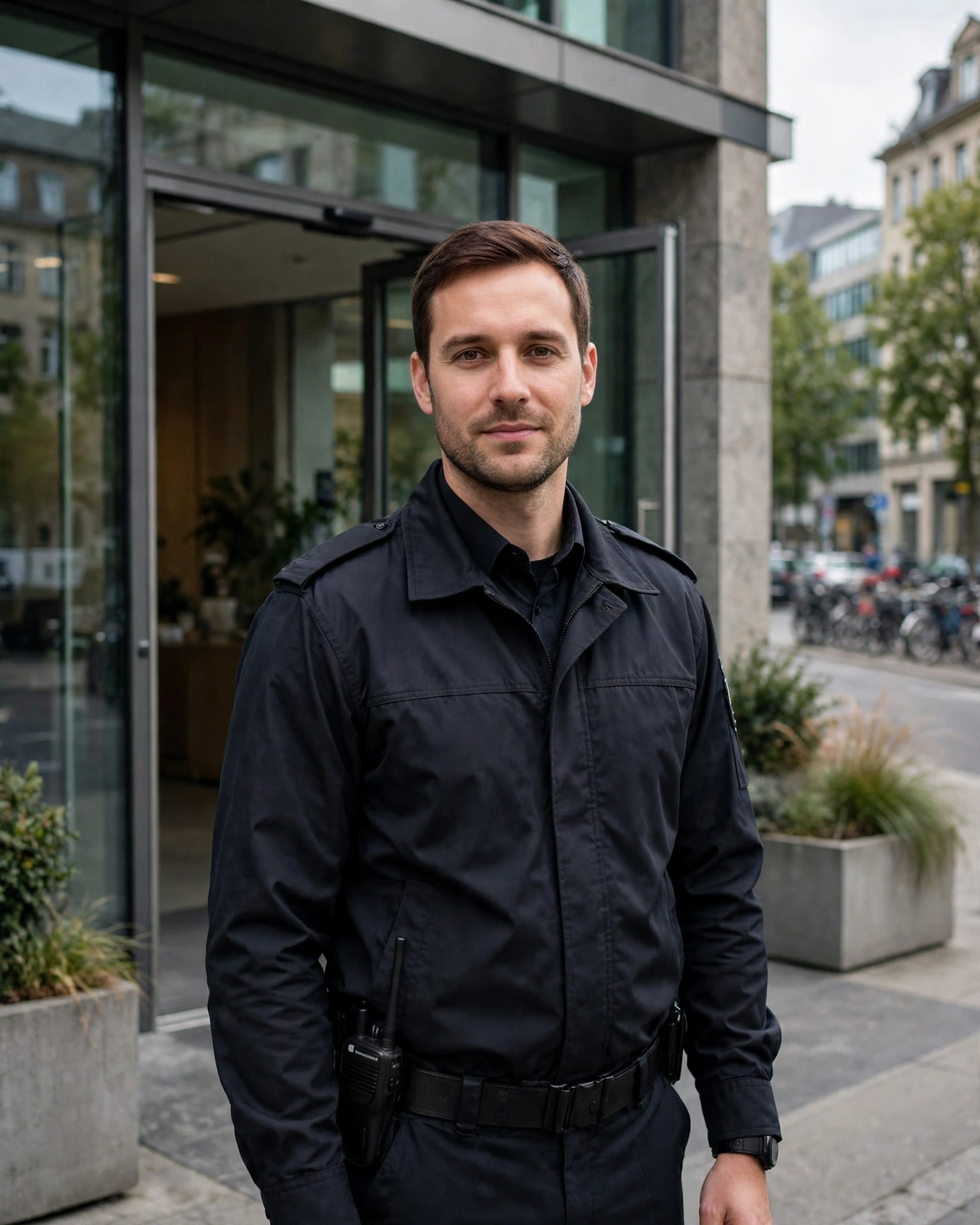
Security guard jobs Germany cover a wide range of duties, and no two posts are exactly alike. A guard at an office building checks badges at the entrance and walks the floors on a patrol round. They also watch the CCTV screens.
At a warehouse, a guard checks delivery vehicles in and out, seals the gates at night and walks the perimeter. In a shopping centre, a guard deals with shoplifters, helps lost visitors and responds when an alarm sounds.
The common thread is presence: a guard who is visible, alert and professional prevents most problems before they start.
Most shifts last eight to twelve hours, and the work runs around the clock. Day shifts usually start in the early morning, while night shifts start in the evening and run through to morning. Weekend work is normal, and public holidays often pay extra.
You will spend long periods on your feet. Patrol routes, entrance duty and the control desk fill the hours. The job asks for stamina and the ability to stay focused when nothing is happening.
Reports matter too: short incident notes, patrol logs and visitor records, written in clear, simple German.
The security licence, German language level and shift work
The licence is the first thing to understand about security guard jobs Germany. You cannot legally work as a guard without it.
You start with the Sachkundeprufung. It is a competence exam run by the Chamber of Industry and Commerce, known as the IHK.
It covers law, dealing with people, first aid basics, fire safety and how to act in dangerous situations. Many employers pay for the course and the exam, and some hire you first and train you. Others expect the certificate already in hand, so read the listing carefully.
Language is the second gate. Most security jobs need German at B1 level or above on the European scale. That means you can hold a conversation, understand instructions and write a short report.
Some posts in international companies or at airports accept B1 with English as well. A guard still needs German to speak to the public, the police and the fire service. Without it, you can work in far fewer places.
Shift work is the third reality. Security never closes, so nights, weekends and holidays are part of the rota. Night shifts pay more per hour in many companies, and some guards prefer them because the sites are quieter. Ask the employer for a sample roster before you accept.
Where to find real security guard jobs Germany listings
Real security guard jobs Germany appear on Indeed Germany, StepStone and the Federal Employment Agency job board. The board is known as the Jobborse.
Search for “Sicherheitsmitarbeiter”, “Security” or “Wachschutz” and filter by city. Start with Berlin, Hamburg, Munich, Frankfurt or Cologne.
Large security companies post here directly, and their listings name the company, the site type and the shift pattern.
Company career pages are the next place to look. Big German security firms like Securitas, KOTTER, Wisag and Pond Security advertise on their own sites. Applying there puts your application in front of the recruiter directly.
These companies run many sites in one city, so one application can lead to several possible posts.
The Jobborse run by the Federal Employment Agency is worth checking. It carries employers who are registered and checked. It also lists whether the employer helps with training for the Sachkundeprufung, which is a useful detail.
Treat social media posts about guard jobs with care. Ask for the company name and a written offer before you share personal documents.
What employers usually ask for
Most security guard jobs Germany ask for a clean criminal record. Employers will check it through the official certificate of good conduct, called a Fuhrungszeugnis.
You can apply for this document at the local registration office once you live in Germany. Employers usually ask for it before your first shift.
Employers want people who are reliable, punctual and presentable. Guards represent the client company as well as their own employer. A tidy uniform, polished shoes and a calm manner are part of the job.
You need to walk patrols, climb stairs and stand for long periods. Some posts, like event security or cash transport, ask for more fitness and extra checks.
Applicants from outside the European Union need a valid work permit. Employers will check it before hiring. German language at B1 level is the usual minimum, and some posts ask for B2. Previous security, police or military experience helps, but many companies train beginners who hold the right attitude and the licence.
Pay: how it is usually described
Pay for security guard jobs Germany is usually described as an hourly rate. The listing should show the rate or the pay group.
Germany has a minimum wage that applies across the sector. Many security companies pay above it under collective agreements, known as Tarifvertrag.
Your exact rate depends on the region, the type of post and your qualifications. It also depends on whether you work nights or weekends, when extra allowances often apply.
Gross pay is before tax and social insurance. Net pay is what lands in your bank account. Judge an offer by the net figure, not the gross headline.
Night, Sunday and public holiday allowances are common in security work, and the employment contract should list them. Some companies pay a higher rate for night hours, and some add a flat allowance per night shift. Overtime is paid or taken as time off, depending on the contract, and the contract should say which. A written contract in German is standard, and you should read it fully before you sign.
The visa question, honestly
The visa question for security guard jobs Germany is harder than for farm or warehouse work. It deserves a straight answer. Citizens of the European Union can live and work in Germany without a visa.
Citizens of other countries need a visa or residence permit that allows work. Security guarding is not on the fast track lists that cover shortage jobs like nursing or IT. That does not make it impossible, but it does mean the route is narrower.
The most realistic route for many applicants is a job seeker visa. The other option is a work visa tied to a specific job offer from a German employer. Processing takes time, often several months, so start early and keep every document organised.
Check the current rules on the website of the German embassy in your country. Also check the Make it in Germany portal.
A B1 certificate from a recognised provider like the Goethe-Institut strengthens a visa application. It also strengthens a job application. Never pay an agent who promises a guaranteed visa or a guaranteed guard job for a fee.
How to apply for security guard jobs Germany
Applying for security guard jobs Germany works best when you prepare the licence and the language first. Then apply to real companies.
A short, honest application sent to a named employer beats a dozen messages sent to strangers on social media.
Step 1: Check the licence and language requirements
Find out whether the post needs the Sachkundeprufung already, or whether the employer trains you. Check your German level honestly against B1, and book a language exam if you have no certificate. Gather your identity documents and, if you live in Germany, apply for your Fuhrungszeugnis early.
Step 2: Search Indeed, StepStone and the Jobborse
Search Indeed Germany, StepStone and the Federal Employment Agency Jobborse for security posts in your chosen city. Save listings that name a real company, a site type and a shift pattern.
Step 3: Prepare a simple CV in German
Write a one or two page CV in German. It should list your work history, your licence status, your language level and any security, police or military experience.
Add a short cover note. Say when you can start, which shifts you can work and where you are based.
Step 4: Apply and confirm the details in writing
Apply through the listing or the company career page. When an offer comes, ask for the details in writing before you accept. Ask about the employment contract, the pay group, the shift pattern, the site location and any training help.
A real employer will send these without hesitation.
Step 5: Complete training and start your first shifts
Take the Sachkundeprufung preparation course if the employer provides it, and pass the exam before your first solo shift.
Attend the site induction. Learn the patrol routes, the alarm procedures and the reporting system, and ask questions when anything is unclear.
What to avoid when you apply
The biggest risk with security guard jobs Germany is not the work itself. It is the people who exploit job seekers around it.
Never pay for a job offer, a visa arrangement or a guaranteed licence for a fee. Real security companies do not charge workers to get hired, and any fee for a job is a warning sign. Report the post and move on.
Be careful with listings that promise very high pay with no experience, no German and no licence. Those three promises together are almost always false, because the licence and the language are legal and practical requirements.
Never hand over your passport or your identity card to an employer, an agent or a middleman. Employers may need to sight your documents and take a copy for their records, and that is normal. Keeping the originals yourself is also normal, and anyone who insists on holding them should be avoided.
A typical week and living costs
A typical week of security guard jobs Germany runs for five days. Shifts last eight to twelve hours, and a rotating roster covers nights and weekends.
A guard on a day rota works early mornings and finishes in the afternoon. Night guards sleep during the day and work through the night. Days off fall on different weekdays each week, so a regular weekend routine is rare.
Living costs depend on the city. Berlin, Hamburg and Munich are expensive for rent, while smaller cities in the east and north are cheaper. Shared flats, known as WGs, are the common choice for single workers, and they keep rent manageable. Cooking your own meals and using a monthly public transport ticket keep weekly costs down.
Your first pay usually arrives at the end of your first month. Bring enough savings to cover rent, food and transport until then.
Frequently asked questions
Do I need a licence for security guard jobs in Germany?
Yes, you need the Sachkundeprufung. This competence exam comes from the Chamber of Industry and Commerce. You need it before you can work unsupervised as a guard.
Many employers pay for the preparation course and the exam, and some hire you first and train you.
How much German do I need to work as a security guard?
Most posts need German at B1 level or above. That means you can hold a conversation, understand instructions and write a short report.
Some posts in international companies accept B1 with English as well. A guard still needs German to speak to the public, the police and the fire service. Without it, you can work in far fewer places.
What shifts do security guards work in Germany?
Security runs around the clock, so guards work days, nights, weekends and public holidays on a rotating roster. Most shifts last eight to twelve hours.
Can I apply for security guard jobs in Germany from outside the EU?
Citizens of the European Union can work in Germany without a visa. Citizens of other countries need a visa or residence permit that allows work, usually tied to a specific job offer. Security guarding is not on the fast track shortage lists, so the route is narrower and processing takes time.
How much can I earn as a security guard in Germany?
Pay is usually hourly, and the exact rate is shown in the live listing or the employment contract.
Your rate depends on the region, the type of post and your qualifications. It also depends on whether you work nights or weekends, when extra allowances often apply.
Related guides
Job804 shares job information and practical guides. Job804 is not an employer or a recruitment agent. It does not guarantee a job, an interview, or a visa.
Always check the live listing on Seek, Indeed, or the employer official website. Check visa conditions on the official immigration website before you apply or pay for anything. Never pay for a job offer.
Last checked: 29 November 2026. Check the live listing before you apply.
